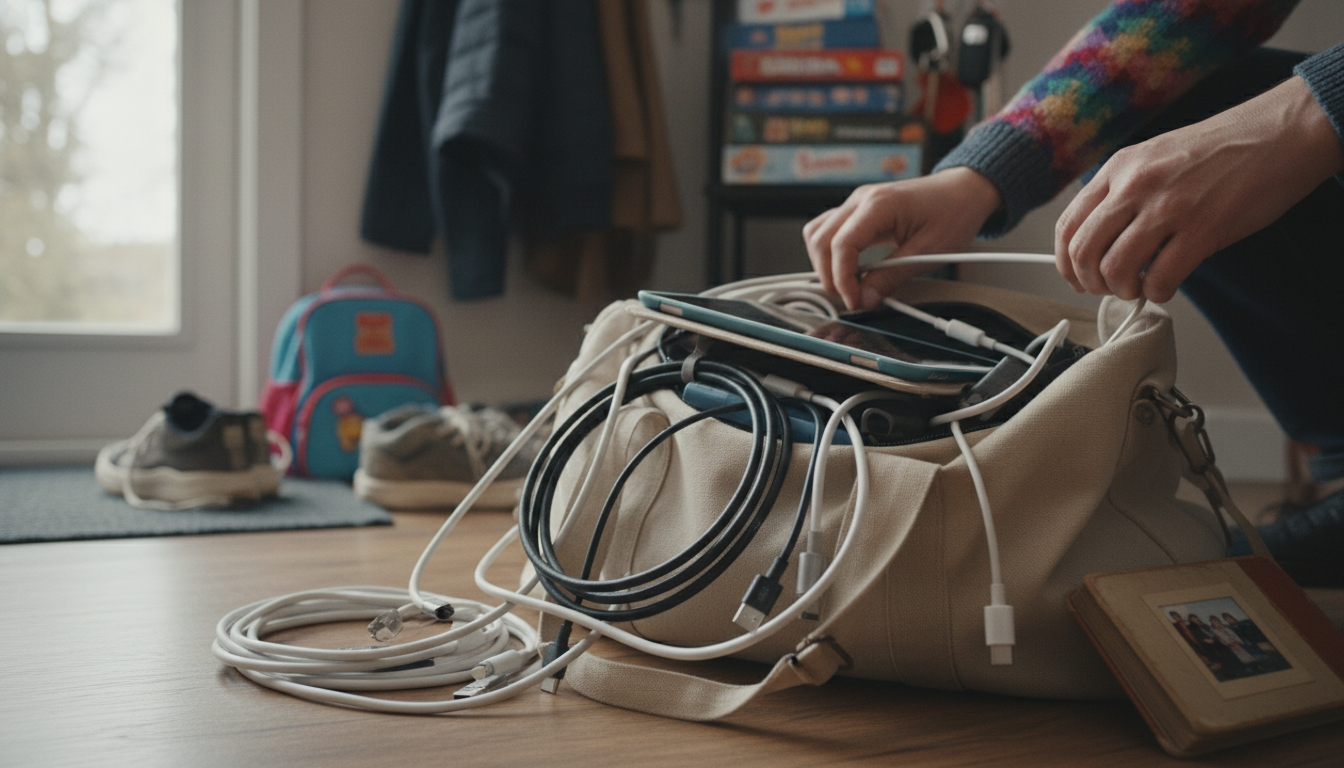
A PD fast charging cable is a USB cable built to support USB Power Delivery (USB-PD), a charging standard that lets a charger and device “negotiate” the safest, fastest power level they both support. Instead of delivering one fixed amount of power, PD can step up voltage and current to charge everything from phones and tablets to power-hungry laptops—when the cable is rated for it.
Most PD fast charging cables are USB-C to USB-C because USB-C is the connector most commonly used for USB-PD. The cable’s job is to carry the power the charger offers and the device requests. That means the cable needs the right internal wiring and, for higher wattage, the right electronic identification (often called an E-marker) so devices allow higher power.
Three things typically determine whether a cable can handle PD fast charging:
If your charger and device support Power Delivery but your cable doesn’t, charging can drop to a lower speed—or fail to reach higher wattage modes. For example, a laptop that can draw near 100W may only charge at 60W (or less) if the cable can’t support 5A operation. Using the right PD-rated cable helps maintain fast charging while keeping power delivery within safe limits.
For a deeper breakdown of PD 3.0, current ratings (3A vs 5A), and what “100W” really means for USB-C to USB-C cables, visit: https://mrsmattie.com/blog/guide-100w-usb-c-to-usb-c-cable-pd-3-0-qc-4-0-5a-explained/.
Usually, yes. You’ll want a USB-C cable that explicitly supports USB Power Delivery, and for higher wattage (like 100W), a 5A E-marked cable is typically required to unlock full speed safely.
No. USB-C is the connector shape, while “PD 100W” refers to the Power Delivery charging capability and wattage. A USB-C cable can exist without supporting 100W PD.
Check the cable or packaging for “PD,” “USB Power Delivery,” and a wattage or current rating (such as 60W/3A or 100W/5A). Product listings and manufacturer specs are often the most reliable source.
A PD fast charging cable is a USB cable built to support USB Power Delivery (USB-PD), a charging standard that lets a charger and device “negotiate” the safest, fastest power level they both support. Instead of delivering one fixed amount of power, PD can step up voltage and current to charge everything from phones and tablets to power-hungry laptops—when the cable is rated for it.
Most PD fast charging cables are USB-C to USB-C because USB-C is the connector most commonly used for USB-PD. The cable’s job is to carry the power the charger offers and the device requests. That means the cable needs the right internal wiring and, for higher wattage, the right electronic identification (often called an E-marker) so devices allow higher power.
Three things typically determine whether a cable can handle PD fast charging:
If your charger and device support Power Delivery but your cable doesn’t, charging can drop to a lower speed—or fail to reach higher wattage modes. For example, a laptop that can draw near 100W may only charge at 60W (or less) if the cable can’t support 5A operation. Using the right PD-rated cable helps maintain fast charging while keeping power delivery within safe limits.
For a deeper breakdown of PD 3.0, current ratings (3A vs 5A), and what “100W” really means for USB-C to USB-C cables, visit: https://mrsmattie.com/blog/guide-100w-usb-c-to-usb-c-cable-pd-3-0-qc-4-0-5a-explained/.
Usually, yes. You’ll want a USB-C cable that explicitly supports USB Power Delivery, and for higher wattage (like 100W), a 5A E-marked cable is typically required to unlock full speed safely.
No. USB-C is the connector shape, while “PD 100W” refers to the Power Delivery charging capability and wattage. A USB-C cable can exist without supporting 100W PD.
Check the cable or packaging for “PD,” “USB Power Delivery,” and a wattage or current rating (such as 60W/3A or 100W/5A). Product listings and manufacturer specs are often the most reliable source.
A PD fast charging cable is a USB cable built to support USB Power Delivery (USB-PD), a charging standard that lets a charger and device “negotiate” the safest, fastest power level they both support. Instead of delivering one fixed amount of power, PD can step up voltage and current to charge everything from phones and tablets to power-hungry laptops—when the cable is rated for it.
Most PD fast charging cables are USB-C to USB-C because USB-C is the connector most commonly used for USB-PD. The cable’s job is to carry the power the charger offers and the device requests. That means the cable needs the right internal wiring and, for higher wattage, the right electronic identification (often called an E-marker) so devices allow higher power.
Three things typically determine whether a cable can handle PD fast charging:
If your charger and device support Power Delivery but your cable doesn’t, charging can drop to a lower speed—or fail to reach higher wattage modes. For example, a laptop that can draw near 100W may only charge at 60W (or less) if the cable can’t support 5A operation. Using the right PD-rated cable helps maintain fast charging while keeping power delivery within safe limits.
For a deeper breakdown of PD 3.0, current ratings (3A vs 5A), and what “100W” really means for USB-C to USB-C cables, visit: https://mrsmattie.com/blog/guide-100w-usb-c-to-usb-c-cable-pd-3-0-qc-4-0-5a-explained/.
Usually, yes. You’ll want a USB-C cable that explicitly supports USB Power Delivery, and for higher wattage (like 100W), a 5A E-marked cable is typically required to unlock full speed safely.
No. USB-C is the connector shape, while “PD 100W” refers to the Power Delivery charging capability and wattage. A USB-C cable can exist without supporting 100W PD.
Check the cable or packaging for “PD,” “USB Power Delivery,” and a wattage or current rating (such as 60W/3A or 100W/5A). Product listings and manufacturer specs are often the most reliable source.
A PD fast charging cable is a USB cable built to support USB Power Delivery (USB-PD), a charging standard that lets a charger and device “negotiate” the safest, fastest power level they both support. Instead of delivering one fixed amount of power, PD can step up voltage and current to charge everything from phones and tablets to power-hungry laptops—when the cable is rated for it.
Most PD fast charging cables are USB-C to USB-C because USB-C is the connector most commonly used for USB-PD. The cable’s job is to carry the power the charger offers and the device requests. That means the cable needs the right internal wiring and, for higher wattage, the right electronic identification (often called an E-marker) so devices allow higher power.
Three things typically determine whether a cable can handle PD fast charging:
If your charger and device support Power Delivery but your cable doesn’t, charging can drop to a lower speed—or fail to reach higher wattage modes. For example, a laptop that can draw near 100W may only charge at 60W (or less) if the cable can’t support 5A operation. Using the right PD-rated cable helps maintain fast charging while keeping power delivery within safe limits.
For a deeper breakdown of PD 3.0, current ratings (3A vs 5A), and what “100W” really means for USB-C to USB-C cables, visit: https://mrsmattie.com/blog/guide-100w-usb-c-to-usb-c-cable-pd-3-0-qc-4-0-5a-explained/.
Usually, yes. You’ll want a USB-C cable that explicitly supports USB Power Delivery, and for higher wattage (like 100W), a 5A E-marked cable is typically required to unlock full speed safely.
No. USB-C is the connector shape, while “PD 100W” refers to the Power Delivery charging capability and wattage. A USB-C cable can exist without supporting 100W PD.
Check the cable or packaging for “PD,” “USB Power Delivery,” and a wattage or current rating (such as 60W/3A or 100W/5A). Product listings and manufacturer specs are often the most reliable source.






Leave a comment