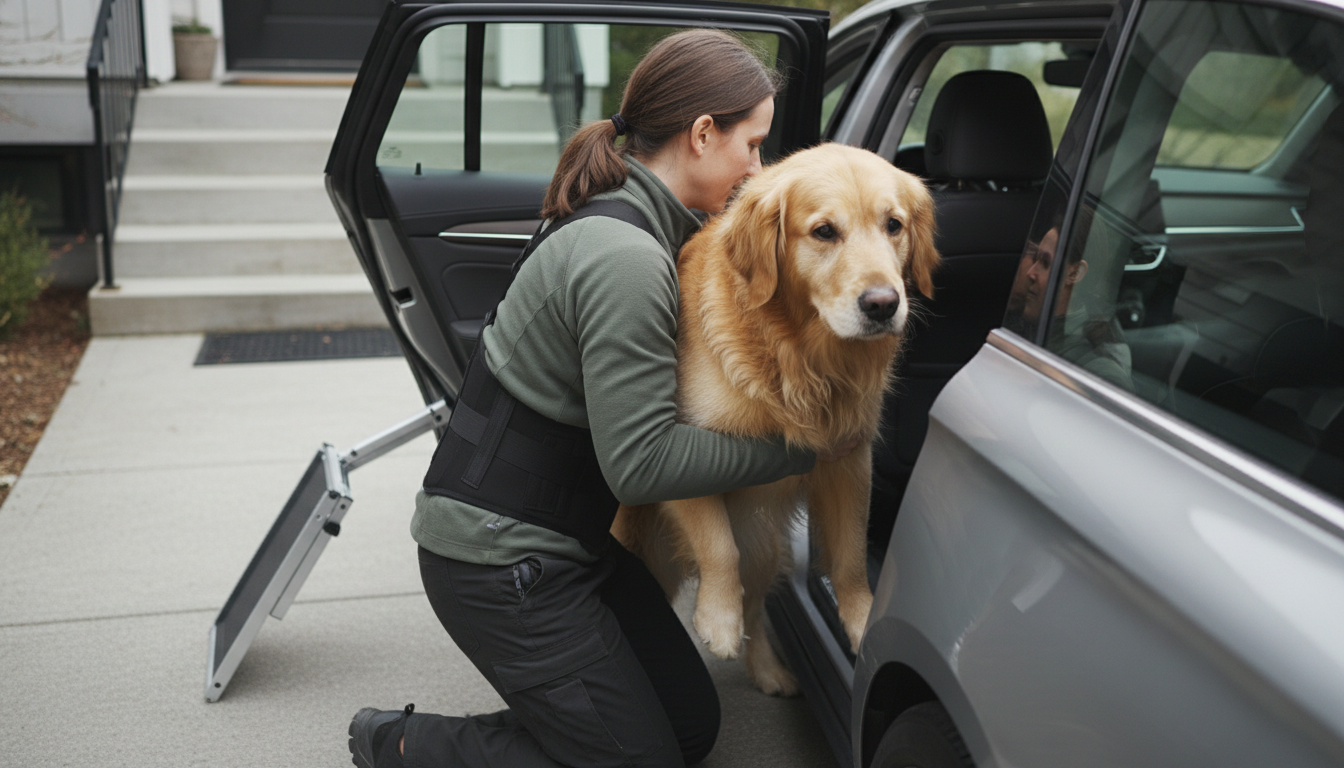
Carrying a heavy dog up stairs is safest when the dog is calm, your grip supports the chest and hips, and you protect your own back. If your dog is injured, painful, or panics when lifted, skip the stairs when possible and use a ramp or dog stairs instead. For a practical alternative that reduces lifting, see the guide to folding aluminum dog stairs here: https://mrsmattie.com/blog/guide-folding-aluminum-dog-stairs-luxury-car-entry/.
Clear clutter, turn on lights, and make sure the steps are dry. If you’re on slick stairs, wear shoes with traction and consider placing a towel or non-slip runner where you’ll step.
Stand close to your dog to reduce strain. Slide one arm under the chest (behind the front legs) and the other arm under the rear end (in front of the back legs) to support both the front and the hips. Lift with your legs, keep your back straight, and hold the dog snug to your torso.
For dogs with weak hind legs, loop a folded towel under the belly just in front of the back legs and hold both ends like handles while your other hand steadies the chest/harness. This doesn’t replace lifting a truly heavy dog, but it can reduce wobbling and help you guide each step.
Take one step at a time, pause on landings, and avoid twisting. If your dog squirms, stop, lower them to the nearest safe step or landing, and reset your grip before continuing.
Don’t carry if your dog growls, yelps, has a suspected spinal injury, or you feel unstable. In those cases, enlist help or use mobility tools (harness handles, ramps, or dog stairs) to prevent falls.
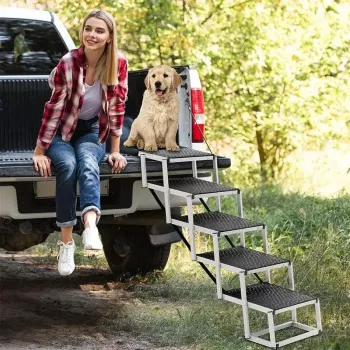
Often, yes—dog stairs can reduce strain on your back and lower the risk of dropping your dog, especially for daily use. They’re also helpful for dogs that are uncomfortable being lifted or have mobility limitations.






Leave a comment