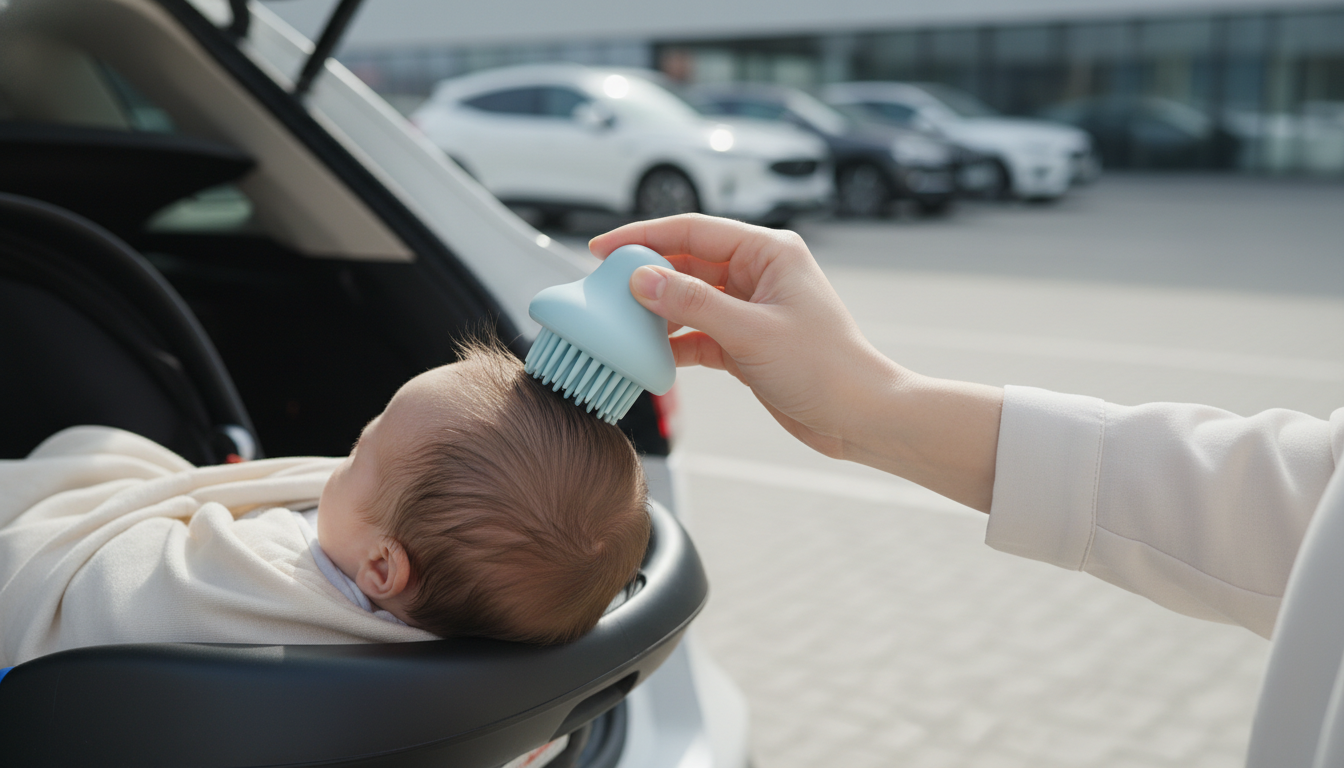
In most cases, a silicone baby brush is safe when it’s made from baby-safe, food-grade silicone, designed for infant skin, and used gently. Silicone is nonporous, which helps it resist holding onto moisture and residue compared to some sponges or fabric washcloths. That can make it a practical option for daily baths—especially for babies with sensitive skin—so long as the brush is clean and in good condition.
Look for a brush labeled BPA-free and made with food-grade or medical-grade silicone. A safe brush should have soft, flexible bristles (not stiff nubs) and smooth edges without seams that could scratch. It should also feel comfortable in your hand so you can control pressure and avoid over-scrubbing delicate areas.
Use light pressure and plenty of warm water. A small amount of gentle, fragrance-free baby cleanser can help the brush glide without tugging. Focus on areas where milk, drool, or diaper-cream residue tends to collect (neck folds, behind ears, underarms), and switch to just your hand for extra-sensitive spots if needed. Avoid using any brush on broken skin, active rashes, or irritated eczema patches unless a pediatrician has advised it.
Rinse the brush thoroughly after each bath, paying attention to the base of the bristles where soap can linger. Let it air-dry completely in an open, ventilated spot. Replace the brush if you notice tears, persistent odor, discoloration, or bristles that feel rough—damage can trap buildup and reduce hygiene.
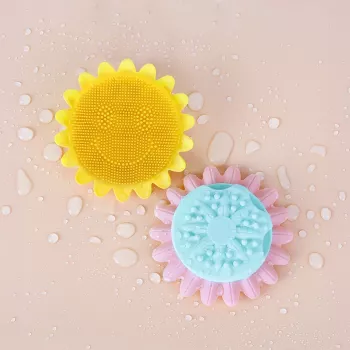
If you’re deciding between tools, a soft silicone brush can be a simple middle ground: gentler than many scrubbers while offering more reach than just your hands. For a closer look at how a soft silicone sunflower-style baby bath brush is designed to support a gentle wash, visit this guide.
Replace it as soon as it shows tearing, rough bristles, or lingering odor, or if it no longer rinses clean. With proper rinsing and complete drying, many families replace one every few months, but wear and hygiene matter more than a fixed timeline.




Leave a comment