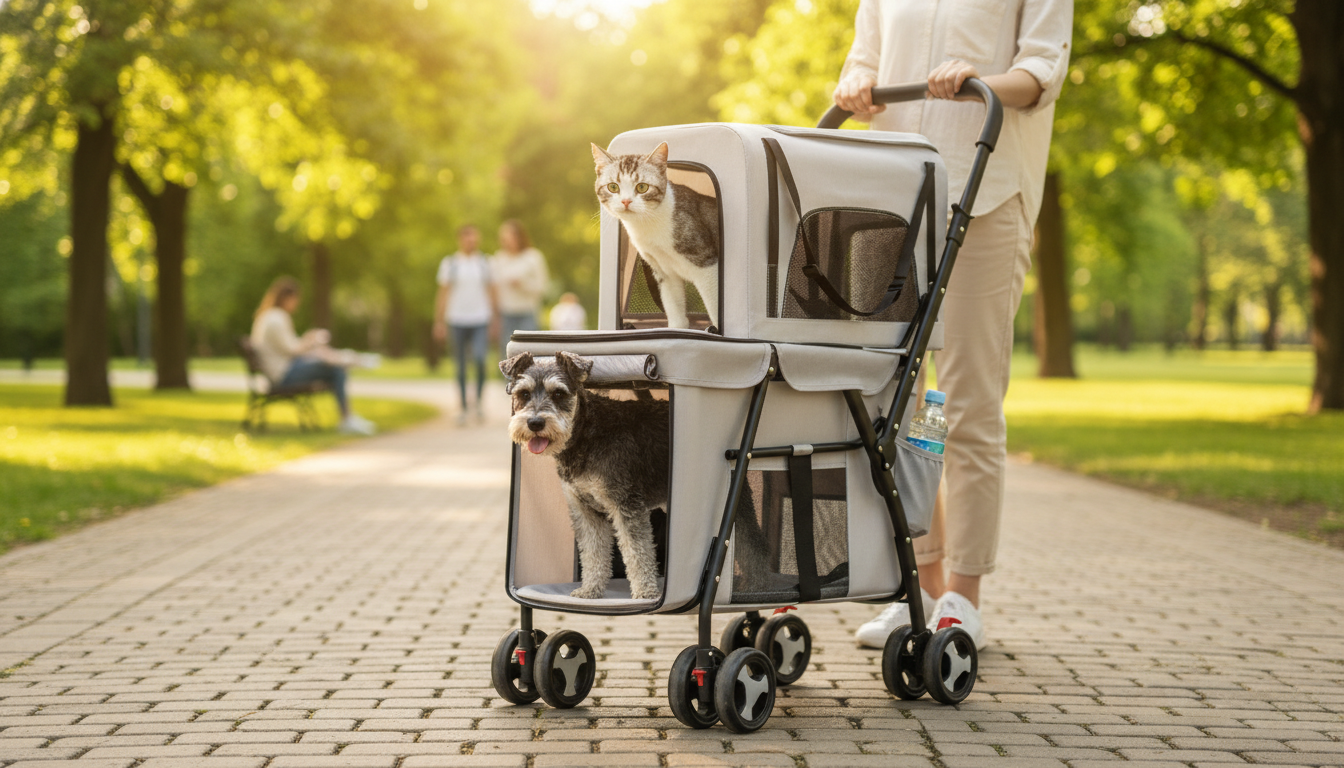
A pet stroller can make daily walks, vet visits, and travel easier—especially for small pets, seniors, or animals recovering from surgery. A double-layer design adds flexibility for households with more than one pet, while a portable carrier can help with transitions from car to sidewalk to indoor spaces. This guide breaks down what to look for in a double-deck foldable stroller, how to use it comfortably and safely, and the practical details that matter most: fit, stability, ventilation, storage, and cleaning.
It’s also a practical choice for pet parents who like to plan ahead: a stroller can serve as a calm “home base” during outdoor events, weekend markets, or travel days when sidewalks and crowds can be unpredictable.
Two compartments can be more than a novelty. In real life, a double-layer stroller can reduce stress, improve balance, and help manage different energy levels—especially if one pet prefers riding while another insists on walking part of the route.
| Consideration | Why it matters | What to check |
|---|---|---|
| Weight capacity per level | Prevents tipping and frame strain | Per-compartment max weight and total combined limit |
| Entry and exit access | Easier loading for timid or senior pets | Zipper placement, opening size, step-in height |
| Ventilation and visibility | Comfort and reduced anxiety | Mesh panels on multiple sides, sun cover options |
| Divider stability | Keeps each compartment secure | Firm base support and secure attachment points |
A stroller that includes a detachable carrier can simplify the “handoff moments” where pets are most likely to wriggle or bolt—parking lots, building entryways, and waiting rooms.
For travel and errands, it helps to practice at home first: let your pet investigate the carrier with the door open, add familiar bedding, then do short, calm “in-and-out” sessions before trying a busy location.
“Foldable” only matters if it folds quickly and fits where it needs to go. Before choosing a stroller, measure your trunk opening (not just the cargo space) and consider where it will live day-to-day—closet, mudroom, or behind a door.
Strollers are safest when pets are secured, weight is balanced, and airflow is protected—especially during warm weather. If temperatures climb, shorten outings, stick to shade, and monitor for overheating. The AVMA’s hot-weather guidance is a helpful reference: Hot Weather Safety for Pets (AVMA).
For car rides, always follow safe travel practices and keep your pet properly contained. The ASPCA’s travel tips are a solid overview: Traveling with Your Pet (ASPCA).
If your household is already juggling pet hair, toys, and day-to-day mess, pairing a tidy system with a simple routine can make maintenance easier. For an at-home reset plan, see Clean Faster, Stay Calm – A Stress-Free Speed Cleaning Guide for Busy Homes | Learn how to clean faster without stress.
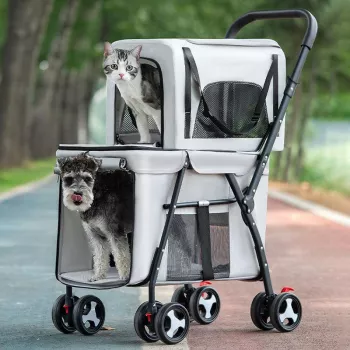
For households that want a two-level stroller plus a portable carrier for flexible outings, Double-Layer Foldable Pet Stroller with Portable Carrier for Dogs and Cats combines both in one setup.
Yes if the stroller is designed for it and the combined weight stays within limits. Keep pets separated by level, balance the load, and use harness tethers so an opened zipper doesn’t turn into a quick escape.
Start indoors with the stroller stationary, add familiar bedding, and use treats in short sessions. Increase movement gradually and avoid forcing entry; stop if your cat shows signs of overheating or escalating fear.
Often yes—carriers reduce escape risk and provide secure containment in busy areas. Make sure there’s good ventilation, closures are fully secured, and the carrier attaches to the stroller the way the manufacturer intends.



Leave a comment