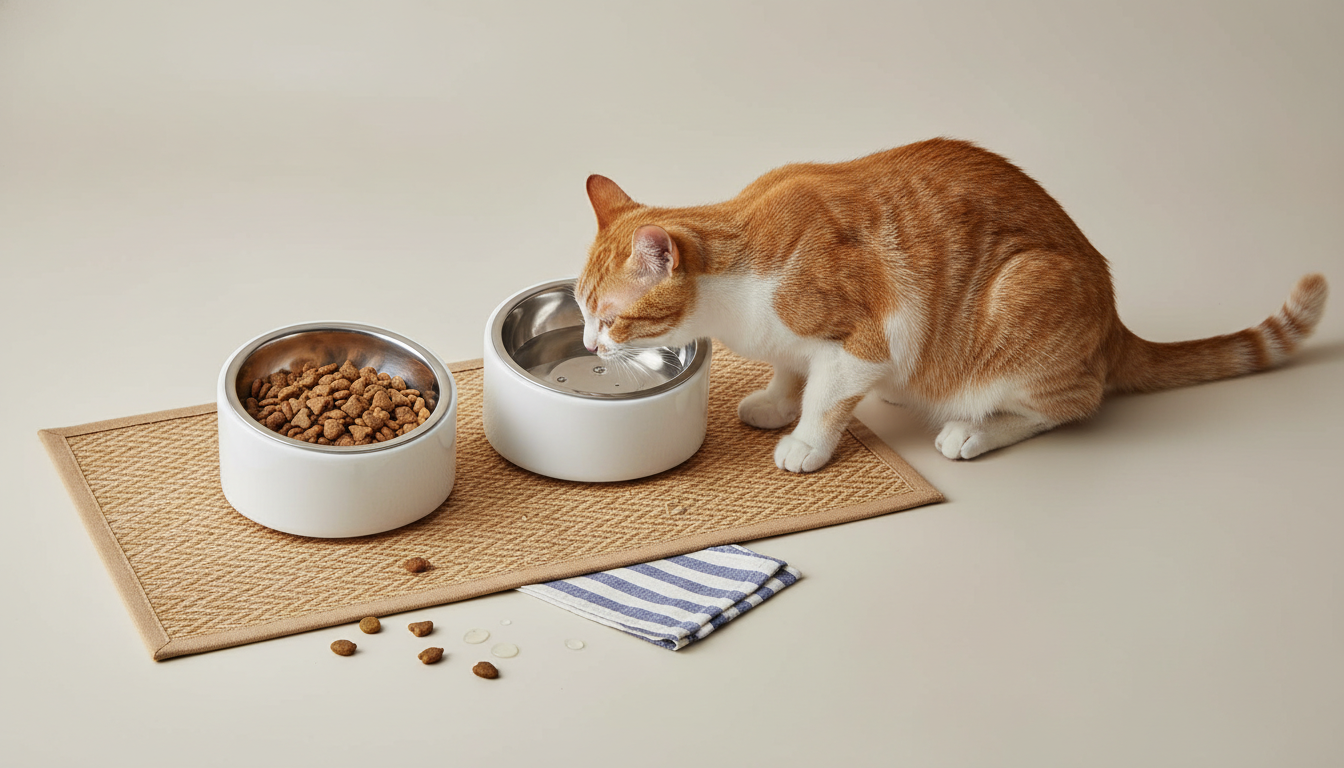
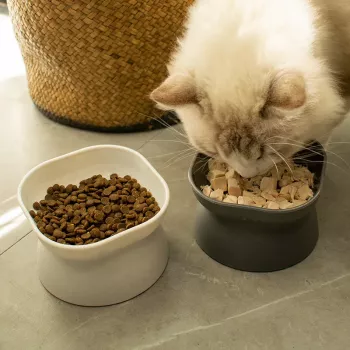
Tilted bowls can make mealtime easier on a cat’s body and cleaner for your home. By angling the food and water slightly upward, these bowls bring the contents closer to your cat’s mouth, which often means less reaching, less hunching, and less pushing food around the rim.
Many cats eat with their neck and shoulders working harder than they need to, especially from deep or flat dishes. A tilted bowl elevates the “front edge” of the meal, so your cat can take bites with a more comfortable head and neck position. For cats that are picky, older, or simply slow eaters, the easier access can reduce frustration and help them settle into calmer meals.
When food slides toward the lowest point of the bowl, cats don’t have to chase kibble or wet food around the dish. That can translate to fewer paw scoops, fewer pieces flipped out of the bowl, and less residue smeared along the edges. If you’re tired of cleaning up scattered crumbs or splatters, the tilt can make a noticeable difference—especially paired with a stable, non-slip base.
Cats rely on sensitive whiskers to navigate tight spaces, and some dislike repeated whisker contact while eating. Many tilted designs also feature a wider, more open shape than traditional deep bowls, so whiskers have more room and don’t press against the sides as much. That extra clearance may help cats that walk away mid-meal or seem annoyed at the bowl.
The best option is one that’s shallow and wide with a modest tilt (not so steep that food slides too fast). Look for easy-to-clean materials and a size that fits your cat’s face comfortably. For a deeper breakdown of angles, shapes, and setup tips, visit this tilted cat food bowl guide.
They can be. Many tilted bowls are also wider and shallower, which reduces whisker contact with the sides and may make eating more comfortable for sensitive cats.





Leave a comment