
Online shopping now dominates the way people buy almost everything. Nearly 70 percent of Americans have shopped online in the past year, a number that keeps climbing every season. You might expect better tech means safer experiences. The reality is risk is growing just as quickly as convenience. Most shoppers miss the hidden traps that can turn a simple click into a major headache.
| Takeaway | Explanation |
|---|---|
| Verify website security | Always check for HTTPS and SSL certificates before entering personal information on a website. |
| Use strong, unique passwords | Create different complex passwords for each account to enhance security and reduce risks of breaches. |
| Monitor transactions regularly | Regularly check financial statements for any unauthorized transactions to detect potential fraud early. |
| Be cautious on public Wi-Fi | Avoid making financial transactions over unsecured public Wi-Fi networks to protect your personal information. |
| Evaluate retailer credibility | Look for trustworthy indicators like valid contact details and professional website design before purchasing from online retailers. |
Safe online shopping represents a comprehensive approach to protecting personal and financial information during digital transactions. As more consumers shift towards internet purchasing, understanding the fundamental principles of secure online shopping becomes increasingly critical.
Online shopping safety encompasses multiple layers of protection designed to shield consumers from potential cyber threats and fraudulent activities. At its core, safe online shopping involves implementing robust security measures that prevent unauthorized access to personal data, financial details, and digital identities.
The primary goal is to create a secure transaction environment where consumers can confidently purchase goods and services without risking their sensitive information. According to the Cybersecurity and Infrastructure Security Agency, this means establishing multiple protective barriers against potential digital risks.
Safe online shopping involves several critical components that work together to create a secure digital purchasing experience:
Consumers who understand and implement these protective strategies significantly reduce their vulnerability to cyber threats. By recognizing potential risks and adopting proactive security measures, shoppers can transform their online purchasing experience from a potential hazard to a convenient and trustworthy process.
The digital marketplace continues to evolve, making consumer awareness and adaptive security practices more important than ever. Protecting personal information is not just about preventing financial loss but also about maintaining digital privacy and personal security in an increasingly connected world.
Online shopping brings tremendous convenience, but it also introduces significant digital risks that consumers must recognize and mitigate. Understanding these potential threats is crucial for maintaining personal and financial security in the digital marketplace.
Cybercriminals employ sophisticated strategies to exploit vulnerabilities in online transactions. These threats range from direct financial theft to complex identity manipulation schemes. According to the Cybersecurity and Infrastructure Security Agency, consumers face multiple potential risks when engaging in digital purchases.
The most prevalent online shopping risks include:
Online shopping platforms can inadvertently expose consumers to substantial security gaps. Unsecured websites, weak transaction protocols, and inadequate data protection mechanisms create opportunities for cybercriminals to intercept sensitive information.
Consumers are particularly vulnerable when:
Recognizing these risks empowers shoppers to make informed decisions and implement protective strategies.
The following table summarizes the major types of digital threats that consumers may face when shopping online, along with a concise explanation of each threat.
| Digital Threat | Explanation |
|---|---|
| Phishing Scams | Fraudulent websites designed to steal personal information |
| Credit Card Fraud | Unauthorized transactions using stolen financial details |
| Identity Theft | Malicious collection and use of comprehensive personal data |
| Fake Product Listings | Deceptive sellers offering non-existent or counterfeit goods |
| By understanding the potential threats, consumers can navigate the digital marketplace with greater confidence and security, transforming online shopping from a potential hazard into a safe and convenient experience. |
Safe online transactions require a comprehensive approach that combines technological awareness, personal vigilance, and strategic digital practices. These principles serve as a protective framework for consumers navigating the complex digital marketplace.
The foundation of secure online transactions rests on verifying the legitimacy and integrity of digital platforms. According to the Federal Communications Commission, consumers must implement multiple layers of protection to safeguard their financial and personal information.
Key security fundamentals include:
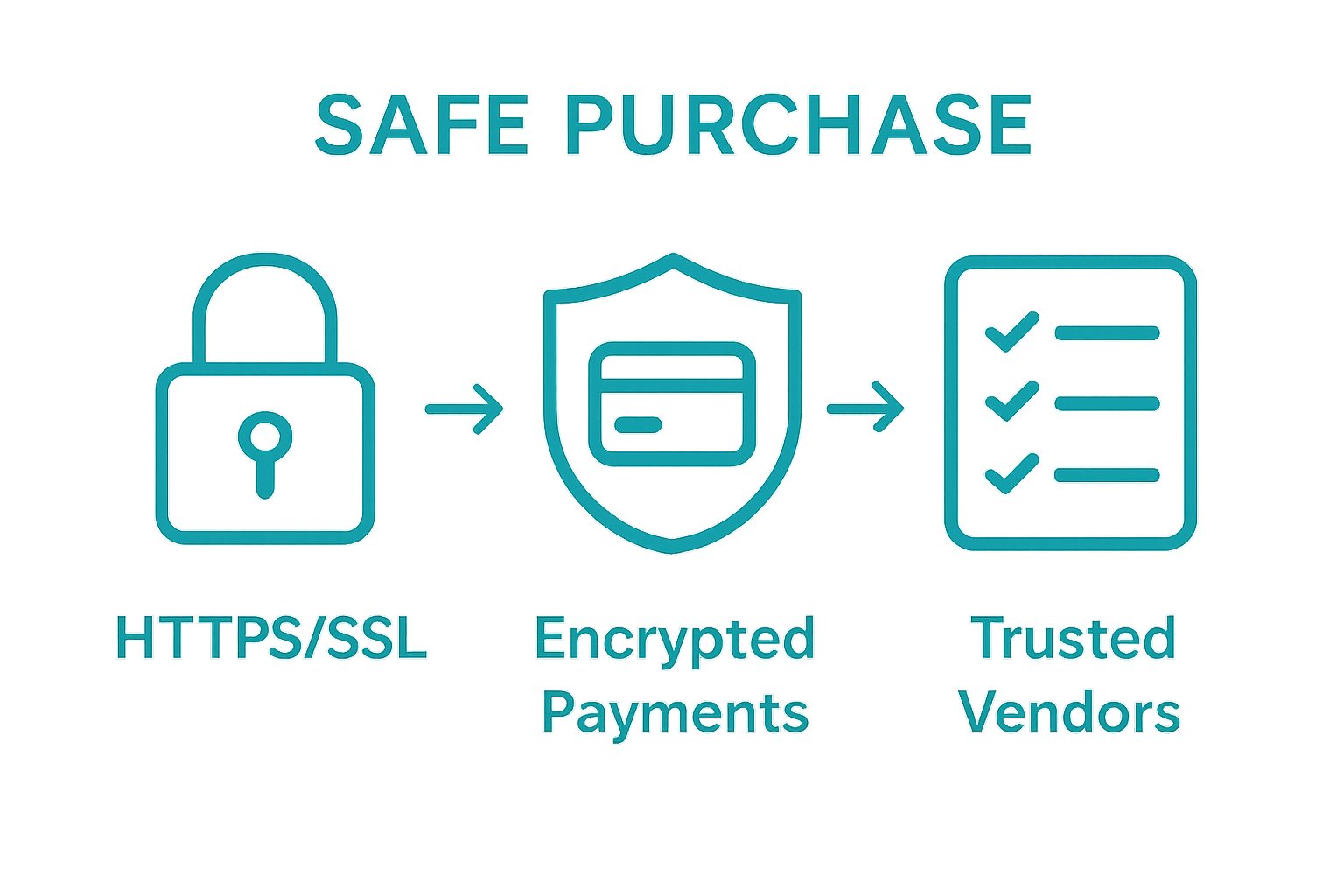
Protecting personal data requires proactive and strategic digital behavior. Consumers must understand that every online interaction potentially exposes sensitive information, making mindful engagement crucial.
Essential protection strategies involve:
By adopting these principles, consumers transform online shopping from a potential risk into a secure and convenient experience. Understanding and implementing robust digital safety measures empowers individuals to confidently navigate the evolving landscape of electronic commerce.
Online shopping security features represent sophisticated technological safeguards designed to create a protected digital transaction environment. These intricate mechanisms work simultaneously to defend consumers against potential cyber threats and unauthorized access.
Security features function as complex layers of defense that intercept and neutralize potential digital risks before they can compromise personal or financial information. According to the Federal Trade Commission, these technological shields operate through multiple interconnected strategies.
Core protection mechanisms include:
Modern online security extends beyond traditional password protection, implementing sophisticated authentication methods that create multiple verification checkpoints. These strategies significantly reduce the potential for unauthorized access and financial fraud.
Key authentication approaches involve:
By integrating these advanced security features, online platforms create dynamic defense systems that adapt and respond to emerging digital threats. Consumers benefit from increasingly robust protection mechanisms that make online shopping safer and more reliable than ever before.
This table outlines some of the most important security features used to protect online purchases, including a brief description of how each feature helps ensure safe transactions.
| Security Feature | Description |
|---|---|
| Encryption Technologies | Convert sensitive information into unreadable code |
| SSL Certificates | Create authenticated, secure communication channels |
| Tokenization | Replace sensitive data with unique identification symbols |
| Real-Time Fraud Detection | Monitor transactions for suspicious patterns in real time |
| Multi-Factor Authentication | Require multiple verification steps to access accounts |
| Biometric Verification | Use physical characteristics (like fingerprints) for security |
Determining the reliability of online retailers is a critical skill in maintaining safe digital shopping experiences. Consumers must develop a comprehensive approach to assessing the credibility and authenticity of digital marketplaces before engaging in financial transactions.
Trustworthiness can be evaluated through multiple interconnected verification methods. According to the Federal Trade Commission, consumers should employ a systematic approach to assessing online retail platforms.
Key credibility indicators include:
Recognizing potential warning signs is equally important in evaluating online retailer trustworthiness. Consumers must remain vigilant and identify potential indicators of fraudulent or unreliable platforms.
Significant warning signs to monitor:
By systematically analyzing these elements, consumers can make informed decisions and minimize risks associated with online shopping. Developing a critical eye for digital marketplace authenticity transforms potential vulnerabilities into opportunities for secure and confident purchasing experiences.

You care about protecting your information and making secure purchases. The risks of online shopping—from phishing scams to fake product listings—can feel overwhelming. This is why putting safety first is more important than ever. At Mrs. Mattie, your security is our top priority, and our entire site is built around providing a trusted, worry-free shopping experience.

Explore our curated Products selection, all backed by secure payment gateways and transparent policies, so you never have to question the safety of your experience. Ready to take the next step in secure online shopping? Visit mrs.mattie.com today and discover how easy it is to shop with confidence and peace of mind. Shop now to experience a higher level of security and support with every order.
Safe online shopping includes secure website verification (checking for HTTPS and SSL certificates), protected payment gateways using encrypted transaction channels, strong password management, and maintaining updated security software.
To protect your personal information, minimize the information shared during online registrations, use unique passwords for different accounts, enable two-factor authentication, and avoid using public Wi-Fi for financial transactions.
Common online shopping scams include phishing scams (fraudulent websites stealing personal information), credit card fraud (unauthorized transactions), identity theft (collecting personal data for malicious uses), and fake product listings (deceptive sellers offering counterfeit or non-existent goods).
To evaluate an online retailer’s trustworthiness, check for secure website protocols (HTTPS and SSL certificates), review transparent contact information, assess website design quality, and look for comprehensive return policies. Also, be alert for red flags such as unrealistic prices and lack of customer reviews.
d6rwqt




Leave a comment