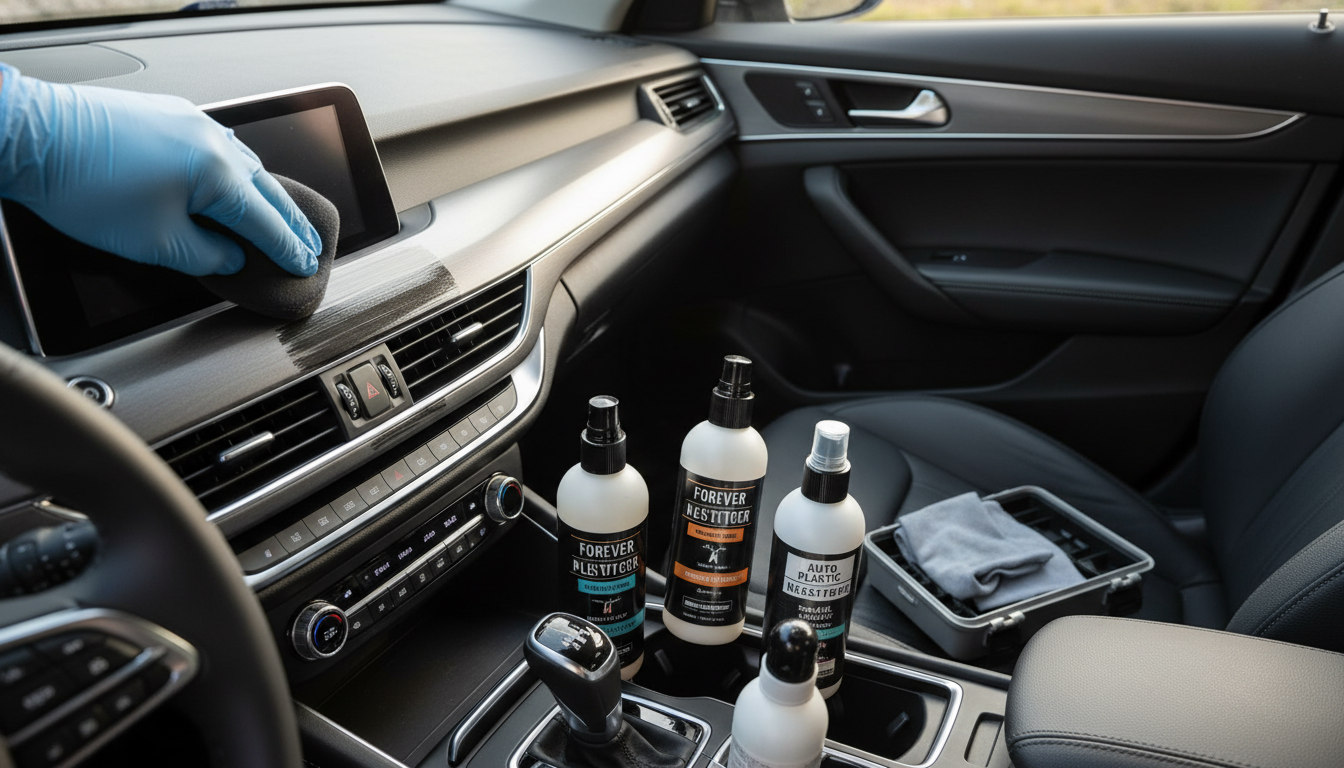
The best auto plastic restorer is one that restores deep color, leaves an even finish (not blotchy or greasy), and holds up through rain, sun, and routine washes. For most drivers, a dedicated trim and plastic restorer designed for exterior automotive plastics will outperform quick fixes because it’s made to bond to textured trim, resist UV fading, and dry to a controlled sheen.
Look for a formula that:
If you want a deeper, “back-to-black” look with gloss done right, follow the step-by-step guidance here: Guide: Back to Black Plastic & Leather Restorer (Gloss Done Right).
Longevity usually comes down to prep and the product’s ability to cure on the surface. Clean the trim thoroughly first (remove road film and old dressings), let it dry, then apply the restorer in thin, even coats. A restorer that levels well on textured plastic will look darker and more uniform, and it’s less likely to run or streak after the first rain.
For daily drivers parked outside, prioritize UV resistance and water repellency. For garage-kept cars or show vehicles, you can lean more toward appearance (like richer gloss) as long as it doesn’t stay greasy.
Wash and degrease the trim, dry it completely, then apply a dedicated plastic restorer in thin, even coats. Buff off excess and allow it to cure so the finish sets without streaks.
WD-40 can temporarily darken plastic, but it’s not a true restorer and typically fades quickly. It can also leave an oily residue that attracts dust and may interfere with longer-lasting trim products.
The best auto plastic restorer is one that restores deep color, leaves an even finish (not blotchy or greasy), and holds up through rain, sun, and routine washes. For most drivers, a dedicated trim and plastic restorer designed for exterior automotive plastics will outperform quick fixes because it’s made to bond to textured trim, resist UV fading, and dry to a controlled sheen.
Look for a formula that:
If you want a deeper, “back-to-black” look with gloss done right, follow the step-by-step guidance here: Guide: Back to Black Plastic & Leather Restorer (Gloss Done Right).
Longevity usually comes down to prep and the product’s ability to cure on the surface. Clean the trim thoroughly first (remove road film and old dressings), let it dry, then apply the restorer in thin, even coats. A restorer that levels well on textured plastic will look darker and more uniform, and it’s less likely to run or streak after the first rain.
For daily drivers parked outside, prioritize UV resistance and water repellency. For garage-kept cars or show vehicles, you can lean more toward appearance (like richer gloss) as long as it doesn’t stay greasy.
Wash and degrease the trim, dry it completely, then apply a dedicated plastic restorer in thin, even coats. Buff off excess and allow it to cure so the finish sets without streaks.
WD-40 can temporarily darken plastic, but it’s not a true restorer and typically fades quickly. It can also leave an oily residue that attracts dust and may interfere with longer-lasting trim products.
The best auto plastic restorer is one that restores deep color, leaves an even finish (not blotchy or greasy), and holds up through rain, sun, and routine washes. For most drivers, a dedicated trim and plastic restorer designed for exterior automotive plastics will outperform quick fixes because it’s made to bond to textured trim, resist UV fading, and dry to a controlled sheen.
Look for a formula that:
If you want a deeper, “back-to-black” look with gloss done right, follow the step-by-step guidance here: Guide: Back to Black Plastic & Leather Restorer (Gloss Done Right).
Longevity usually comes down to prep and the product’s ability to cure on the surface. Clean the trim thoroughly first (remove road film and old dressings), let it dry, then apply the restorer in thin, even coats. A restorer that levels well on textured plastic will look darker and more uniform, and it’s less likely to run or streak after the first rain.
For daily drivers parked outside, prioritize UV resistance and water repellency. For garage-kept cars or show vehicles, you can lean more toward appearance (like richer gloss) as long as it doesn’t stay greasy.
Wash and degrease the trim, dry it completely, then apply a dedicated plastic restorer in thin, even coats. Buff off excess and allow it to cure so the finish sets without streaks.
WD-40 can temporarily darken plastic, but it’s not a true restorer and typically fades quickly. It can also leave an oily residue that attracts dust and may interfere with longer-lasting trim products.
The best auto plastic restorer is one that restores deep color, leaves an even finish (not blotchy or greasy), and holds up through rain, sun, and routine washes. For most drivers, a dedicated trim and plastic restorer designed for exterior automotive plastics will outperform quick fixes because it’s made to bond to textured trim, resist UV fading, and dry to a controlled sheen.
Look for a formula that:
If you want a deeper, “back-to-black” look with gloss done right, follow the step-by-step guidance here: Guide: Back to Black Plastic & Leather Restorer (Gloss Done Right).
Longevity usually comes down to prep and the product’s ability to cure on the surface. Clean the trim thoroughly first (remove road film and old dressings), let it dry, then apply the restorer in thin, even coats. A restorer that levels well on textured plastic will look darker and more uniform, and it’s less likely to run or streak after the first rain.
For daily drivers parked outside, prioritize UV resistance and water repellency. For garage-kept cars or show vehicles, you can lean more toward appearance (like richer gloss) as long as it doesn’t stay greasy.
Wash and degrease the trim, dry it completely, then apply a dedicated plastic restorer in thin, even coats. Buff off excess and allow it to cure so the finish sets without streaks.
WD-40 can temporarily darken plastic, but it’s not a true restorer and typically fades quickly. It can also leave an oily residue that attracts dust and may interfere with longer-lasting trim products.






Leave a comment