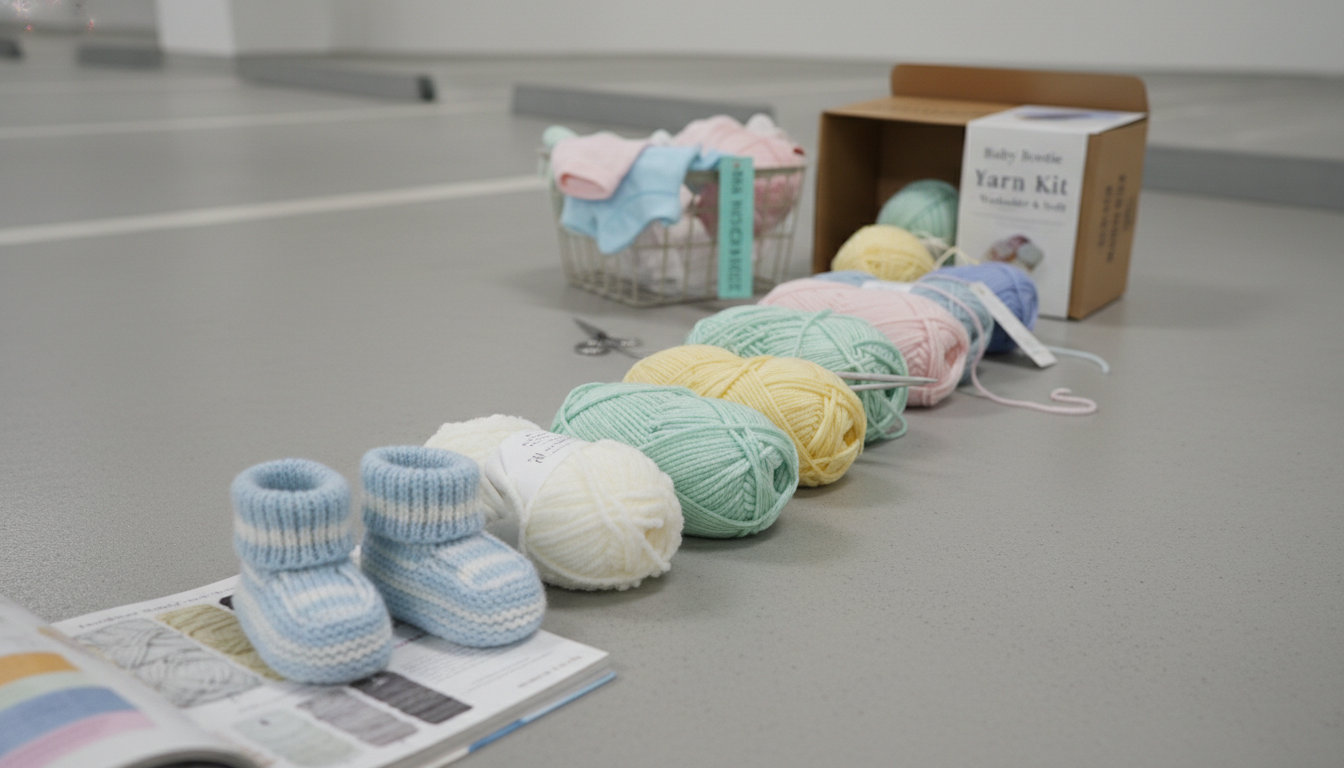
The best yarn for baby booties is a soft, washable yarn that won’t irritate sensitive skin and will hold up to frequent laundering. For most families, a high-quality acrylic or acrylic blend is the most practical choice because it’s gentle, budget-friendly, and easy to care for.
Softness: Choose yarn labeled “baby,” “soft,” or “anti-pilling.” Baby feet are delicate, so scratchy fibers can cause redness or fussiness.
Machine-washable care: Booties get messy quickly. A yarn that can be machine washed (and ideally tumble dried) makes life easier and helps the booties get worn more often.
Low lint and minimal shedding: Avoid fuzzy novelty yarns that shed fibers. Smooth yarns keep the booties looking tidy and reduce stray fluff.
Good stretch and bounce: A yarn with a bit of elasticity helps booties stay on without feeling tight. This is especially helpful around the cuff/ankle area.
Premium acrylic (or acrylic blends): Great everyday option—soft, durable, and easy-care. Anti-pilling versions look newer longer, even after repeated washes.
Superwash wool: Warm and naturally breathable, making it a strong choice for cooler climates. Make sure it’s truly “superwash” and not prone to scratchiness.
Cotton blends: Ideal for warm weather or indoor wear. Cotton alone can feel less stretchy, so blends (cotton/acrylic or cotton/bamboo) often fit better and keep their shape.
Merino (baby merino): Exceptionally soft and temperature-regulating, but usually pricier and may require more careful washing depending on the label.
Skip rough wools, highly textured novelty yarns, and yarns that require delicate hand-washing only. If the care instructions feel fussy, the booties may end up unused.
For more tips on keeping booties warm, comfy, and secure on wiggly feet, visit the full guide: knitted baby booties comfort and stay-on guide.
A smooth, soft, medium-weight yarn (often labeled DK or worsted) that’s machine washable is a dependable choice for crochet booties, since it shows stitches clearly and holds up well to wear and washing.
Soft, breathable, non-irritating fibers like baby acrylic, superwash merino, or cotton blends tend to work best. The right pick depends on climate and how often the booties will be washed.
The best yarn for baby booties is a soft, washable yarn that won’t irritate sensitive skin and will hold up to frequent laundering. For most families, a high-quality acrylic or acrylic blend is the most practical choice because it’s gentle, budget-friendly, and easy to care for.
Softness: Choose yarn labeled “baby,” “soft,” or “anti-pilling.” Baby feet are delicate, so scratchy fibers can cause redness or fussiness.
Machine-washable care: Booties get messy quickly. A yarn that can be machine washed (and ideally tumble dried) makes life easier and helps the booties get worn more often.
Low lint and minimal shedding: Avoid fuzzy novelty yarns that shed fibers. Smooth yarns keep the booties looking tidy and reduce stray fluff.
Good stretch and bounce: A yarn with a bit of elasticity helps booties stay on without feeling tight. This is especially helpful around the cuff/ankle area.
Premium acrylic (or acrylic blends): Great everyday option—soft, durable, and easy-care. Anti-pilling versions look newer longer, even after repeated washes.
Superwash wool: Warm and naturally breathable, making it a strong choice for cooler climates. Make sure it’s truly “superwash” and not prone to scratchiness.
Cotton blends: Ideal for warm weather or indoor wear. Cotton alone can feel less stretchy, so blends (cotton/acrylic or cotton/bamboo) often fit better and keep their shape.
Merino (baby merino): Exceptionally soft and temperature-regulating, but usually pricier and may require more careful washing depending on the label.
Skip rough wools, highly textured novelty yarns, and yarns that require delicate hand-washing only. If the care instructions feel fussy, the booties may end up unused.
For more tips on keeping booties warm, comfy, and secure on wiggly feet, visit the full guide: knitted baby booties comfort and stay-on guide.
A smooth, soft, medium-weight yarn (often labeled DK or worsted) that’s machine washable is a dependable choice for crochet booties, since it shows stitches clearly and holds up well to wear and washing.
Soft, breathable, non-irritating fibers like baby acrylic, superwash merino, or cotton blends tend to work best. The right pick depends on climate and how often the booties will be washed.
The best yarn for baby booties is a soft, washable yarn that won’t irritate sensitive skin and will hold up to frequent laundering. For most families, a high-quality acrylic or acrylic blend is the most practical choice because it’s gentle, budget-friendly, and easy to care for.
Softness: Choose yarn labeled “baby,” “soft,” or “anti-pilling.” Baby feet are delicate, so scratchy fibers can cause redness or fussiness.
Machine-washable care: Booties get messy quickly. A yarn that can be machine washed (and ideally tumble dried) makes life easier and helps the booties get worn more often.
Low lint and minimal shedding: Avoid fuzzy novelty yarns that shed fibers. Smooth yarns keep the booties looking tidy and reduce stray fluff.
Good stretch and bounce: A yarn with a bit of elasticity helps booties stay on without feeling tight. This is especially helpful around the cuff/ankle area.
Premium acrylic (or acrylic blends): Great everyday option—soft, durable, and easy-care. Anti-pilling versions look newer longer, even after repeated washes.
Superwash wool: Warm and naturally breathable, making it a strong choice for cooler climates. Make sure it’s truly “superwash” and not prone to scratchiness.
Cotton blends: Ideal for warm weather or indoor wear. Cotton alone can feel less stretchy, so blends (cotton/acrylic or cotton/bamboo) often fit better and keep their shape.
Merino (baby merino): Exceptionally soft and temperature-regulating, but usually pricier and may require more careful washing depending on the label.
Skip rough wools, highly textured novelty yarns, and yarns that require delicate hand-washing only. If the care instructions feel fussy, the booties may end up unused.
For more tips on keeping booties warm, comfy, and secure on wiggly feet, visit the full guide: knitted baby booties comfort and stay-on guide.
A smooth, soft, medium-weight yarn (often labeled DK or worsted) that’s machine washable is a dependable choice for crochet booties, since it shows stitches clearly and holds up well to wear and washing.
Soft, breathable, non-irritating fibers like baby acrylic, superwash merino, or cotton blends tend to work best. The right pick depends on climate and how often the booties will be washed.
The best yarn for baby booties is a soft, washable yarn that won’t irritate sensitive skin and will hold up to frequent laundering. For most families, a high-quality acrylic or acrylic blend is the most practical choice because it’s gentle, budget-friendly, and easy to care for.
Softness: Choose yarn labeled “baby,” “soft,” or “anti-pilling.” Baby feet are delicate, so scratchy fibers can cause redness or fussiness.
Machine-washable care: Booties get messy quickly. A yarn that can be machine washed (and ideally tumble dried) makes life easier and helps the booties get worn more often.
Low lint and minimal shedding: Avoid fuzzy novelty yarns that shed fibers. Smooth yarns keep the booties looking tidy and reduce stray fluff.
Good stretch and bounce: A yarn with a bit of elasticity helps booties stay on without feeling tight. This is especially helpful around the cuff/ankle area.
Premium acrylic (or acrylic blends): Great everyday option—soft, durable, and easy-care. Anti-pilling versions look newer longer, even after repeated washes.
Superwash wool: Warm and naturally breathable, making it a strong choice for cooler climates. Make sure it’s truly “superwash” and not prone to scratchiness.
Cotton blends: Ideal for warm weather or indoor wear. Cotton alone can feel less stretchy, so blends (cotton/acrylic or cotton/bamboo) often fit better and keep their shape.
Merino (baby merino): Exceptionally soft and temperature-regulating, but usually pricier and may require more careful washing depending on the label.
Skip rough wools, highly textured novelty yarns, and yarns that require delicate hand-washing only. If the care instructions feel fussy, the booties may end up unused.
For more tips on keeping booties warm, comfy, and secure on wiggly feet, visit the full guide: knitted baby booties comfort and stay-on guide.
A smooth, soft, medium-weight yarn (often labeled DK or worsted) that’s machine washable is a dependable choice for crochet booties, since it shows stitches clearly and holds up well to wear and washing.
Soft, breathable, non-irritating fibers like baby acrylic, superwash merino, or cotton blends tend to work best. The right pick depends on climate and how often the booties will be washed.



Leave a comment