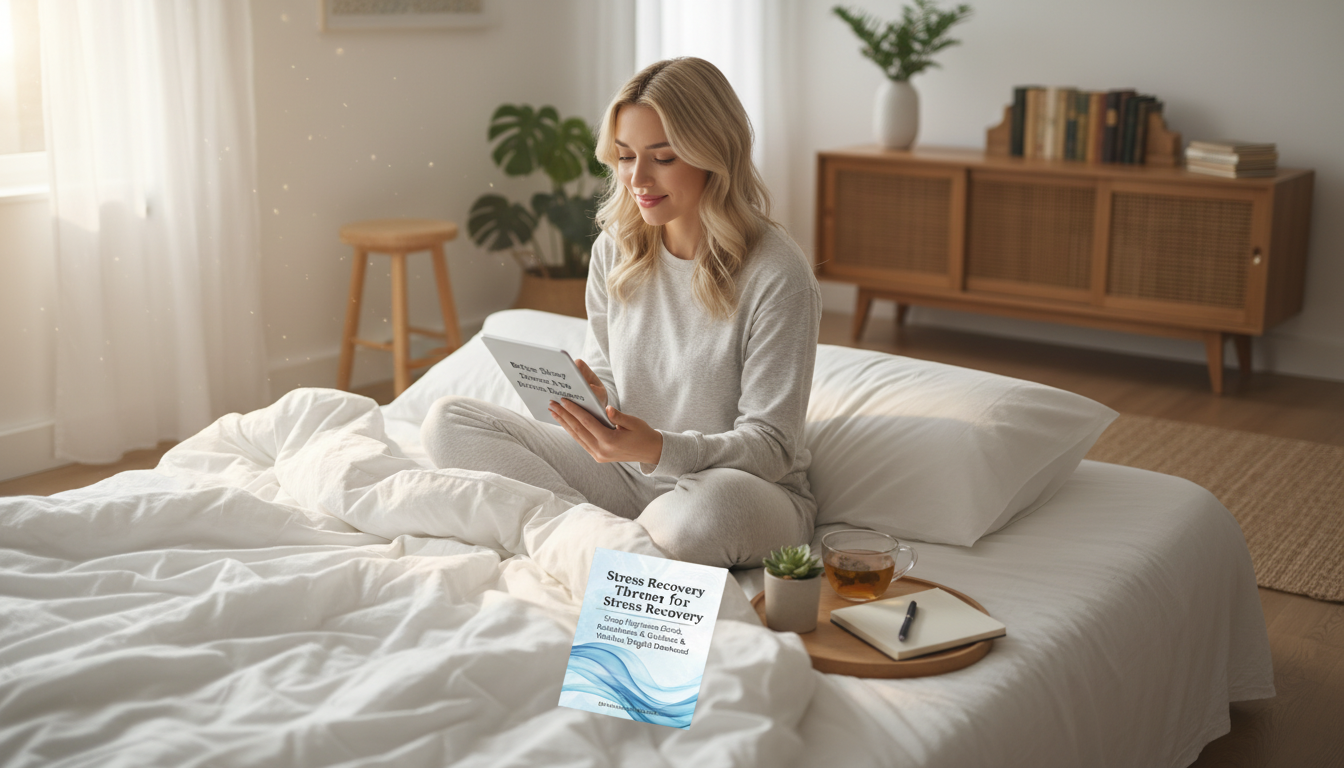
Better sleep is one of the fastest ways to feel more resilient under stress. When nights are fragmented or too short, the body’s stress response can stay “on,” making mood, focus, and energy harder to manage. The good news: sleep doesn’t have to be perfect to be restorative. A few steady habits—especially around light, timing, and a realistic wind-down—often start paying off within 1–2 weeks.
Sleep supports emotional balance and helps regulate stress hormones so everyday challenges feel more manageable. When sleep is consistently poor, stress sensitivity often rises—along with irritability, cravings, and difficulty concentrating. The aim isn’t a flawless night every night; it’s building a repeatable routine that improves the odds of deeper, more refreshing sleep.
Authoritative sleep guidance and basics can be found from the Centers for Disease Control and Prevention (CDC), the National Heart, Lung, and Blood Institute (NHLBI), and the American Academy of Sleep Medicine.
Sleep hygiene isn’t about rigid rules—it’s about stacking small cues that tell your body it’s safe to power down. Start with the highest-impact anchors:
| Habit | What to do | Why it helps |
|---|---|---|
| Wake time | Keep the same wake time most days | Stabilizes circadian rhythm and improves sleep pressure |
| Light exposure | Get outdoor light within 1 hour of waking | Supports a stronger day/night signal |
| Caffeine | Stop caffeine by early afternoon (earlier if sensitive) | Reduces nighttime alertness and awakenings |
| Evening lighting | Use warm, dim light 1–2 hours before bed | Encourages a melatonin-friendly environment |
| Bedroom setup | Cool, dark, quiet; remove clutter and work cues | Signals safety and rest to the brain |
| If awake | Leave bed briefly; return when sleepy | Breaks the bed–wakefulness connection |
On high-stress days, complex routines often collapse. A better approach is a simple 20–40 minute sequence that’s easy to repeat even when motivation is low.
These tools aren’t about forcing sleep—they’re about lowering arousal so sleep can arrive naturally.
If you’d like a ready-to-use system, consider Stress Recovery Through Better Sleep | Sleep Hygiene eBook, Relaxation Guide, Mindfulness & Wellness Digital Download (instant digital access) to help set up your routine and keep it consistent.
For a surprisingly common sleep disruptor—late-night cleaning spirals and “I can’t rest until the house is handled”—a lighter, faster reset can help. Clean Faster, Stay Calm – A Stress-Free Speed Cleaning Guide for Busy Homes supports calmer evenings by reducing the time and stress you spend trying to catch up.
Some people notice small wins within a few nights, but 1–2 weeks of consistent wake time, morning light, and a steady wind-down is a common window. Track simple markers like time to fall asleep, fewer awakenings, and morning energy.
Try a short “worry window” earlier in the evening, write a brief plan for tomorrow, and use one relaxation practice like box breathing or progressive muscle relaxation. If you’re wide awake, get out of bed briefly in dim light to avoid pairing the bed with rumination.
Usually it works better to keep a consistent wake time and shift bedtime earlier gradually (15–30 minutes) rather than forcing an early bedtime. Strong sleep pressure and good circadian timing tend to produce better results than trying to “make” sleep happen.






Leave a comment