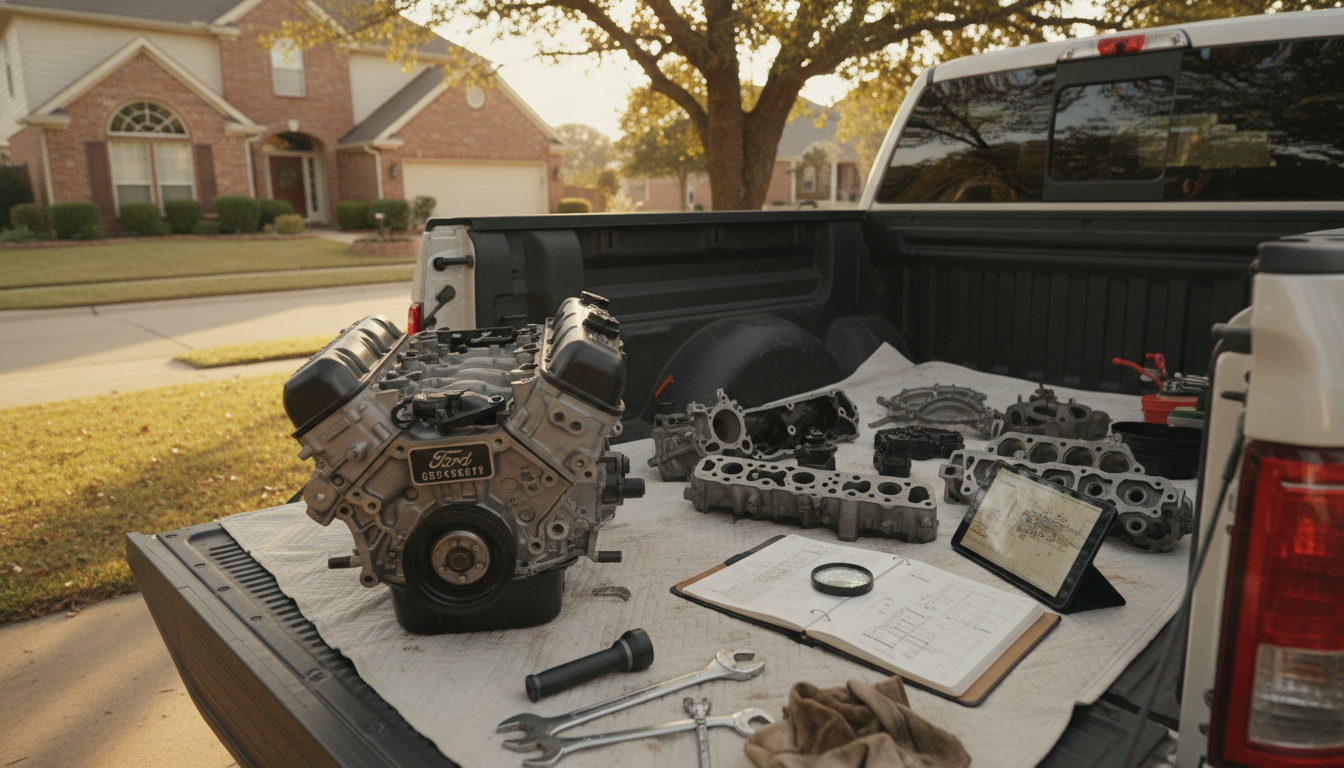
To figure out which Ford V8 is in your vehicle, start with the fastest identifiers (VIN and under-hood labels), then confirm with physical engine details like the casting number, firing order, and key bolt patterns. This combo approach prevents mix-ups caused by engine swaps, rebuilt long blocks, or missing decals.
On most Fords, the VIN can point to the original engine configuration using an “engine code” character. Find the VIN at the lower driver-side windshield or on the driver door jamb. Then compare that code to a Ford VIN/engine chart for the model year. If the vehicle has been swapped, the VIN may only tell you what it left the factory with—not what’s installed now.
Many Ford trucks and cars have an emissions information sticker on the radiator support or underside of the hood. It often lists engine family/displacement (like 5.0L, 5.4L, 6.2L) and sometimes the calibration or timing specs that narrow the exact variant.
Casting numbers are among the most reliable identifiers. Common locations include the side of the block above the oil pan rail, near the starter area, or at the rear of the block; head castings are often under the valve cover or on the end of the head. Clean the area, use a flashlight, and write down the entire casting string before looking it up.
Quick checks can point you toward the right family: the intake manifold shape (especially on modular 4.6/5.4/5.0 Coyote), coil-on-plug vs. distributor, valve cover fastener style, and front accessory layout. Small-block Windsor engines (289/302/351W) look different from 351 Cleveland, FE-series (like 390/428), and modular engines.
Once you suspect a family, verify details like firing order (often found in service literature or on intake/valve cover decals) and how ignition is configured. These specifics help differentiate similar displacements and generations.
For a styling upgrade that complements your V8 identity, see the main guide here: V8 flag emblem badge guide.
Yes, the VIN usually includes an engine code that identifies what the vehicle originally came with. If the engine has been swapped, the VIN won’t reflect the current engine, so verify with casting numbers or under-hood labels.
Use a combination of VIN/under-hood emissions label, block and head casting numbers, and visual identifiers like intake design, ignition type, and accessory layout. Confirm the final match with family-specific details such as firing order and component patterns.






Leave a comment