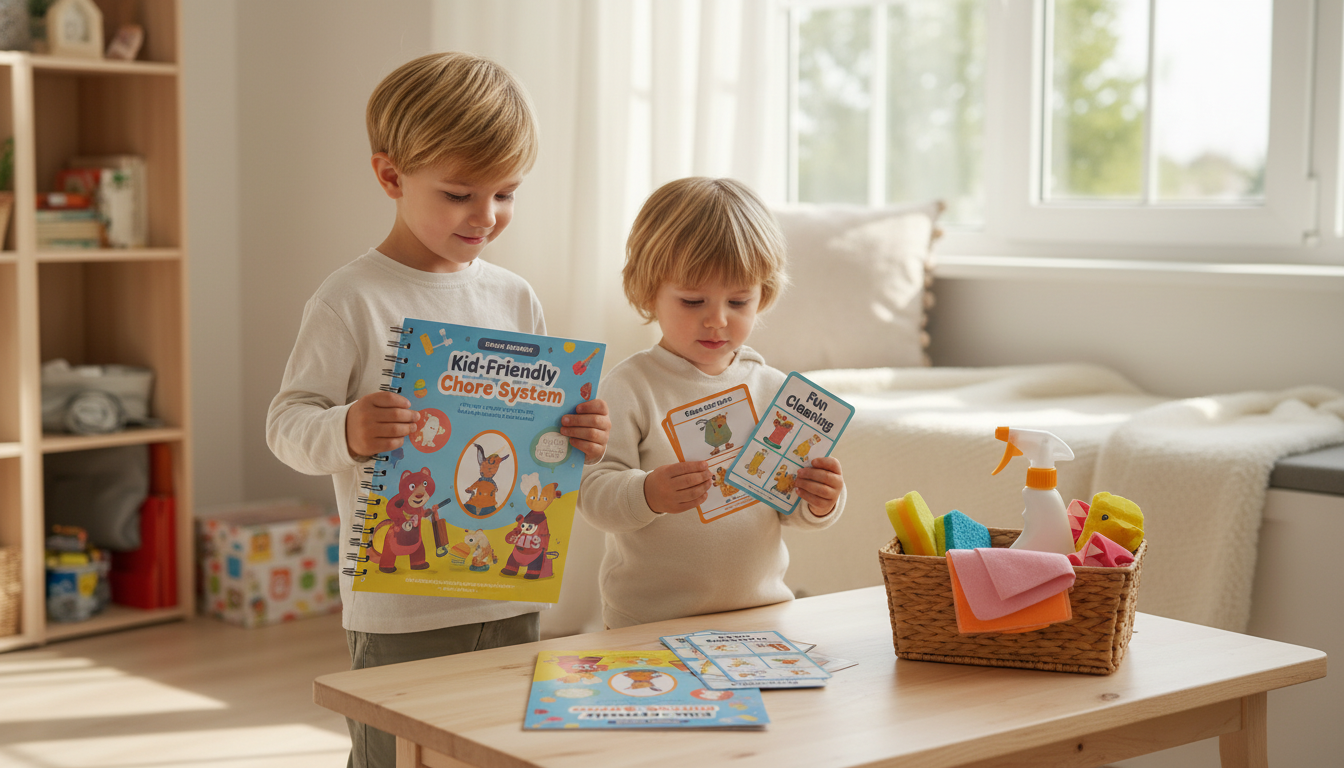
Getting kids to help with cleaning doesn’t have to turn into nagging or negotiations. With the right routines, clear expectations, and a few playful systems, chores can become a predictable part of family life—and a genuine help. This guide breaks down simple, age-appropriate ways to share household work, reduce daily mess, and build responsibility without battles.
Most chore resistance isn’t “laziness”—it’s overwhelm. Kids push back when a task feels too big (“Clean your room”), too vague (“Tidy up”), or impossible to finish in one go. The fix is usually smaller steps, a clearer finish line, and a repeatable routine.
Motivation goes up when chores are short, clearly defined, and anchored to the same time and sequence each day. Predictability reduces the mental load for everyone: kids know what’s coming, and parents don’t have to reinvent instructions.
A “team household” mindset also shifts the tone. Instead of treating chores as something kids do to earn rewards (or avoid consequences), frame it as contribution: everyone who lives here helps it run. Praise effort and follow-through—not perfection—so kids build confidence and resilience.
Finally, visual cues matter. A simple checklist on the fridge can replace repeated reminders and help kids feel capable and independent—especially if each chore is broken into a few obvious steps.
The goal isn’t a flawless house; it’s a house that resets quickly. Start small with two daily non-negotiables and keep them consistent for a couple of weeks. Many families do well with “dishes cleared” plus a “10-minute tidy.”
Next, create zones (kitchen, living room, bedrooms, bathrooms). Zones answer the question “Where do I start?” and prevent kids from bouncing around and getting distracted. Make supplies kid-accessible with a low shelf: wipes, microfiber cloths, a small broom, and a labeled caddy they can carry.
To reduce arguing and redo’s, decide what “done” looks like in one sentence per chore—simple, measurable, and realistic for your child’s age. For example: “Floor is clear and shoes are in the bin.”
| Part of the system | What it looks like | Why it helps |
|---|---|---|
| Daily reset | 10 minutes after dinner: clear surfaces + quick floor pick-up | Prevents clutter from becoming a weekend crisis |
| Zone focus | One zone per day: Mon kitchen, Tue living room, etc. | Breaks cleaning into small wins |
| Visual checklist | One page on the fridge or in a sleeve | Less reminding; more independence |
| Supply station | Kid-safe tools in a labeled bin | Removes barriers and excuses |
| Family standard | One-sentence definition of “done” | Reduces arguing and redo’s |
Fun doesn’t have to mean constant rewards. Instead, add energy and momentum: beat-the-timer rounds, quick “before/after” photos, or a simple points chart that leads to a family activity (movie night, choosing dinner, a weekend outing). The focus stays on contribution while still feeling positive.
Choice is another powerful tool. When kids get to pick between two tasks (“wipe the table or pick up toys?”), they feel more control and less resistance. Music cues work surprisingly well too: one song equals one chore, and you stop when the song ends.
Try turning chores into roles: “Floor Patrol,” “Laundry Loader,” or “Snack Station Cleaner.” Roles help kids remember what they’re responsible for without you repeating it. Keep tasks short at first—5 minutes—then build stamina to 10 and 15 minutes over time.
The best chores for kids are safe, simple, and repeatable. Start with tasks that create a visible win (a clear floor, an empty sink, a tidy entryway). As consistency improves, expand responsibility—one small upgrade at a time.
| Age range | Best starter chores | Supervision |
|---|---|---|
| 2–4 | Toy pickup, hamper drop, wipe small spills | Constant, side-by-side |
| 5–7 | Table help, pet care, dusting, sock matching | Frequent check-ins |
| 8–10 | Dishwasher help, towels folding, vacuum small rooms | Light supervision |
| 11–13 | Laundry start, sink clean, mirror wipe, sweep | Occasional check |
| 14+ | Full zone resets, bathroom rotation, meal prep, own laundry | Outcome-based |
For guidance on building independence and choosing developmentally appropriate responsibilities, see resources from HealthyChildren.org (American Academy of Pediatrics) and the CDC child development guidance.
If you want a ready-to-use system, Smart Parent’s Bundle to Get Help with Cleaning: 3-in-1 Guide for Fun and Easy Household Chores is designed as a practical, family-friendly set of guides that turns cleaning into manageable routines and kid-help systems. Pair it with a visible checklist and a simple supply station to reduce daily friction.
To make the whole home easier to maintain (especially on busy weeks), combine it with Clean Faster, Stay Calm – A Stress-Free Speed Cleaning Guide for Busy Homes so the adult “reset” stays quick while kids handle their smaller repeatable tasks.
| Day | Focus | Goal |
|---|---|---|
| 1 | Family standard | Agree on “done” and where items belong |
| 2 | Assign starter chores | Each child owns 1–2 small repeatable tasks |
| 3 | Daily reset routine | 10-minute tidy becomes automatic |
| 4 | Zone practice | Complete one room with a checklist |
| 5 | Make it smoother | Adjust tasks that are too hard or too vague |
| 6 | Add fun mechanics | Timer/music/roles to improve participation |
| 7 | Review + rotate | Celebrate wins and set next week’s zones |
Focus on consistent routines, clear boundaries, and age-appropriate responsibility taught in small steps. Prioritize simple systems that reduce daily stress over perfection, and coach skills until your child can repeat them independently.





Leave a comment