
Employee motivation isn’t a fixed personality trait—it rises and falls with day-to-day conditions. Workload spikes, unclear priorities, missing tools, lack of recognition, limited growth, or strained team dynamics can quietly drain energy even when compensation is competitive. When motivation drops, the symptoms are often behavioral: missed deadlines, minimal initiative, more friction between teammates, and a “quietly checked out” vibe that’s hard to measure unless you’re looking for it.
When motivation is strong, teams tend to persist through obstacles, solve problems faster, and produce better outcomes for customers. It also supports retention, because people are more likely to stay when effort feels noticed and progress feels possible. A checklist helps because it replaces guesswork with repeatable management actions—especially helpful when bias or assumptions might otherwise shape how leaders interpret performance.
For a helpful research lens, Self-Determination Theory highlights how autonomy, competence, and relatedness fuel intrinsic motivation (see Self-Determination Theory (overview)), while workplace engagement findings from Gallup reinforce how clarity, development, and recognition connect to real business outcomes.
Before changing incentives or launching new initiatives, verify the fundamentals. Start by clarifying the “what” and the “why.” In one paragraph, define what success looks like this week and why it matters—then ask team members to repeat it back in their own words. If they can’t, motivation often fades because effort feels disconnected from results.
Next, remove friction. Motivation shrinks when people have to fight for permissions, hunt down files, or use workarounds to do routine tasks. Finally, right-size workload. Chronic overtime, constant context switching, and unrealistic timelines turn even high performers into survival-mode workers. A simple one-week reset can make a visible difference: simplify one or two processes and eliminate one recurring blocker.
| Area | What to check | Simple fix to try this week |
|---|---|---|
| Role clarity | People can’t define priorities or success measures | Write 3 priorities for the week; tie each to a metric or outcome |
| Resources | Missing tools, permissions, or outdated systems | Create a shared list of access needs; set a 48-hour resolution target |
| Workload balance | Repeated deadline slips; constant urgent requests | Add a “not doing” list; cap work-in-progress per person |
| Process friction | Rework, unclear handoffs, duplicate approvals | Map one workflow on one page; remove one approval step |
| Meeting load | Too many meetings reduce deep work | Convert one meeting to an async update; protect 2 focus blocks per week |
Motivation improves when people can see a finish line. Use short horizons: a clear two-week goal that’s achievable and visible builds momentum fast. Connect tasks to impact by translating outputs (reports, tickets, deliverables) into outcomes (customer satisfaction, revenue protected, defects reduced, hours saved, risk lowered). When people can explain how their work changes something real, effort feels worthwhile.
Make progress obvious with a simple board, checklist, or lightweight dashboard. Avoid vague directives like “do better.” Replace them with measurable behaviors (e.g., “reduce handoff delays by using the new intake form for every request”) or concrete deliverables (“ship the updated onboarding doc by Friday and test it with two new hires”).
Recognition works best when it’s specific and timely. Name the behavior, the impact, and why it mattered: “You escalated the blocker early, which protected the deadline and saved the client from confusion.” That level of clarity reinforces repeatable habits instead of rewarding random bursts of heroics.
Balance private and public praise based on the individual. Some people love a team shout-out; others prefer a direct message. Also, reward consistency—not just last-minute saves. When teams only celebrate emergencies, they unintentionally train people to operate in crisis mode. Aim for recognition within 24–48 hours, while the effort is still fresh.
Autonomy is a powerful motivator when it’s paired with clarity. Delegate decisions, not just tasks: let people choose sequencing, methods, and problem-solving approaches. Then define guardrails—budget, timeline, quality standards, and escalation points—so autonomy doesn’t become ambiguity.
Reduce approval bottlenecks by setting thresholds for when approval is required versus optional. A practical manager prompt: “Bring two options and a recommendation.” It signals trust, builds decision-making muscle, and keeps leaders in a coaching role instead of becoming a constant gatekeeper.
Address conflict quickly. Unresolved tension drains energy and pulls focus away from shared goals. Also, follow through on promises—consistency and fairness are major drivers of sustained engagement. For more on well-being at work, explore the APA’s resources on healthy workplaces.
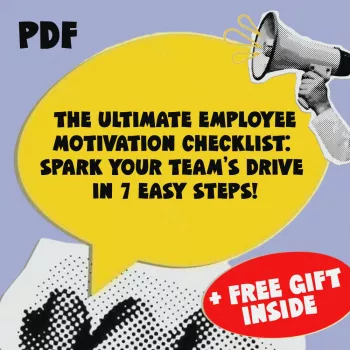
The Ultimate Employee Motivation Checklist: Spark Your Team’s Drive in 7 Easy Steps (Printable PDF) includes prompts for clarity, recognition, autonomy, growth, trust, and an easy cadence so improvements stick.
For leaders who are also trying to reduce stress outside of work (which often impacts energy at work), a quick reset at home can help protect bandwidth: Clean Faster, Stay Calm – A Stress-Free Speed Cleaning Guide for Busy Homes.
If you’re building small morale rituals for remote or hybrid teams (like a themed coffee chat), this can be a simple add-on: Cozy Pumpkin Spice Latte | Fall-Inspired Recipe Guide.
Motivation influences how much effort people invest, how long they persist through setbacks, how creatively they solve problems, and how willing they are to collaborate. It often shows up in measurable outcomes like productivity, quality, attendance, customer satisfaction, and retention—especially when goals are clear, autonomy is supported, and recognition is timely.





Leave a comment