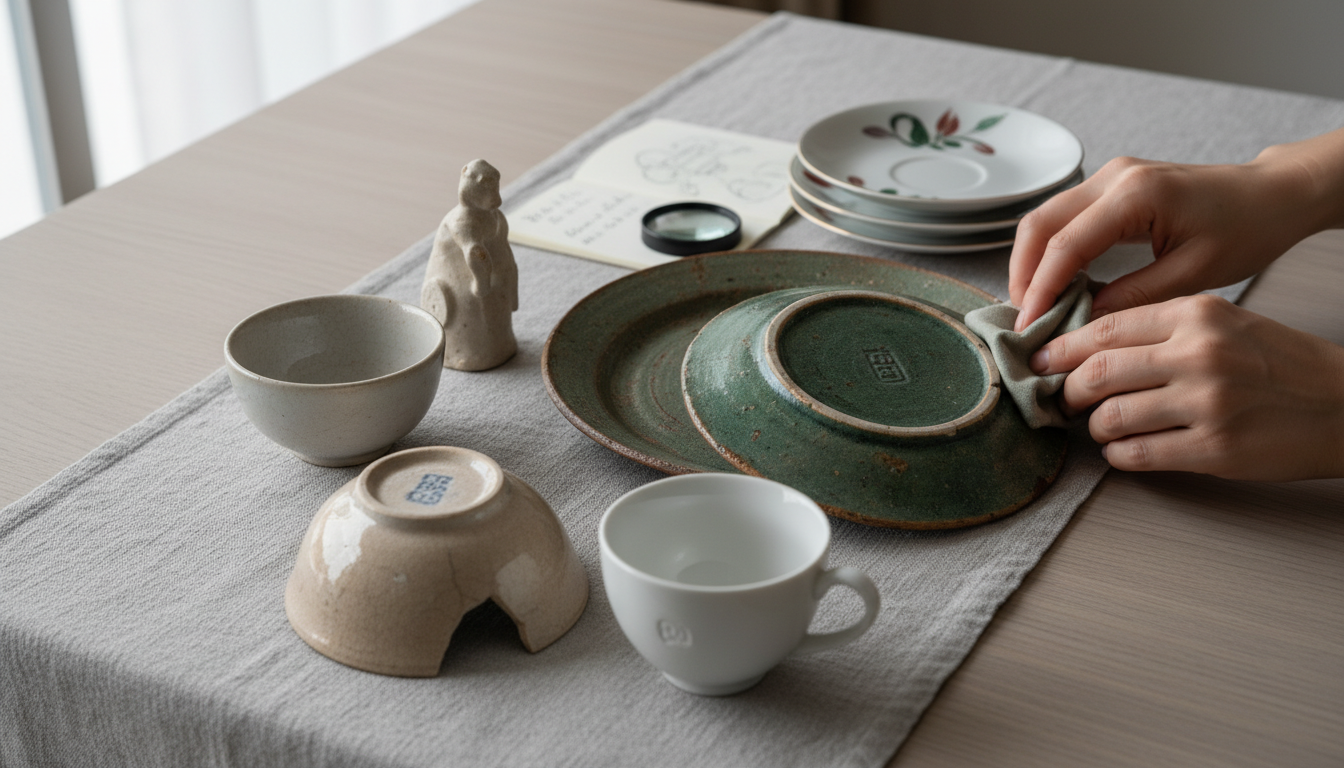
“Vintage” ceramic usually refers to pieces made roughly 20–100 years ago. Because styles get revived and marks get copied, the best approach is to look for several clues that line up—materials, construction, markings, and wear—rather than relying on just one detail.
Turn the piece over and look for a stamp, impressed mark, handwritten signature, or label residue. Older marks are often under the glaze (fired in) or impressed into the clay, while newer decorative logos may sit on top of the glaze. If you find a mark, compare it to known variations from the same maker—logos and country-of-origin wording changed over time.
Vintage glazes often show subtle variations: pooling in recessed areas, slight crazing (fine crackle lines), and color depth that’s hard to replicate perfectly. Be cautious, though—crazing can be artificially induced, and many modern ceramics intentionally mimic mid-century finishes.
Hand-thrown or hand-finished pieces may show trimming rings, slight asymmetry, or tool marks. Mold-made items can still be vintage, but look for clean seam lines and consistent thickness typical of modern mass production. The foot ring can also hint at age: older pieces may have a more worn or slightly rough base from kiln contact and handling.
Natural age shows up where hands and surfaces repeatedly touch: a softened base edge, small scuffs, or gentle fading on high points. “Perfectly distressed” wear in odd places, uniform abrasion, or fresh-looking chips can be signs of intentional aging.
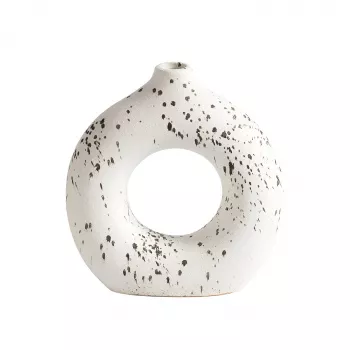
If you’re buying to style a space, date clues matter less than condition and how the piece fits your home. For guidance on choosing, styling, and caring for contemporary ceramics (including statement vases), visit this modern ceramic vase styling and care guide.
Antique typically means 100+ years old, while vintage is generally newer—often 20–100 years old. The exact cutoff can vary by seller and category, so it’s smart to ask for an estimated production decade.






Leave a comment