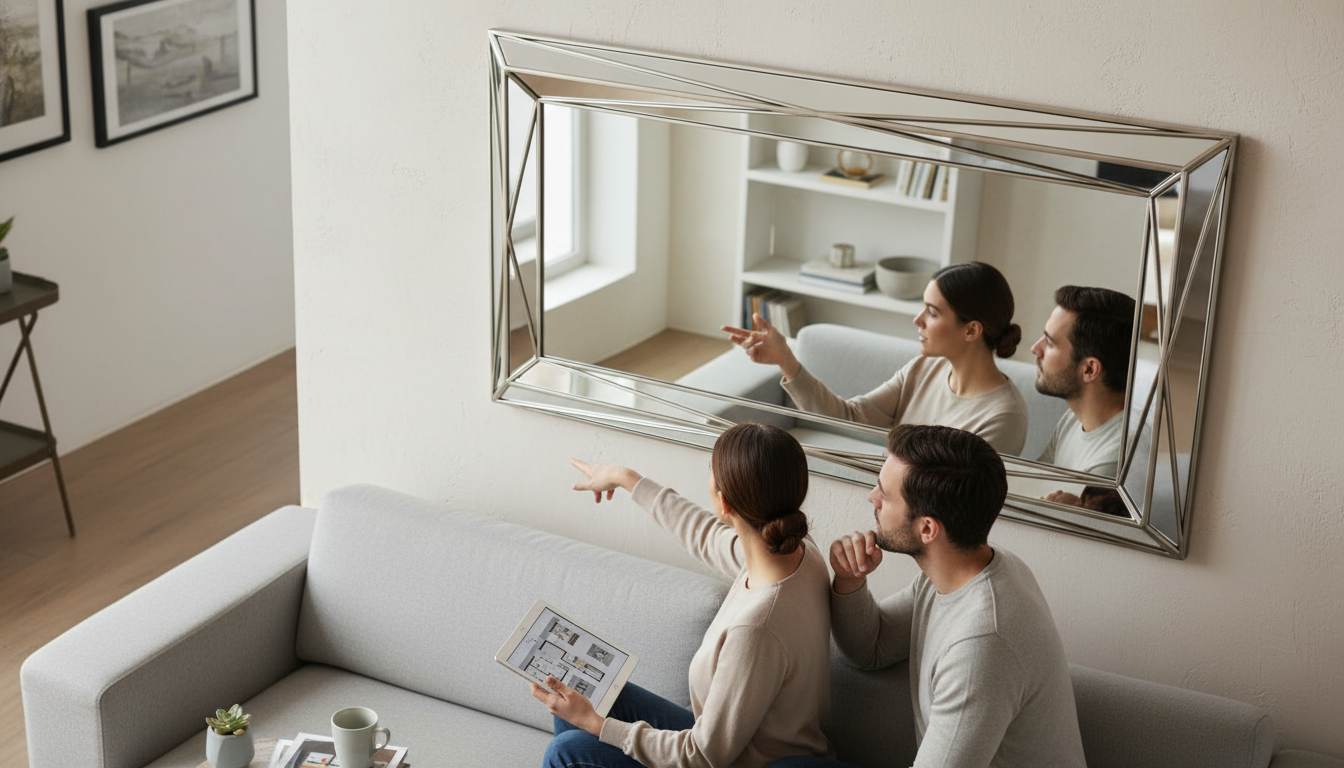
Beveled mirrors can add value to a home, mainly by boosting perceived quality and making spaces feel brighter, larger, and more finished. While a mirror rarely increases an appraisal on its own, a well-chosen beveled mirror often contributes to stronger first impressions—especially in entryways, bathrooms, and primary bedrooms where buyers notice detail and light.
A beveled mirror has an angled, finished edge that catches light and creates a subtle frame-like effect. That detail can read as custom or higher-end compared with flat-edged mirrors, which are more common in builder-grade homes. The result is a cleaner, more intentional look that can elevate the overall design without a major renovation.
Mirrors reflect both natural and artificial light, so adding one in the right spot can make a hallway feel wider, a living room feel airier, or a bathroom feel less cramped. Beveling adds a crisp highlight around the perimeter, which can make the mirror stand out as décor instead of appearing purely functional.
Placement matters more than size alone. A beveled wall mirror near an entry console, above a mantel, or over a bathroom vanity can help a space feel styled and move-in ready. In bathrooms, it can also soften the look of tile and fixtures, tying finishes together for a more cohesive presentation.
To maximize impact, choose a shape and scale that fits the wall (not undersized), and match the mirror’s tone to nearby metals and finishes. Silver beveled rectangular mirrors are especially versatile because they pair easily with modern, transitional, and classic interiors. For ideas on styling and selecting a polished option, see this guide to a silver beveled rectangular wall mirror.
Hang it where it can reflect light or a pleasant view—across from a window, in an entryway, or above a vanity. Make sure the size fits the wall and furniture below it so it looks intentional rather than like an afterthought.






Leave a comment