
Neither wattage is automatically “better”—it depends on what you blend and how often you use it. A 300 watt hand blender can be a smart pick for lighter, quick jobs, while an 800 watt model is typically the better choice for thicker mixtures, tougher ingredients, and more consistent performance with less effort.
A 300 watt immersion blender is usually sufficient for everyday, low-resistance blending tasks. It can handle protein shakes, thin soups, scrambled eggs, salad dressings, and soft cooked fruits or vegetables. If storage space is tight, you blend only occasionally, or you want a simple tool for small batches, 300 watts can be practical and budget-friendly.
The trade-off is that it may struggle (or require more time) with thicker blends. Overworking a lower-watt motor can also mean more heat buildup and more stopping to let it rest, especially with sticky or dense recipes.
An 800 watt hand blender generally delivers more torque, which helps it power through thicker soups, hummus-like dips, fibrous cooked vegetables, frozen fruit, and smoothie ingredients with less stalling. If you want smoother results faster, plan to blend frequently, or prefer a tool that feels less “maxed out,” higher wattage is a strong advantage.
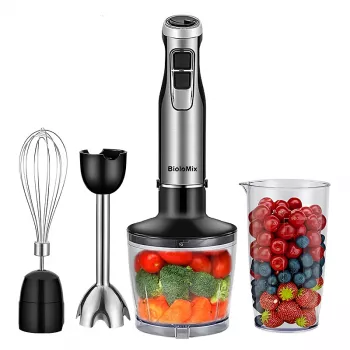
More power is also useful when you’re using attachments like a chopper bowl or whisk, because the motor has extra headroom to keep speeds steadier under load.
Wattage is only one part of performance. Blade design, shaft length, bell shape (the guard around the blade), speed settings, and build quality can make a noticeable difference. Comfort matters too—an ergonomic grip and easy-to-reach controls help when blending hot soups or larger batches.
For a deeper look at choosing a versatile, multi-attachment option, see this guide: 1200W 4-in-1 hand blender with chopper and smoothie cup.
Hand blenders are great for smoothies, whipped cream, mayonnaise, salad dressings, baby food, pancake batter, and blending cooked vegetables directly in the pot for quick purees.





Leave a comment