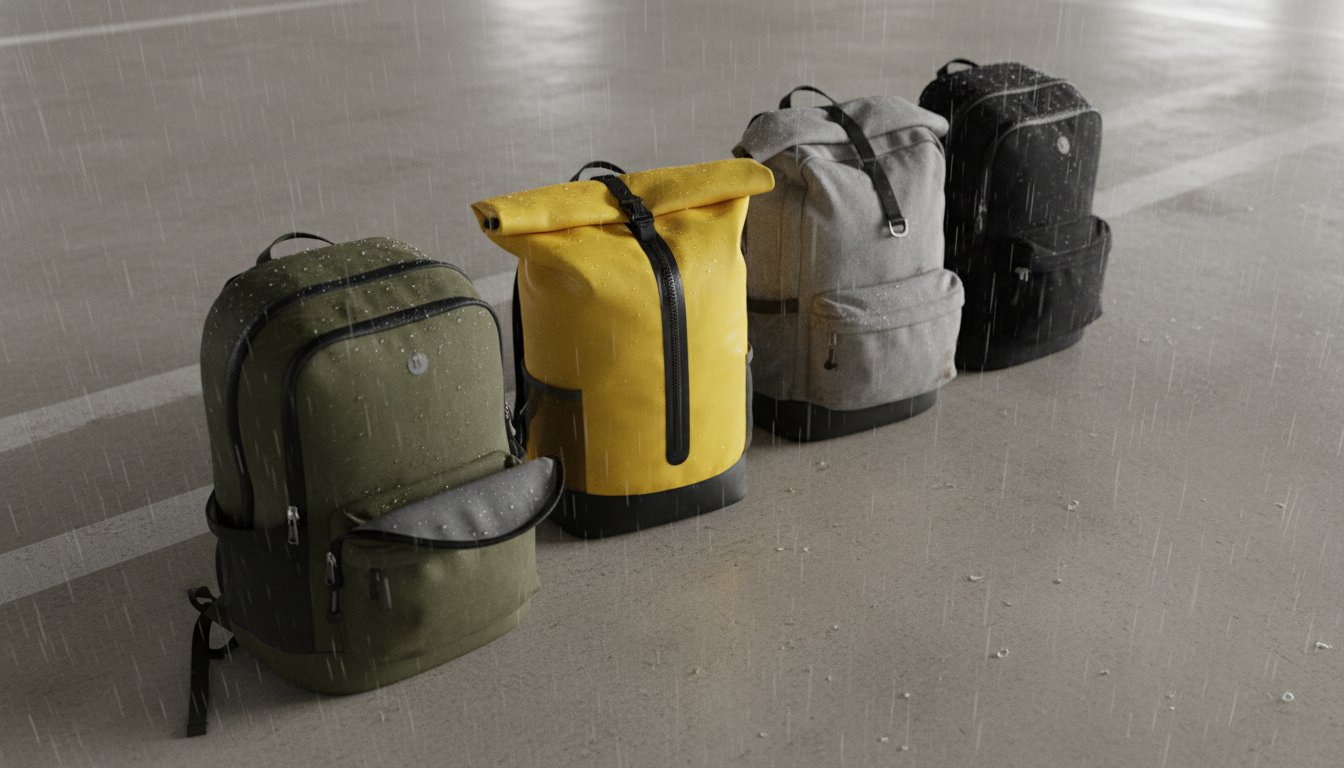
No. Most backpack zippers are designed to resist everyday splashes, not to create a true waterproof seal. Even on packs advertised as “water-resistant,” the zipper is often the first place moisture sneaks in during steady rain or when water pools on the surface.
A waterproof zipper typically has a sealing design that limits water entry through the teeth and the slider area. Many use a coated outer layer (often a rubberized or PU-laminated finish) and a tighter construction so water can’t easily push through. These zippers are common on dry bags and technical outdoor gear, but they can feel stiffer and may require more force to open and close.
These are the most common. They’re smooth, flexible, and durable, but water can seep between the zipper elements, especially under pressure or prolonged exposure.
Many laptop and commuter backpacks use coated zippers or zipper garages (small fabric covers at the ends). These help shed light rain, but they’re not guaranteed waterproof—water can still enter at the seams, zipper ends, or through the slider.
Some premium bags use coated zippers that significantly improve rain protection. They’re a great upgrade for commuters, but they still depend on overall bag construction (fabric, seams, and flaps).
Look for a coated, smooth-looking zipper tape, covered zipper tracks, and zipper garages at both ends. Also check if the bag has a storm flap over the zipper and whether seams are taped. If you carry a laptop, it’s smart to assume the zipper alone won’t fully protect electronics and use an internal sleeve or waterproof pouch as backup.
For a deeper breakdown of rain protection features (including materials and design details that matter beyond the zipper), see the main guide: Rain-Ready 15.6 Laptop Backpack USB Guide.
Add a rain cover or pack liner, and keep electronics in a waterproof sleeve. You can also apply a durable water repellent (DWR) spray to the fabric, but it won’t make standard zippers fully waterproof.





Leave a comment