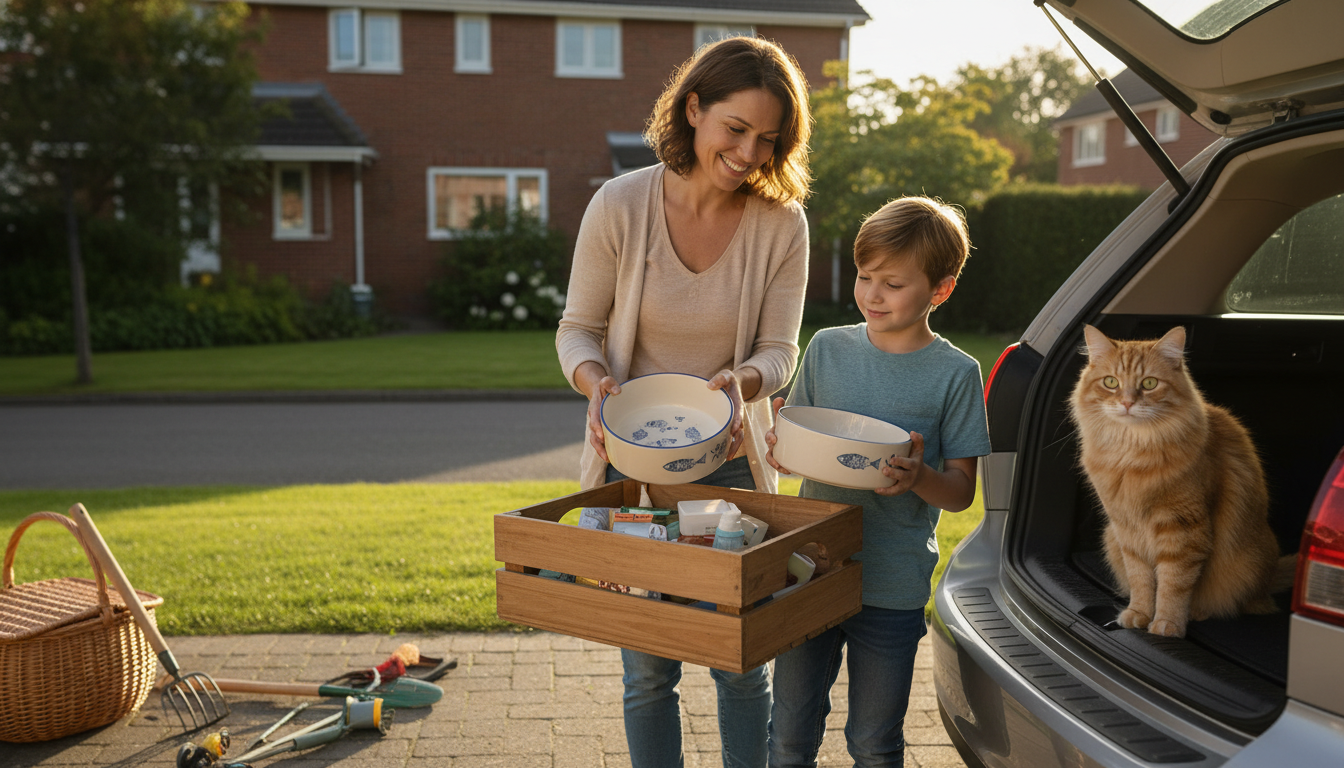
Many cats do better with slightly slanted bowls, especially for wet food or mixed meals. A gentle tilt brings food closer to the front of the dish, which can make eating feel more natural and reduce how far your cat has to reach. For some cats, that translates to calmer meals, less scooping food out onto the floor, and fewer “whisker issues” from repeatedly brushing the sides of a deep bowl.
A slanted bowl is often a good choice if your cat tends to push food to the edge, leaves a ring of leftovers they can’t quite reach, or seems annoyed when their whiskers touch the bowl. The angle can also be useful for senior cats or cats with mild mobility stiffness because it reduces neck bending and makes each bite easier to access.
That said, not every cat needs a tilt. Some cats eat perfectly well from a standard shallow dish, and some prefer a flat surface—particularly if the bowl is already wide and low. The “best” bowl is the one that keeps your cat comfortable and helps them finish meals without mess or stress.
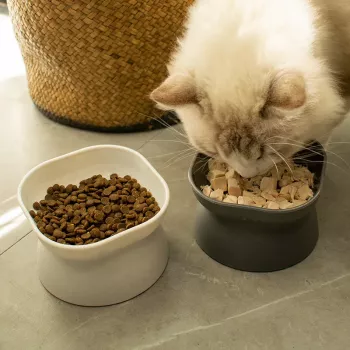
Choose a bowl with a wide, whisker-friendly shape and a stable, non-slip base. The tilt should be modest (not so steep that food slides too quickly), and the rim should be smooth to avoid irritation. Many households find that pairing a slight tilt with a small amount of height (a raised stand) improves posture even more—especially for cats that eat fast or seem uncomfortable crouching.
Material matters too: easy-to-clean ceramic or stainless steel is typically preferred for hygiene and odor control, while lightweight plastic can scratch and hold smells over time.
Switch bowls at a normal mealtime and watch for quick feedback: easier eating, less pawing, less mess, and fewer pauses. If your cat seems hesitant, try the same food in the new bowl for a few meals without changing anything else. Keep the feeding area quiet and wipe the bowl between meals to prevent lingering odors that can discourage eating.
For a deeper breakdown on angles, bowl shapes, and choosing the right setup, see the full guide here: tilted cat food bowl guide.
Raised bowls can improve posture for some cats by reducing neck and shoulder strain, especially for seniors or cats that seem uncomfortable crouching. A low lift paired with a wide bowl is often the easiest starting point.





Leave a comment