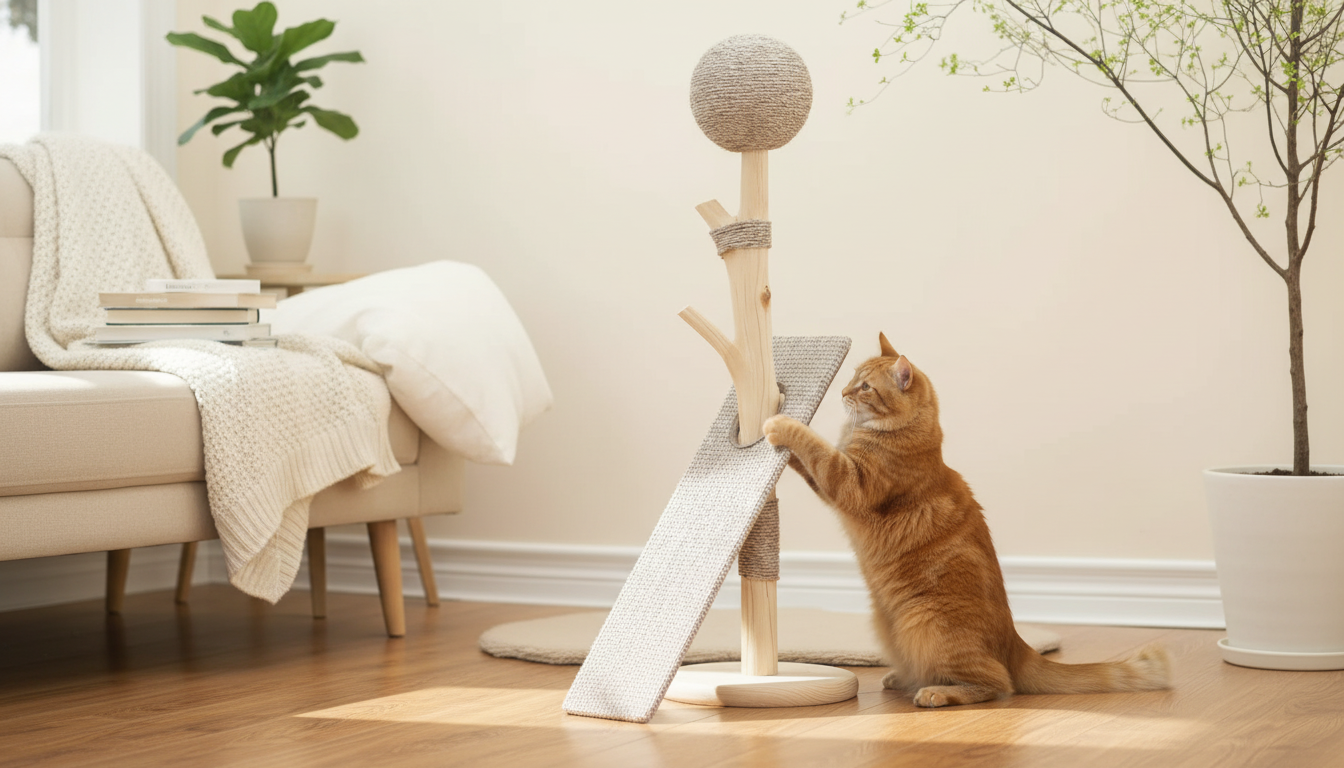
Cats need a dependable place to scratch, stretch, and burn off energy—without turning furniture into a project. A solid wood scratching post paired with natural sisal and a dangling sisal ball blends stability, enrichment, and a clean look that fits most rooms. When the scratch surface feels “right” and the post doesn’t wobble, cats are far more likely to choose it over sofa corners, rugs, and chair legs.
The biggest difference comes down to confidence. Cats scratch with their whole body—leaning in, pulling, and stretching. A rigid wood core helps reduce wobble during full-body stretches and vigorous scratching sessions, which can be the deciding factor for larger cats or enthusiastic scratchers.
Solid wood typically holds up better over time than lightweight particleboard bases in high-use homes. It’s less prone to loosening, warping, or feeling “tired” after months of daily use. And because a natural wood finish can look more like furniture than pet gear, it’s easier to place where your cat actually wants to be—without feeling like you have to hide it in a corner.
Sisal is a classic for a reason: it offers a satisfying, grippy texture that helps cats shed old claw sheaths. That texture gives feedback—cats can feel their claws catch and release—so the scratching experience is naturally rewarding.
The resistance of tightly wrapped rope encourages longer scratching sessions on the post instead of on upholstery. When the wrap is firm and close-set, cats can really “dig in,” which is often what they’re seeking when they target a couch arm. A dedicated scratch surface also supports normal marking behavior (visual marks and scent from paw glands), which can lower the urge to scratch multiple household targets once the cat accepts the post as their main station. For more on why scratching is normal and how to redirect it, see the ASPCA’s guidance on scratching and International Cat Care’s overview of scratching behavior.
A scratching post works best when it becomes part of a cat’s daily routine—not a one-time novelty. A hanging sisal ball adds a “reward” after scratching—batting and pouncing keep cats engaged, especially right after a good stretch.
That movement can be the difference-maker for curious kittens and hesitant adult cats who ignore stationary scratchers. A quick swat makes the toy swing, and the cat learns that approaching the post leads to an interactive moment. Combining scratch + play can reduce boredom-related behaviors, particularly for indoor cats that need more outlets for energy and hunting instincts.
Even the nicest post can fail if it’s parked in the wrong spot. Placement is about meeting your cat where they already scratch and where they already spend time. Place the post near an existing problem scratch zone first; cats often return to familiar locations because those areas are already “claimed.”
| If scratching happens here… | Place the post here… | Extra tip |
|---|---|---|
| Sofa arms or corners | Right next to the sofa edge | Angle the post so the cat can scratch while facing into the room |
| Carpet by doorways | Near entryways or hallway junctions | Use a doormat-style scratch pad nearby if carpet is a major target |
| Bedroom furniture | Near the bed or a window perch | Pair with a short play session at night to build the habit |
| Multiple areas (multi-cat homes) | One post per main zone | Avoid forcing cats to “share” a single scratch spot |
If you’re aiming for one main scratch station that feels sturdy and looks tidy in a living space, the Solid Wood Cat Scratching Post with Sisal Ball is built for exactly that role. The solid wood build is designed for a stable scratch-and-stretch experience, while the natural sisal scratching surface helps redirect clawing away from furniture.
| Item | Details |
|---|---|
| Name | Solid Wood Cat Scratching Post with Sisal Ball |
| Availability | In stock |
| Price | 724.01 USD |
| Link | View product |
Scratching posts are low-mess compared to many cat activities, but fur, tracked litter, and everyday clutter tend to accumulate around pet areas. If you’re trying to keep the space cleaner (especially in a family home), the Smart Parent’s Bundle to Get Help with Cleaning: 3-in-1 Guide for Fun and Easy Household Chores can help turn quick cleanups into a routine—so the scratch station stays guest-ready without becoming another task you dread.
Put it where your cat already scratches, then reward any interest with a treat or a short play session. If your cat responds to catnip, a light sprinkle can help, and gently placing their paws on the scratch surface once or twice can introduce the texture without forcing it.
Sisal is usually more durable and clearer as a “cat-only” scratch texture. Carpet-like materials can accidentally teach cats that rugs and carpeting are acceptable scratch targets.
Replace it when the rope becomes significantly worn, loose, or starts unraveling enough to reduce resistance or create a safety issue. Many posts last longer with routine checks and trimming stray fibers before they spread.






Leave a comment