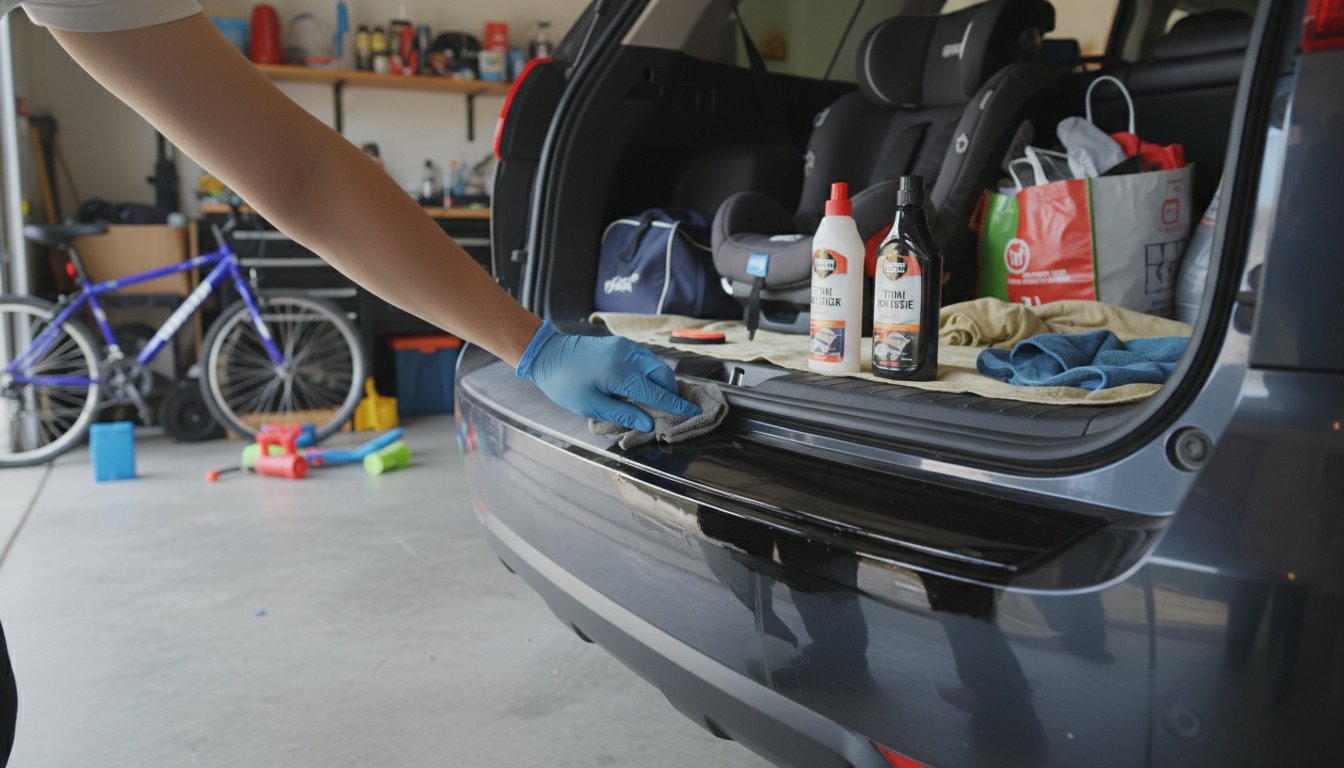
Faded exterior trim (bumpers, mirror housings, cowl panels, and textured cladding) usually turns gray from UV exposure, oxidation, and embedded road film. To make automotive plastic look black again, start with a thorough clean, then restore color with a trim restorer, and finally protect it so the fade doesn’t return right away.
Wash the area with car soap, then use an all-purpose cleaner or dedicated trim cleaner and a soft brush to lift oxidation and grime from the texture. Rinse well and dry completely. Any residue left in the grain can block restorers from bonding evenly and may cause streaks.
If the trim has been coated with oily shine products, wipe it down with isopropyl alcohol on a microfiber towel to strip leftover silicones. For heavier oxidation, lightly agitate with a nylon brush and cleaner until rinse water stops turning gray. Let the trim fully dry before applying anything restorative.
Choose a quality plastic restorer designed for exterior automotive trim. Apply a small amount to a foam applicator or microfiber pad and work it into the plastic in thin, even passes. Let it level for a few minutes, then buff off excess so it dries to a uniform satin finish instead of a greasy shine. A second light coat is often better than one heavy coat, especially on textured plastic.
After curing (follow the product directions), add UV protection with a trim protectant or sealant. Regular gentle washing and occasional top-ups help keep trim black longer and reduce that chalky return.
For product guidance and a step-by-step walkthrough, visit the full guide here: Back-to-Black Plastic & Leather Restorer Guide.
Most last a few weeks to a few months depending on sun exposure, washing frequency, and whether you added UV protection afterward. Garaged vehicles and protected trim typically hold results longer.






Leave a comment