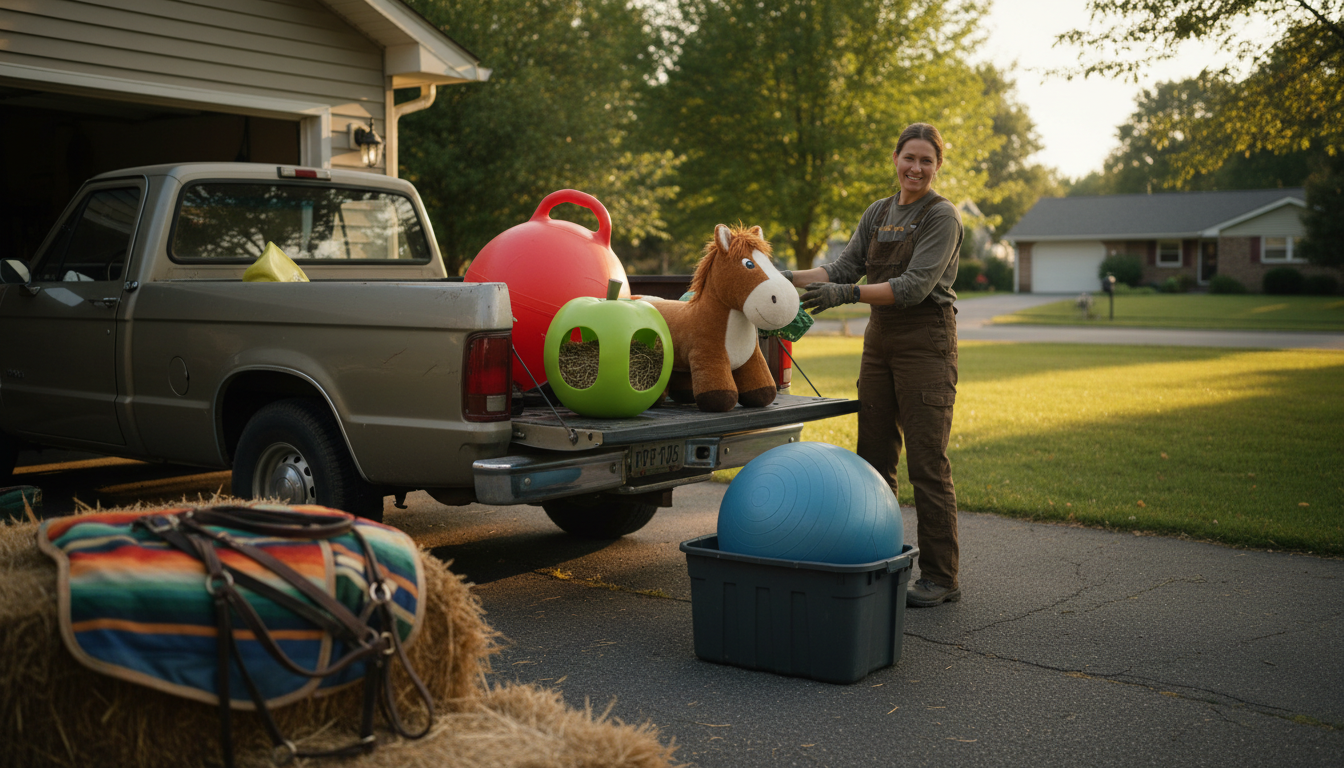
Most horses “favorite” toys are the ones that let them do what comes naturally: investigate, mouth, push, and interact. Since every horse has a different personality (and different turnout setup), the best-loved toys tend to fall into a few reliable categories—especially those that are safe, durable, and rewarding to play with.
Many horses gravitate toward sturdy balls and rollable toys because they can nudge them with their nose, paw at them, and chase them around the paddock. Look for thick, horse-grade materials and a size that can’t get stuck in fencing or be easily lifted and thrown. Toys designed to be pushed (rather than chewed apart) often last longer for determined players.
Treat balls and slow-feed “puzzle” toys are favorites for horses that get bored or anxious. A toy that releases small bits of hay cubes or low-sugar treats as it rolls can encourage movement and keep a horse occupied during stall time. Start with an “easy” setting so the horse learns the game, then adjust as needed.
Some horses prefer a toy they can pull, bump, or mouth in place—like a hanging rope toy or a suspended ball. These can work well in stalls, but they must be hung high enough to avoid entanglement and checked regularly for fraying, broken hardware, or loose parts.
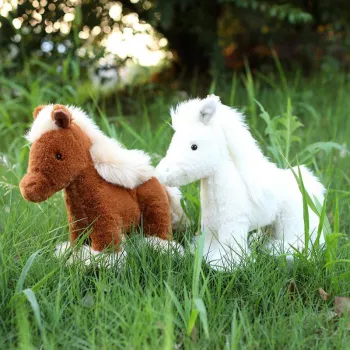
Not every favorite toy involves action. Many horses—especially youngsters, recent weanlings, or horses in limited social turnout—seem to enjoy a soft “buddy” they can nuzzle. If you’re considering a plush option, choose one made for horse use, with reinforced seams and minimal hard components. For a deeper look at choosing and caring for lifelike plush companions, visit this realistic horse plush toys buying & care guide.
A favorite gets revisited without prompting: the horse carries it, returns to it after grazing, or interacts with it during downtime. If a toy is ignored for a week, try moving it to a new spot, introducing it during a calm moment, or pairing it with a small reward to spark interest.
They can be, as long as the toy is made for horses, sized appropriately, and used with low-sugar treats in controlled amounts. Inspect it often for cracks or sharp edges, and remove it if pieces start to break off.





Leave a comment