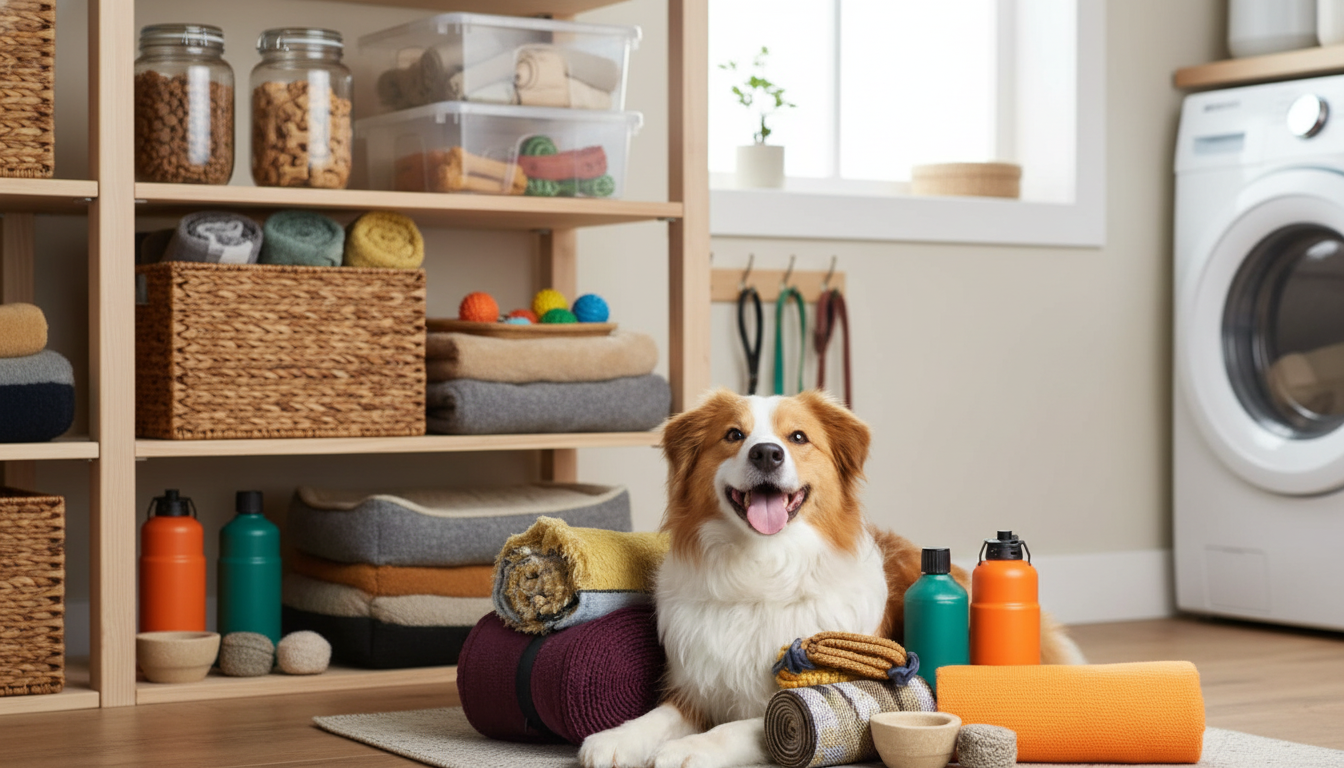
Pet supplies multiply fast—food bins, treats, leashes, toys, grooming tools, meds, and seasonal gear. A simple storage system keeps everything easy to find, safer for pets and kids, and cleaner for the home. Use the steps below to set up zones, choose containers that actually work, and maintain order with minimal effort.
Before buying a single bin, do a fast “reset” so you’re organizing what you actually use (not what’s expired, duplicated, or no longer fits your routine).
| Category | Examples | Best storage location | Container idea |
|---|---|---|---|
| Feeding | Food bag, scoop, treats, bowls, slow feeder | Near feeding station | Airtight bin + small treat jar |
| Walking | Leash, harness, poop bags, flashlight | By main exit | Wall hooks + small caddy |
| Grooming | Brush, nail clippers, shampoo, towels | Bathroom or laundry area | Handled tote with divider pouches |
| Health | Meds, supplements, flea/tick, first-aid items | High cabinet away from pets/kids | Labeled lidded box |
| Cleanup | Enzyme cleaner, lint rollers, waste can liners | Cleaning closet or near litter area | Slim bin or shelf basket |
| Play & training | Toys, clicker, treats, puzzle feeder | Living area | Toy basket + small training pouch |
The goal isn’t perfect labeling—it’s speed and consistency. If supplies live where you naturally use them, they get put away without a second thought.
Good containers do three jobs: keep things fresh, keep things contained, and keep you from overbuying because you “can’t find it.”
For food and treat safety specifics, follow the FDA’s tips for safely storing pet food and treats, especially if you’re transferring food to a bin or storing large bags long-term.
A clean setup isn’t just about looks—smart storage reduces accidental ingestion, contamination, and that lingering “pet supply” smell in small spaces.
If there’s ever concern a pet got into medication, contact a veterinarian and consult ASPCA Animal Poison Control for guidance.
Even in a studio apartment, you can create “micro-zones” that feel effortless to maintain.
If you want a structured setup you can follow in one or two short sessions, Paw-sitively Organized: Smart Tips for Storing Pet Supplies – Ultimate Guide for Pet Owners breaks the process into clear zones, container choices, and quick checklists that keep supplies from overflowing again.
For households juggling pet messes alongside everyday chores, pairing a storage reset with a simple cleaning routine helps everything stay under control. Smart Parent’s Bundle to Get Help with Cleaning: 3-in-1 Guide for Fun and Easy Household Chores is a practical option for building easy, repeatable systems that reduce day-to-day clutter (pet-related and otherwise).
Use an airtight container in a cool, dry place, and keep the original bag inside the bin when possible so you retain the lot number and expiration details. Wash and fully dry the bin and scoop between refills to prevent old oils and crumbs from building up.
Create a few simple zones (entry, feeding, grooming, and health), then rely on vertical storage like wall hooks and over-the-door pockets. Limit toy clutter by keeping one basket and rotating a smaller set of toys weekly.
Store them in a high or latched cabinet away from pets and children, and avoid humid or hot spots like steamy bathrooms or sunny windowsills. Keep everything together in a labeled, lidded box with vet instructions and dosing tools.






Leave a comment