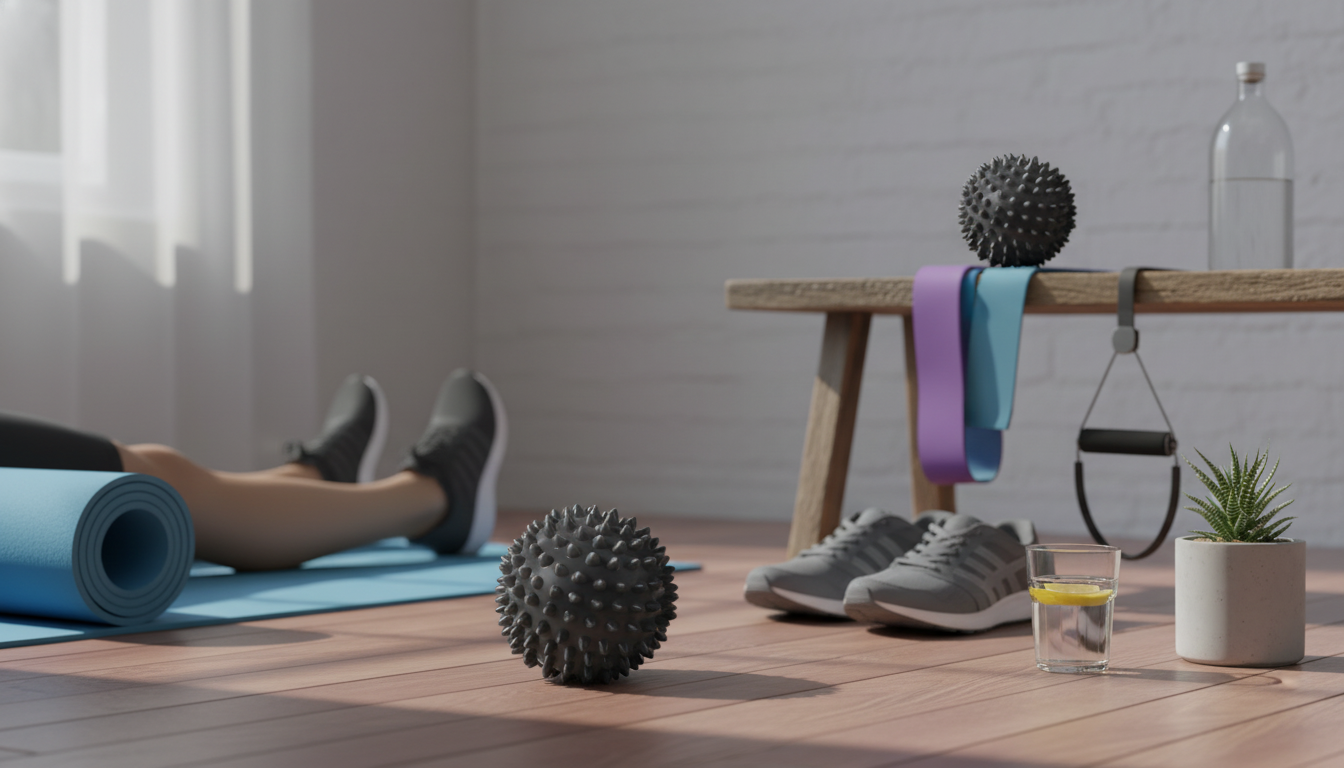
A compact massage ball can deliver focused pressure where foam rollers and stretching can’t reach. A deep tissue PVC yoga massage ball is designed to target tight spots, support recovery, and help maintain everyday mobility at home, at the gym, or while traveling. With the right technique, it becomes a simple tool for improving how muscles feel and move—without needing a full setup or a lot of space.
What It Is and Why It Helps
A massage ball is a small, firm sphere used to apply localized pressure to muscles and fascia (the connective tissue around muscles). Because it’s compact, it can “find” knots that larger tools skim over.
- Localized pressure: The smaller contact point helps target stubborn areas more precisely than broad rollers.
- Self-massage support: Common tight zones include feet, calves, glutes, upper back, and shoulders.
- Useful pre- and post-activity: A short session before training can help tissues feel more “ready,” while after training it can reduce perceived soreness and stiffness.
- More controllable than it looks: When a full-size roller feels too intense (or not specific enough), a ball lets you scale pressure by using a wall, chair, or partial bodyweight.
For a deeper look at the principles behind self-myofascial release, see guidance from the American Council on Exercise (ACE). Practical foam rolling considerations also translate well to ball work, including notes from the Cleveland Clinic.
Best Places to Use It
This tool shines in areas where muscles are layered, small, or hard to reach. Start conservatively and adjust the setup so you can relax into the pressure.
- Feet: Roll under the arch and heel to ease stiffness from long standing or running.
- Calves and shins: Target dense lower-leg tightness by leaning into a wall or using the floor.
- Glutes and hips: Sit on the ball to find tender points around the glute med/min and deep rotators.
- Upper back (thoracic area): Place it between your shoulder blade and spine; avoid direct pressure on the spine itself.
- Chest (pecs): Use it against a wall to help open the front of the shoulders after desk work.
- Forearms: Gentle pressure can help after grip-heavy activities; avoid irritated tendon insertion points.
How to Use It for Deep Tissue Relief
Good technique matters more than brute force. The goal is pressure you can breathe through and control, not a sharp or alarming sensation.
- Start light-to-moderate: Increase gradually. Think “strong but controllable.”
- Move slowly: Roll 1–2 inches at a time and pause on tender spots for 20–40 seconds while breathing steadily.
- Choose wall vs. floor: Use a wall for lighter, more adjustable control; use the floor for deeper pressure (often best for glutes, calves, and upper back).
- Add gentle motion: Try small shoulder sweeps, ankle circles, or hip rotations while keeping pressure manageable.
- Keep it short per area: Aim for 1–3 minutes each. Stop if tenderness escalates instead of easing.
Quick Routines by Goal
Quick Routines by Goal
| Goal |
Area |
Setup |
Time |
Notes |
| Morning mobility |
Feet + calves |
Standing, ball under foot; then calf against wall |
3–5 min |
Keep pressure light; focus on slow rolling |
| Post-workout reset |
Glutes + upper back |
Floor for glutes; wall or floor for upper back |
6–10 min |
Pause on tight spots; avoid rolling directly on the spine |
| Desk-day relief |
Pecs + upper traps |
Ball on wall, lean in and sweep slowly |
4–6 min |
Keep neck relaxed; reduce pressure near the front of the shoulder |
| Foot comfort |
Plantar area |
Seated, ball under arch |
2–4 min |
Avoid aggressive pressure if the area feels inflamed |
Research on self-myofascial release commonly discusses short bouts and range-of-motion effects; you can explore summaries and studies via PubMed.
What to Look For in a Massage Ball Like This
- Material: PVC typically provides a firm feel that transfers pressure efficiently for deep tissue work.
- Firmness: Firmer balls are more intense; scale down with a wall or partial bodyweight.
- Size: A smaller diameter reaches compact areas (feet, pecs, rotator cuff region) more easily than larger balls.
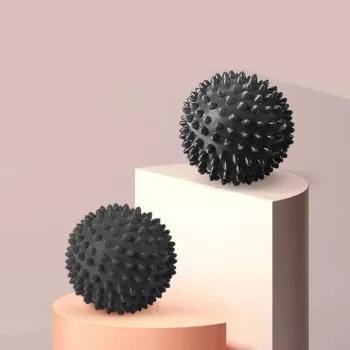
- Texture: Smooth surfaces glide; lightly textured surfaces can add sensory feedback—choose what feels comfortable.
- Portability: A small ball slips into a gym bag, work tote, or carry-on so you can stay consistent.
Safety and Comfort Tips
- Avoid bony areas and joints: Don’t press directly on the spine, kneecap, ribs, or collarbone.
- Stop with numbness/tingling: Nerve-like sensations mean you should reposition or end the session.
- Use caution with injuries: Skip areas with acute injury, significant swelling, bruising, or suspected fractures.
- Get help for persistent pain: If pain is severe, worsening, or doesn’t improve, consult a qualified healthcare professional.
- Support recovery basics: Hydration, gentle movement, and rest typically complement self-massage better than pushing through high pain.
Massage Ball vs. Foam Roller vs. Lacrosse Ball
Care, Cleaning, and Storage
Shop In-Stock Picks
FAQ
How long should a massage ball session last?
Plan for about 5–15 minutes total, spending roughly 1–3 minutes per area. Pause on tender points for 20–40 seconds, and stop if pain increases or if you notice numbness or tingling.
Can this be used every day?
Daily use is often fine when pressure stays moderate and sessions are kept reasonable. Rotate areas and use lighter pressure for maintenance, taking a rest day if soreness lingers.
Is it okay to use a massage ball on the lower back?
Use caution: avoid direct pressure on the lumbar spine and kidney area. A safer option is working the glutes, hips, and the muscles beside the spine (often with a wall to reduce intensity).
Recommended for you



Leave a comment