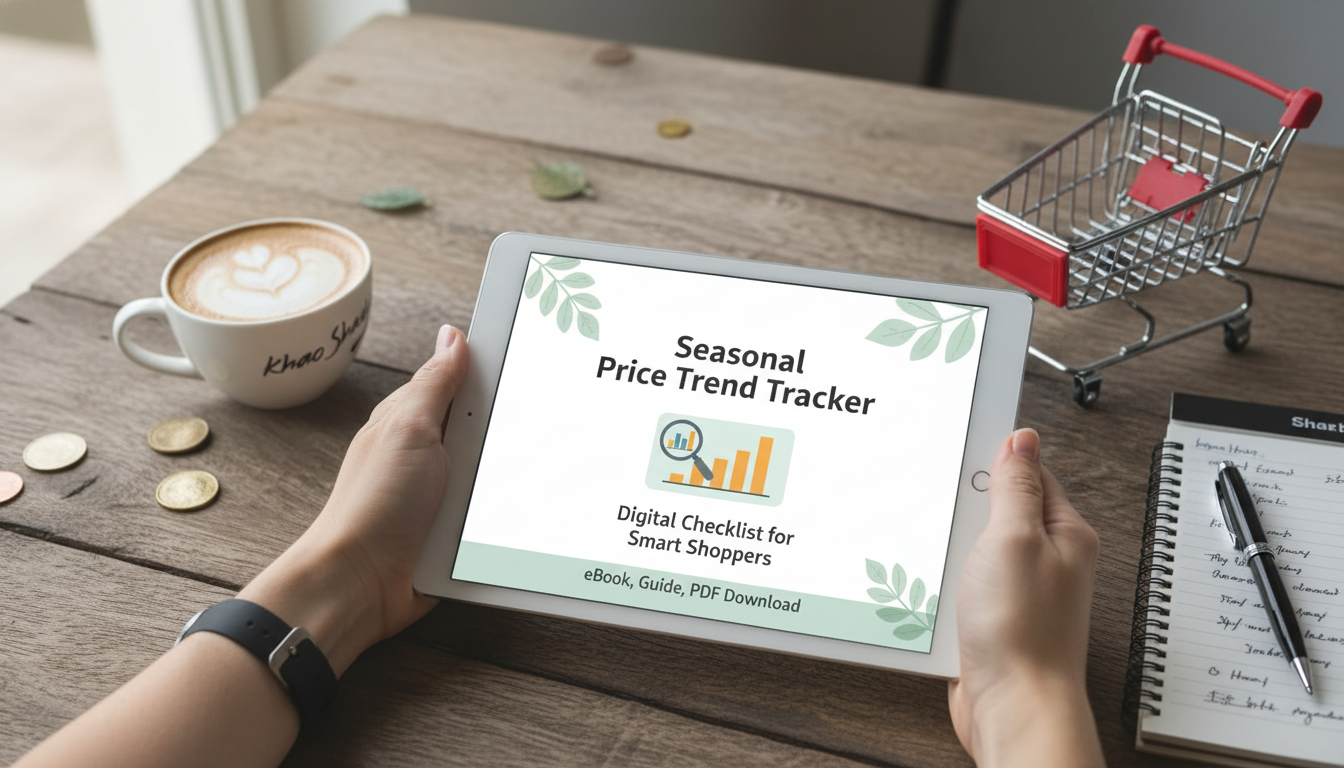
Seasonal pricing is predictable enough to plan around, but only if patterns are captured consistently. A lightweight tracking routine can reveal when prices usually dip, when promotions stack, and when “limited-time” offers are actually normal. The system below keeps the process simple: record the right details, ignore the noise, and use a few clear thresholds to decide when to buy—so big purchases land in the right window and everyday buys stop quietly draining the budget.
Prices don’t change randomly. Retailers react to predictable forces, and your tracker helps separate “true” seasonal lows from marketing theater.
If you want a reality check on broader inflation vs. item-level fluctuations, the U.S. Bureau of Labor Statistics CPI is a useful reference—your tracker then shows how a specific product behaves inside that bigger trend.
The goal is reliable comparisons. That means tracking the price you’d actually pay, for the exact item you’d actually receive.
| Field | What to record | Why it matters |
|---|---|---|
| Item details | Brand/model, size, color, version | Prevents comparing different products |
| Store/seller | Retailer name and link | Keeps pricing apples-to-apples |
| List price | Displayed price before discounts | Shows the starting point for markdowns |
| Final price | After coupons + shipping + tax | Reflects real out-of-pocket cost |
| Date | Day/month and promo period | Builds the seasonal pattern over time |
| Notes | Return window, warranty, bundle terms | Avoids “cheap but risky” buys |
Consistency beats complexity. A small habit, done weekly, quickly turns into a personal “price climate map” for the items that matter most.
If you want a ready-to-use format instead of building your own, Seasonal Price Trend Tracker (PDF download) is designed for quick weekly entries and clean comparisons.
When promotions feel confusing, it helps to remember that retailers must market truthfully and clearly. The Federal Trade Commission’s advertising guidance is a helpful lens for understanding why fine print (shipping costs, conditions, comparisons) matters so much to the “real” final price.
| Category | Typical price pressure | What to look for in your log |
|---|---|---|
| Seasonal clothing | Peak-season highs; post-season clearance | Clearance depth and size availability over time |
| Home & kitchen | Event promos and model updates | Model-number dips and coupon stacking |
| Fitness gear | New-year demand spikes | Whether prices normalize later or stay elevated |
| Holiday items | Pre-holiday scarcity; post-holiday liquidation | How quickly prices collapse after the date passes |
| School essentials | Short buying rush | Price swings week-by-week around local start dates |
For apparel-specific tracking (sizes, colorways, and styling plans that influence what you actually buy), pairing your log with a capsule approach can cut “almost right” purchases. Modern Minimal Outfits with New Balance Guide – Effortless Style & Clean Streetwear Looks can help keep your wish list focused so your tracker stays manageable.
For holiday-timed purchases, your tracker can also reduce “seasonal urgency.” If a themed item is truly time-sensitive, record its pre- and post-holiday behavior so next year’s buy window is clearer. For example, Patriotic Eagle Hoodie – 4th of July Hooded Sweatshirt – USA Unisex Hoodie is the kind of item where demand clusters around a date—your notes will show whether prices soften before or after the holiday in your preferred sizes.
For context on how major retail moments shape promotions (and why your weekly check-in should note event timing), the National Retail Federation is a solid resource on seasonal retail cycles and shopping periods.
Expect early signals in 2–4 weeks, clearer “usual low/usual high” ranges in about 8–12 weeks, and strong confidence after one full season. Start with a small set of items so you can track consistently without burnout.
Compare the current final price (after shipping and tax) to a baseline like the median of your last 6–12 observations, and confirm the exact model/size matches. Also watch for pre-sale price inflation or changes in bundles that make the “discount” misleading.
A digital checklist is enough to build consistency and make buy/wait decisions with simple thresholds. Spreadsheets add charts and automation, but many shoppers save more by tracking fewer items reliably than tracking many items inconsistently.






Leave a comment