Soft Hands Overnight: A Simple Night Hand Care Routine (Digital Download)
Dry, rough hands often come from a mix of frequent washing, weather, and barrier damage. A consistent nighttime routine can help hands feel smoother by morning and look healthier over time. Below is a practical, low-effort sequence you can repeat nightly—plus a printable option that makes it easier to stick with the routine when you’re tired. For more guidance, see The Role of Moisturizers in Addressing Various Kinds of Dermatitis.
Why hands get rough so fast
Hands are constantly exposed, and the skin barrier takes the hit. When that barrier is stressed, moisture escapes faster, texture gets rougher, and even “good” lotion can sting. For further reading, see Dry skin – Diagnosis and treatment – Mayo Clinic.
- Soap, hot water, sanitizers, and friction can strip protective lipids and increase water loss—especially with frequent washing.
- Cold air, low humidity, and indoor heating dry hands quickly, and nighttime can feel worse when moisture levels drop.
- Household cleaners and DIY projects can trigger irritation; tiny cracks can make skin feel tight and look dull.
- Common signs your barrier needs support: persistent dryness, flaking, stinging when applying lotion, or small splits around knuckles and cuticles.
For dermatologist-backed basics on dry hands, see the American Academy of Dermatology Association guidance.
The overnight routine: the order that matters
The biggest difference-maker is layering from light to heavy—hydration first, then a seal to keep that hydration from evaporating overnight.
Step-by-step sequence
- Step 1 — Gentle cleanse: Use lukewarm water and a mild, fragrance-free cleanser when possible. Pat dry instead of rubbing.
- Step 2 — Optional quick soak (2–5 minutes): Helps soften rough patches. Skip if skin is cracked and stinging.
- Step 3 — Humectant layer: Apply a hydrating lotion/serum (glycerin, hyaluronic acid, low-% urea if tolerated) while skin is slightly damp.
- Step 4 — Seal and protect: Top with a richer cream or ointment (ceramides, dimethicone, petrolatum) to reduce overnight moisture loss.
- Step 5 — Cuticle focus: Massage remaining product into cuticles and around nails to reduce hangnails and splitting.
- Step 6 — Gloves (optional but powerful): Cotton gloves (or clean socks) for 30–120 minutes (or overnight if comfortable) can boost results by keeping product in place.
- Consistency tip: Keep a small “night kit” by the bed so the routine still happens on low-energy nights.
Overnight hand routine checklist
| Step |
What to do |
Good options to look for |
Time |
| Cleanse |
Wash with lukewarm water; pat dry |
Mild, fragrance-free cleanser |
30–60 sec |
| Hydrate |
Apply on slightly damp skin |
Glycerin, hyaluronic acid, low-% urea |
20 sec |
| Seal |
Top with thick cream/ointment |
Ceramides, dimethicone, petrolatum |
20–30 sec |
| Target |
Press into knuckles/cuticles |
Same product; add balm if needed |
20 sec |
| Occlude |
Wear cotton gloves (optional) |
Breathable cotton |
30–120 min |
Choosing products for your skin type and sensitivity
- Very dry or cracked hands: Prioritize ointments and barrier creams at night; reapply after handwashing during the day.
- Sensitive or eczema-prone skin: Avoid fragrance and harsh essential oils. Look for ceramides and minimal-ingredient formulas. If you suspect an allergy trigger, contact dermatitis can present with recurring irritation or rash.
- Rough texture and thickened skin: Consider urea or lactic acid in modest strengths a few nights per week; stop if stinging occurs.
- Frequent handwashing jobs (healthcare, food service, parents): Choose quick-absorbing products for daytime and go heavier at night.
- Nail/cuticle issues: Add a drop of cuticle oil or use the same occlusive ointment around nails nightly.
If you rely on sanitizer often, using it correctly can help limit unnecessary irritation—see the CDC guidance on hand sanitizer use.
Small habit upgrades that make results last
- Handwashing tweaks: Lukewarm water, gentle soap, and moisturizer within 1 minute of drying.
- Gloves for chores: Use nitrile or rubber gloves for dishes and cleaning; cotton liners can reduce sweat irritation.
- Daytime “micro-repairs”: One pump of hand cream after each wash builds momentum without adding a long routine.
- Overnight environment: A bedside humidifier can reduce dryness in winter or air-conditioned rooms.
- When to pause actives: If hands are cracked or burning, stick to gentle cleansing + a bland moisturizer/ointment until calm.
Using a printable routine to stay consistent
- A checklist reduces decision fatigue: When the steps are written out, it’s easier to follow the same sequence nightly.
- Track what changes: Weather shifts, a new soap, extra cleaning, or skipping gloves can explain sudden flare-ups.
- Keep it realistic: Start with three core steps (cleanse, hydrate, seal). Add gloves and extra cuticle care once the habit feels automatic.
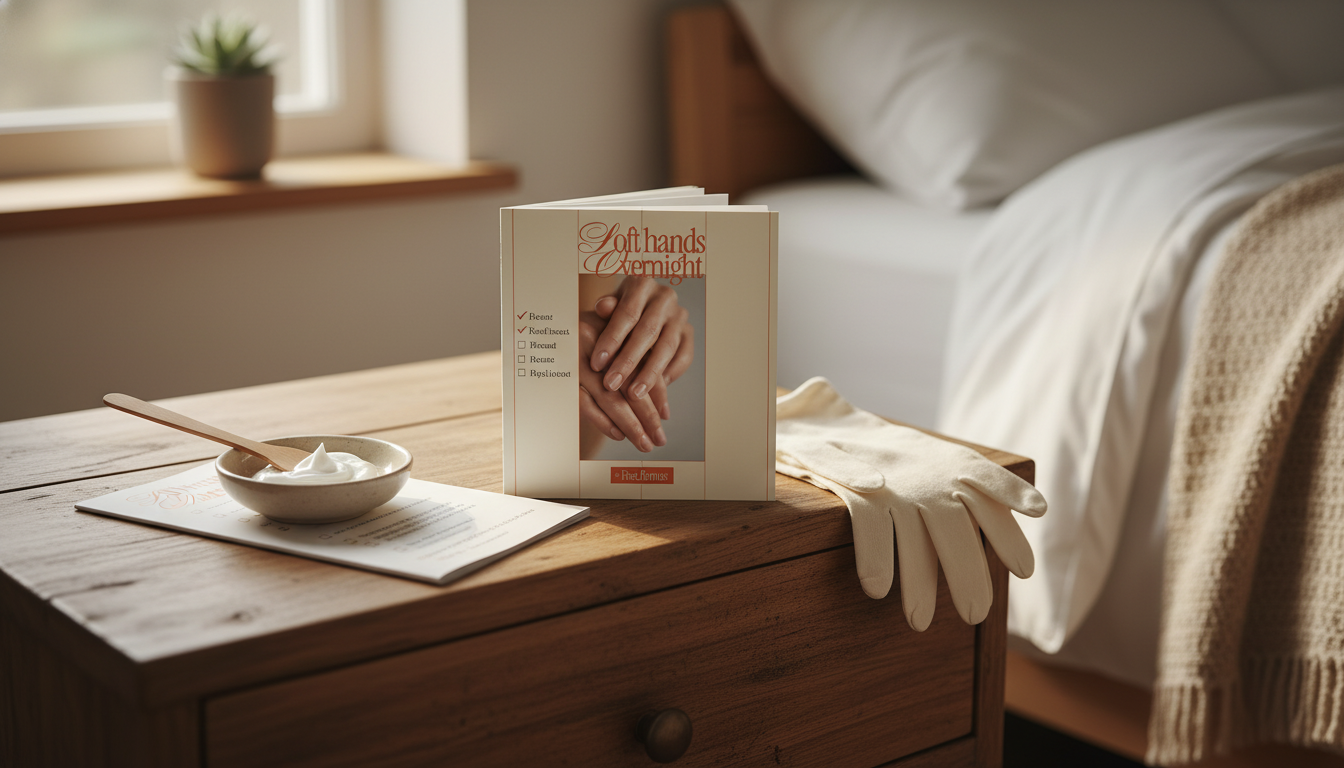
Soft Hands Overnight (Digital Download): what it is and how it helps
Soft Hands Overnight | Night Hand Care Routine Digital Download is a nighttime hand-care routine guide designed to be quick to follow and easy to repeat. It’s especially helpful if you do well with a simple sequence and a checklist format, or if you want a steady before-bed habit that doesn’t require switching out all your products.
Because it’s routine-first, it works well alongside common hand creams and ointments you may already have—so the focus stays on using the right order and doing it consistently.
More digital favorites to pair with a “reset your routines” season
When to get professional advice
FAQ
How to make hands soft and wrinkle free
“Wrinkle free” isn’t a realistic promise, but hands can look noticeably smoother with better hydration and barrier support: cleanse gently, moisturize on slightly damp skin, and seal with a thicker cream or ointment at night (cotton gloves help). For daytime, sunscreen on hands helps reduce visible photoaging over time.
Recommended for you







Leave a comment