Fur Free Ride: A Simple System for Removing Pet Hair from Car Seats
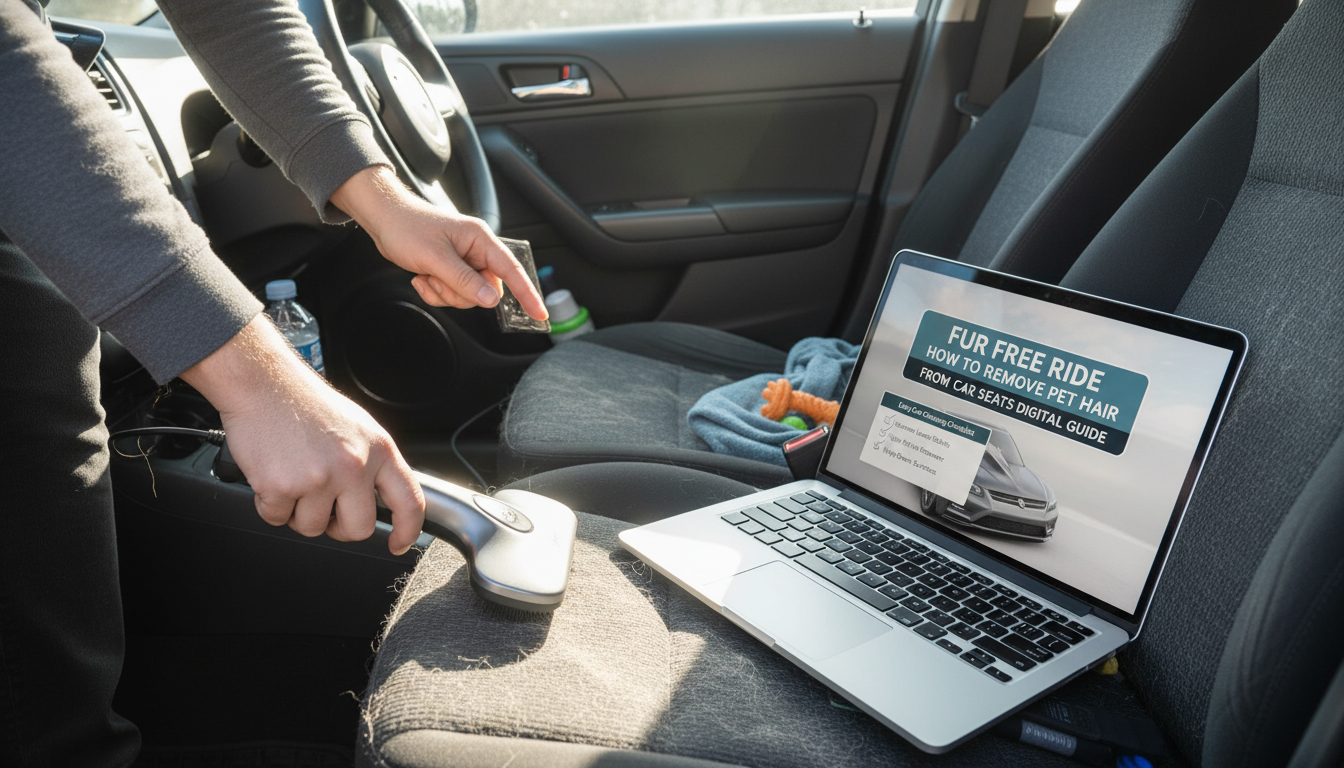
Pet hair clings to car upholstery, embeds into seat seams, and reappears after every trip. A repeatable routine makes the difference: loosen the hair, lift it efficiently, then prevent the next layer from bonding to fabric. Below is a practical checklist for quick cleanups and deeper resets—so the car feels livable again without turning detailing into a weekend project.
Why pet hair sticks to car seats (and why it’s hard to vacuum)
Pet hair is lightweight, static-prone, and shaped to tangle into fabric. That’s why it seems to “weave” itself into seats instead of sitting on top.
- Static electricity + friction: Sliding in and out of the car builds static that helps hair cling to synthetic fibers and carpeted seat backs.
- Fabric texture traps strands: Cloth weaves, textured panels, and carpet act like tiny hooks. Seams and creases become collection channels that “comb” hair into place.
- Moisture and oils: Natural oils from fur/skin, humidity, and interior protectants can make hair stickier and easier to mat.
- Vacuum heads can skate over hair: Smooth plastic tools often glide across hair without grabbing it. Agitation (or a rubber edge) usually has to happen first.
- The winning approach is sequence-based: Loosen first, then suction—especially on cloth seats and carpet.
Quick clean routine (10 minutes after the dog park)
This is the “keep it under control” routine. The goal isn’t perfection—it’s stopping hair from building up in seams and turning into a monthly problem.
- Remove loose items first: Pull out blankets, toys, leashes, and seat covers. Shake them outside the car to contain hair before it spreads.
- Do a fast dry sweep: Use a rubber pet hair brush, rubber glove, or pumice-style hair block on durable cloth (avoid harsh abrasion on delicate materials).
- Work top to bottom: Headrest area → seat back → seat base → seams → floor mats. Hair falls downward, so you’re not re-contaminating cleaned areas.
- Pick up clumps as you go: A lint roller or slightly damp microfiber grabs the piles quickly and reduces flyaway fuzz.
- Finish with targeted vacuuming: Crevice tool for seams and rails; short, overlapping strokes work better than long fast passes.
- Deodorize lightly (only if needed): Ventilate, then use a fabric-safe odor neutralizer. Heavy fragrances tend to mix poorly with “wet dog” and can become cloying.
10-minute pet hair cleanup checklist
| Step |
Tool |
Where it works best |
Notes |
| Shake out & remove items |
Hands + trash bag |
Seat covers, blankets, mats |
Contain hair before it spreads |
| Loosen embedded hair |
Rubber glove/brush |
Cloth seats, carpeted panels |
Use firm, short strokes to form clumps |
| Wipe up clumps |
Microfiber or lint roller |
Seat surfaces |
Slightly damp microfiber reduces static |
| Vacuum seams |
Crevice tool |
Seat seams, anchors, rails |
Slow passes; revisit creases twice |
| Final pass |
Upholstery head |
Seat backs & bases |
Crosshatch strokes: vertical then horizontal |
Deep clean routine (monthly reset for heavy shedders)
If your pet sheds heavily or rides often, a monthly reset prevents the “felt layer” that forms in creases and cargo corners.
Tool-by-tool: what works best on cloth, leather, and carpet
Prevention that actually reduces future buildup
- Use a washable barrier: A dedicated pet seat cover or blanket you can shake out and launder weekly makes cleanup far faster.
- Brush your pet before rides: Even two minutes at the door removes loose undercoat that would otherwise embed into upholstery. For grooming basics and shedding context, the American Kennel Club (AKC) guide to dog shedding and grooming is a solid reference.
- Keep a mini kit in the car: Rubber glove/brush, travel lint roller, microfiber, small trash bag, and a compact crevice attachment.
- Choose surfaces that release hair: Smooth covers and tightly woven materials let hair lift more easily than textured factory cloth.
- Control static when possible: Low humidity increases cling. A light anti-static mist (compatible with upholstery) helps reduce re-adhesion.
If pet hair also triggers sniffles or irritation, reducing hair and dander buildup can make rides more comfortable—see the CDC overview on pet allergies for practical background.
A ready-to-use checklist for consistent results
Helpful in-stock guides
FAQ
What removes pet hair from car seats the fastest?
Loosen hair first with a rubber glove or rubber brush so it clumps up, then vacuum seams and tight areas with a crevice tool. Finish by grabbing remaining fuzz with a lint roller or slightly damp microfiber.
Can fabric softener help with pet hair in a car?
A very light mist of diluted fabric softener and water can reduce static on some cloth upholstery, which helps hair release more easily. Spot-test first and avoid soaking seats, since moisture can sink into padding and create odors.
How do you get hair out of seat seams and tight creases?
Agitate the seam with a rubber brush to pull hair upward, then use a crevice tool with slow, overlapping passes. For stubborn buildup, carefully use compressed air to push hair out of track corners and vacuum immediately.
Recommended for you



Leave a comment