
A fast-charging cable should do three things consistently: negotiate safe power, deliver the wattage your device can actually use, and hold up to daily bending and travel. This guide breaks down how a 100W USB‑C Power Delivery cable fits iPhone, Xiaomi, and Samsung charging needs—plus what to check for compatibility, speed, and durability.
USB Power Delivery (PD) is a universal charging standard that lets a charger and device “talk” to each other and agree on the best voltage/current profile. That negotiation is what enables faster charging while helping prevent unsafe power delivery.
When a cable is labeled “100W,” it means the cable is built to handle up to 100 watts when paired with compatible hardware. That matters most for laptops, tablets, and higher-demand USB‑C accessories. A 100W-rated cable does not force 100W into your phone—your phone will only draw what it’s designed to accept. For consistent fast charging, all three parts must align: a PD-capable charger, a PD-capable device, and a cable rated for the required power.
| PD power tier | Common use cases | What else must support it |
|---|---|---|
| 18–30W | Most phones, small tablets, power banks | Phone must support PD (or compatible fast-charge), charger must offer 9V/12V PD profiles |
| 45–67W | Large tablets, some ultralights, fast-charge capable Android flagships (varies by model) | Charger must provide higher PD profiles; device must request them |
| 90–100W | Laptops and high-power USB‑C docks/monitors (device dependent) | Charger and device must support high-watt PD; cable should be 5A-rated for full 100W |
The first compatibility check is simple but easy to overlook: the connector on each end of the cable has to match both your charger and your device.
For Apple’s official fast-charge guidance and required accessories, reference Apple Support: Fast charge iPhone.
On most phones, PD fast charging commonly lives in the 18–30W range. A 100W cable doesn’t “unlock” more wattage by itself, but it does provide headroom so the cable isn’t the bottleneck—especially if you switch between devices or use longer cable lengths.
Some Android models (including certain Samsung and Xiaomi devices) advertise very high charging wattages, but those top speeds may rely on proprietary charging protocols in addition to (or instead of) standard PD. In practice, PD still tends to charge quickly and reliably, but maximum advertised speeds may require the brand’s specific charger and cable pairing.
Tablets and laptops are where a 100W PD cable becomes more obviously useful. Many laptops will draw 45W, 65W, or more under load; a cable that’s truly built for higher current helps maintain stable delivery. Real-world charging speed still varies due to battery temperature, battery level (charging slows near full), background usage, and charger quality. For a deeper overview of the standard itself, see USB‑IF: USB Power Delivery.
Fast charging is only as dependable as the cable’s physical design. A few build details tend to correlate with fewer failures over time:
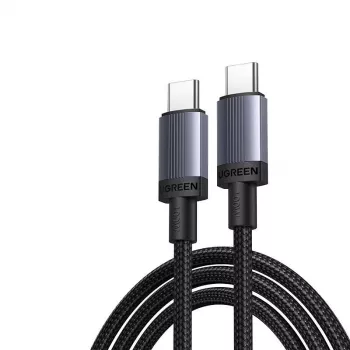
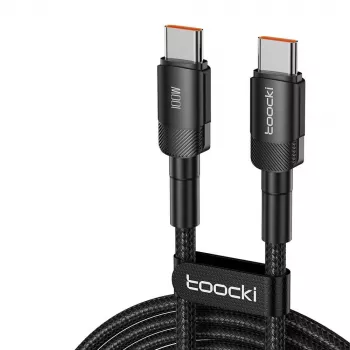
PD 100W USB‑C Fast Charging Cable for iPhone, Xiaomi & Samsung is a budget-friendly choice designed for fast charging across common USB‑C ecosystems. Confirm the connector type needed for your specific iPhone model before ordering, and pair it with a PD wall charger that matches your device’s charging capability.
| Item | Details |
|---|---|
| Name | PD 100W USB‑C Fast Charging Cable for iPhone, Xiaomi & Samsung |
| Price | 9.01 USD |
| Availability | In stock |
USB‑C Power Delivery is for power, not video. Display over USB‑C usually requires DisplayPort Alt Mode or Thunderbolt support on the device and a cable designed to carry video data, since many charging-focused cables are power-only.





Leave a comment