
Choosing fabrics is no longer just a style decision—it shapes water use, land impact, microplastic pollution, worker safety, and how long a garment stays in rotation. Smart fabrics and data-driven tools can help compare tradeoffs, spot greenwashing, and build a wardrobe (or product line) that performs well and wastes less.
“Sustainable” isn’t a single fiber—it’s a set of outcomes across a garment’s full lifecycle. The most responsible choice is the one that delivers the performance you need with the lowest total impact over time.
To sanity-check brand claims, it helps to lean on industry frameworks and disclosures from organizations such as Textile Exchange and the Ellen MacArthur Foundation.
Most fabrics can be “good” or “bad” depending on how they’re grown, processed, and used. Here’s a practical look at what tends to matter most.
For chemistry and wastewater best practices, programs like ZDHC (Roadmap to Zero) provide useful signals that go beyond a fiber label.
Use this as a starting point, then validate with certifications, supplier documentation, and care requirements. Blends can improve performance but often reduce recyclability—balance function with end-of-life plans.
| Material | Strengths | Watch-outs | Best for |
|---|---|---|---|
| Organic cotton | Comfortable, widely available, familiar care | Water/land use varies; dyeing/finishing impacts | Everyday tees, basics, kidswear |
| Linen (flax) | Durable, breathable, can be lower input | Wrinkles; processing impacts vary | Summer shirts, trousers, home textiles |
| Hemp | Strong, long wear, often lower pesticide needs | Coarse feel in low-grade yarns; processing varies | Workwear-style pieces, denim alternatives |
| Lyocell (closed-loop) | Soft drape, potentially lower chemical loss | Verify certified forestry and mill practices | Dresses, shirts, linings |
| Viscose/rayon | Soft, versatile, widely used | Deforestation risk; chemical controls vary | Occasional wear when verified sourcing exists |
| Recycled polyester | Reduces virgin fossil demand; performance | Microfiber shedding; not biodegradable | Activewear, outerwear, bags |
| Wool (certified) | Warm, durable, odor resistant | Land/methane concerns; animal welfare | Coats, sweaters, socks |
Smart textiles can add real function—thermoregulation, moisture management, conductivity, or protective performance. The sustainability catch is that coatings, laminations, and embedded electronics can make garments harder to repair or recycle.
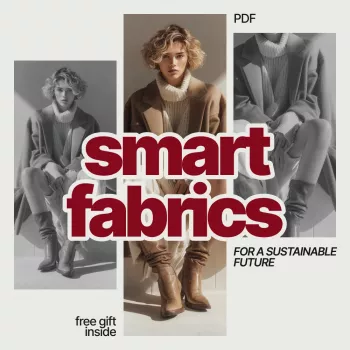
If you want a step-by-step way to compare materials (plus ready-to-use checklists), see the Smart Fabrics for a Sustainable Future ebook guide.
For styling that emphasizes fewer, better pieces (and helps you get more wears out of what you own), the Modern Minimal Outfits with New Balance Guide – Effortless Style & Clean Streetwear Looks pairs well with a durability-first approach to shopping.
And if a long-lasting layer is the goal, choose sturdy knits and timeless graphics that won’t feel dated after a few wears—like the Patriotic Eagle Hoodie – 4th of July Hooded Sweatshirt – USA Unisex Hoodie—then follow lower-energy care (spot clean when possible, wash less, air dry) to extend its life.
“Most sustainable” depends on the impact you’re prioritizing and how the garment will be used. Linen/hemp, certified closed-loop lyocell, verified organic cotton, and recycled synthetics (when performance truly matters) often do well—when sourcing and processing are transparent.
Not always. Recycled fibers can reduce virgin inputs and divert waste, but they may shed microfibers, use significant energy, and often get downcycled—so durability and transparent sourcing still matter.
AI can organize options and compare multiple factors like certifications, chemistry risks, and care impacts, but it can’t replace proof. Use it to build a shortlist, then validate with credible standards, restricted substance lists, and supplier documentation.





Leave a comment