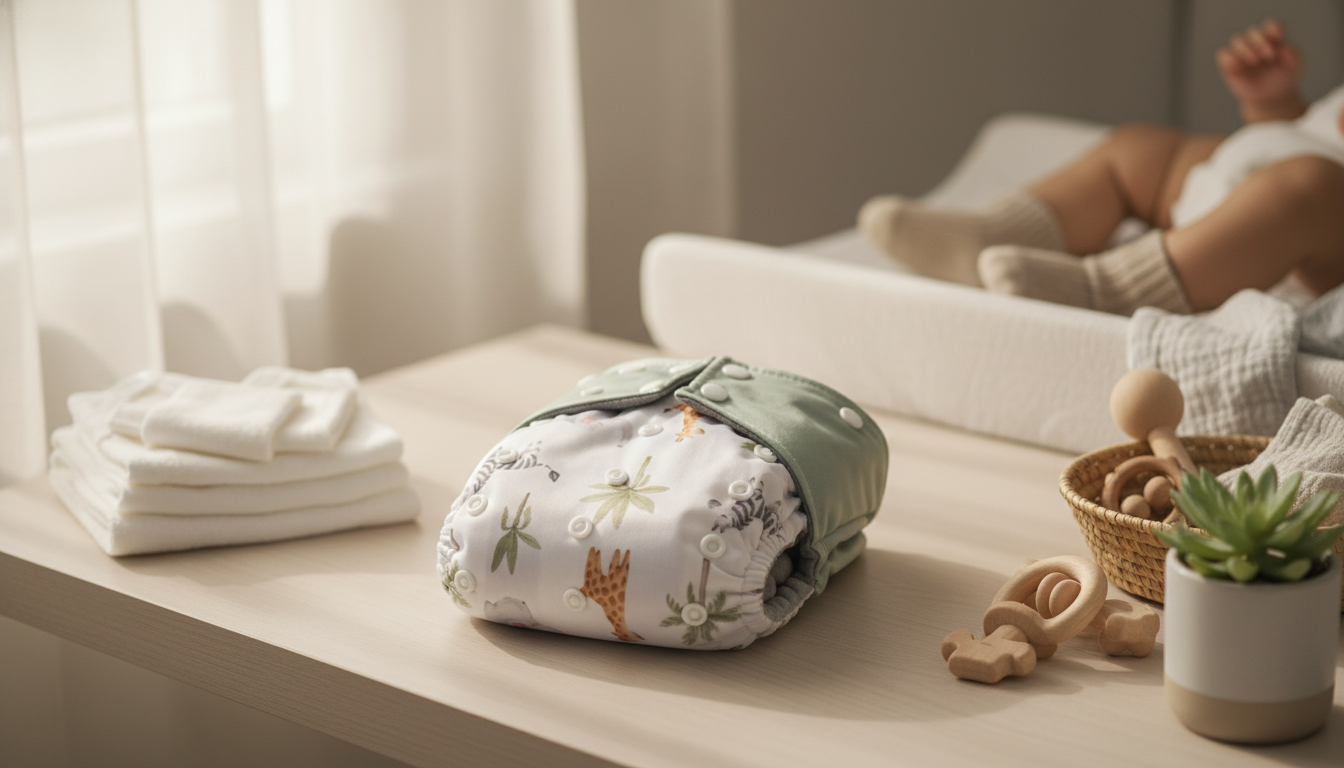
Soft, washable, and designed for everyday changes, a pocket-style cloth diaper combines a bamboo charcoal inner layer with an outer shell and a handy “pocket” for inserts. The result is a diaper setup that’s comfortable on baby, easy to customize for absorbency, and friendly to a predictable budget—while helping cut down on single-use waste over time.
Pocket cloth diapers are built like a two-part system in one piece: a stay-dry inner layer connected to an outer waterproof shell, plus a pocket opening where absorbent inserts slide in. That design keeps changes fast (similar to disposables) while letting you tailor absorbency to your baby and your schedule.
Bamboo charcoal fabric is commonly used as a soft inner layer meant to feel drier against skin. Many parents like it because it can reduce that immediate “wet” sensation compared with some natural fibers that feel damp faster. Comfort still depends on the full setup: the insert choice, how often changes happen, and whether the diaper is fitted snugly without gaps.
If diaper rash is a concern, frequent changes and keeping skin clean and dry are key habits. Guidance from the American Academy of Pediatrics (HealthyChildren.org) is a helpful reference for spotting irritation early and choosing practical care steps.
One of the biggest perks of pocket diapers is adjustability. With rise snaps and waist snaps, a single diaper can often fit across multiple stages, which is especially useful during growth spurts.
With pocket diapers, the shell’s job is containment. Inserts do the absorbing. That means you can run a lighter insert for quick errands, then stack layers for naps, longer outings, or overnight—without changing the diaper you put on baby.
When stacking, place the fastest-absorbing layer closer to baby, then add higher-capacity layers beneath it. Keep inserts flat so they don’t bunch and create pressure points.
Every diaper system has tradeoffs. Pocket diapers often strike a middle ground: easy like disposables once pre-stuffed, but more flexible than all-in-ones for absorbency changes.
| Option | Ease of changes | Dry time after washing | Absorbency flexibility | Typical use |
|---|---|---|---|---|
| Pocket diaper | Easy (like a disposable) | Medium | High (swap/stack inserts) | Daytime, naps, travel |
| All-in-one | Very easy | Longer | Medium | Daycare, babysitters |
| Prefold/flat + cover | Moderate | Fast (flats) to medium (prefolds) | High | Home use, backups |
| Disposable | Very easy | None | Low (fixed) | Travel, emergencies |
Prints aren’t just for photos. They can make a cloth routine smoother, especially in busy households.
A pocket diaper routine is straightforward once the first few changes are done. The key is preparation: pre-stuff a few diapers so they’re grab-and-go.
Reusable diapers can reduce household trash compared with single-use options, and many families like that costs become more predictable: an initial setup plus laundry rather than continual purchases. For a broad view of waste and materials management, the U.S. Environmental Protection Agency’s facts and figures provide useful context.
They can, if absorbency is boosted with higher-capacity inserts (often layered) and the fit is snug. Many families use a daytime setup and a separate, heavier overnight insert combination.
Change when soiled and regularly for comfort, similar to other diaper types. For longer stretches like naps or outings, add absorbency rather than extending wear time too far.
Choose a detergent that rinses clean and fits your washer and water hardness. Avoid heavy softeners or residue builders, and focus on a solid pre-wash plus main wash routine.






Leave a comment