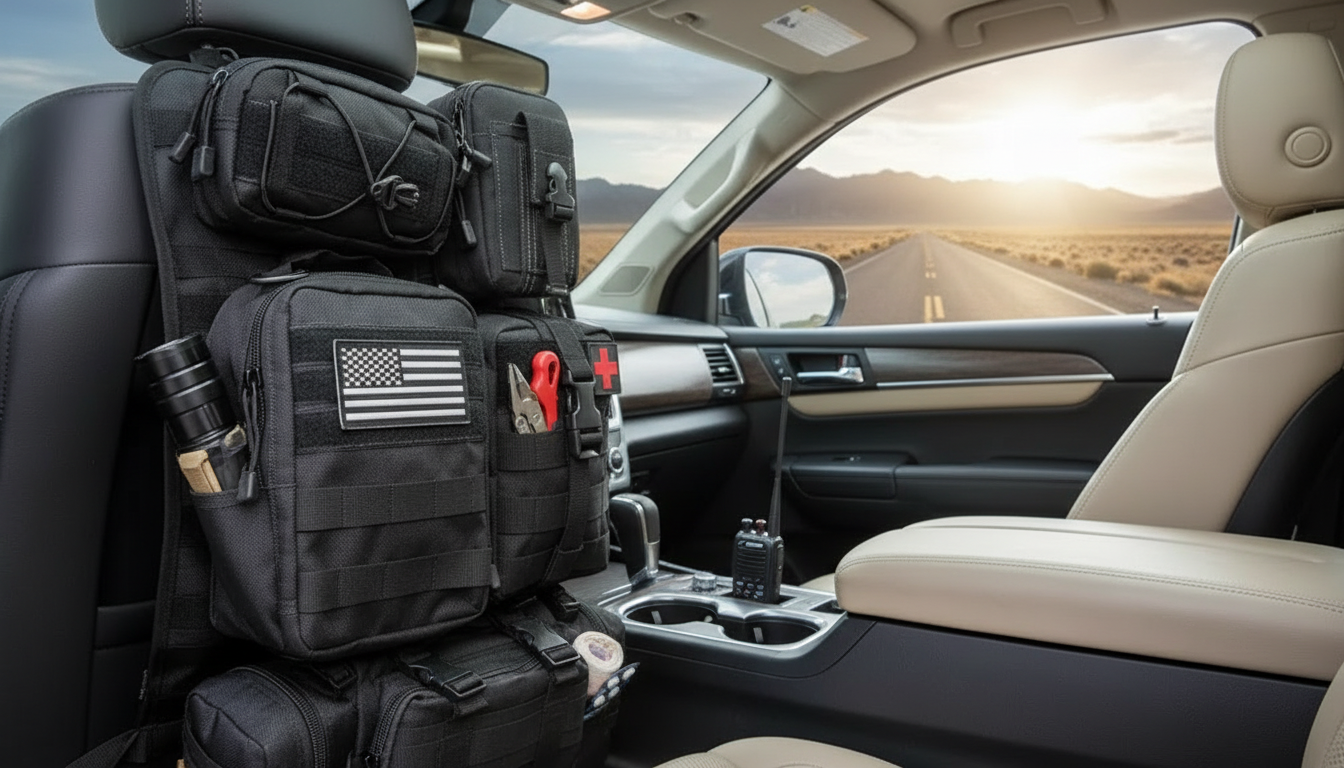
Loose gear on the floor turns into noise, clutter, and a safety distraction. A tactical-style back seat organizer adds structured storage right where passengers can reach it, keeping everyday essentials, road-trip supplies, and emergency items secured and easy to find. The biggest win is simple: instead of digging under seats or letting items roll around during turns, you get a dedicated “home” for the stuff that tends to migrate across the cabin.
Reducing in-car distractions also matters for safety. Agencies like the NHTSA and the CDC emphasize keeping attention on the road—having essential items organized and predictable helps cut down on frantic searching at the worst possible moment.
Compared to tossing everything in a tote bag, a tactical-style panel makes it easier to “scan” what you have at a glance. That means fewer duplicates (another charging cable, another pack of wipes) and less time spent rummaging while stopped for gas or helping kids in the back seat.
A good organizer feels “invisible” once installed: it stays tight to the seatback, doesn’t steal legroom, and doesn’t become another noisy item in the cabin. Look for stitching that appears reinforced at stress points (strap joints and pocket seams), since those take the most wear during daily use.
“Universal” usually means adaptable straps and a flexible panel that can conform to many seat styles. Still, small differences matter—especially in vehicles with fixed headrests, unusual seat contours, or rear-seat features that need clearance.
| Compartment | Best For | Tip |
|---|---|---|
| Large open pocket | Jackets, small blanket, paper towels | Keep soft items here to avoid pressure on passengers |
| Medium pouch | Water bottle, snacks, sunglasses case | Choose items used often while parked or at stops |
| Zippered pocket | Cables, batteries, small tools, first-aid add-ons | Use for small items that tend to vanish between seats |
| Elastic/loops | Flashlight, multitool, tire gauge, pen | Place quick-grab safety items in consistent positions |
One of the most useful habits is assigning “zones.” For example: left-side pockets for personal items (glasses, hand sanitizer), center pockets for shared items (tissues, napkins), and right-side pockets for safety gear (flashlight, tire gauge). When everyone knows where things go, the organizer stays tidy instead of turning into a second glovebox.
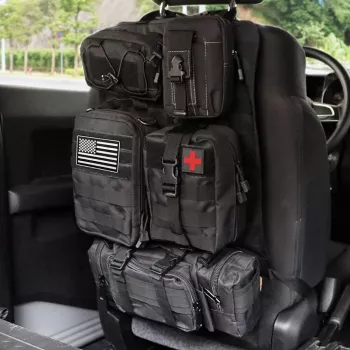
Universal Tactical Car Back Seat Storage Organizer is a practical choice for building a consistent, easy-to-maintain layout—especially if you’re tired of items sliding into the footwells or disappearing between the seats.
Most universal organizers are designed to work with standard headrest posts and adjustable straps, so they fit a wide range of vehicles. Check your seatback shape and headrest style, and confirm it won’t interfere with rear vents, USB ports, or other seatback features.
It depends on where the car seat is positioned and how the organizer straps route behind the seat. Prioritize car-seat safety first and make sure nothing interferes with anchors, tethers, or a correct, secure installation.
Tighten the top straps firmly, secure the lower anchors to remove slack, and place heavier items in the bottom compartments. After a short test drive with a few turns and braking, re-tighten as needed until it sits stable.





Leave a comment