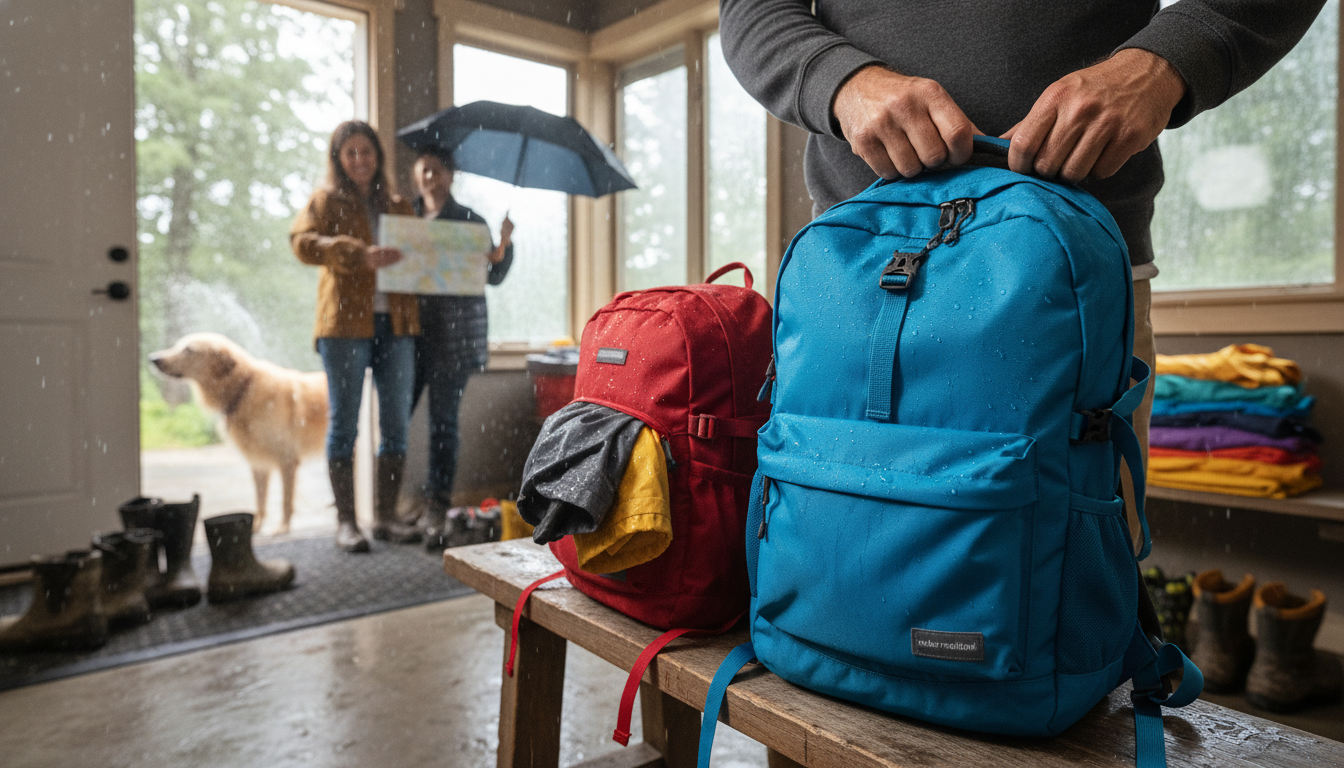
Not necessarily. Most everyday backpacks are designed to be water-resistant, not fully waterproof. That means they can handle light rain or splashes for a short time, but prolonged exposure or heavy downpours can still let moisture seep through seams, zippers, and fabric pores.
A water-resistant backpack typically uses treated fabrics (like polyester or nylon with a coating) and may include a durable water-repellent (DWR) finish. A waterproof backpack is built to block water entry more aggressively, often using sealed seams, waterproof laminates, and watertight closures (like roll-tops). The gap matters most around zipper tracks, stitching holes, and the bottom panel—common leak points in standard packs.
A fully waterproof backpack makes the most sense for situations where getting soaked is likely and consequences are high: commuting in storm-prone areas, cycling, travel days with extended outdoor walking, boating, or carrying electronics you can’t risk. For many shoppers, pairing a water-resistant laptop backpack with an added rain cover (or a packable poncho for the bag) is the practical middle ground.
Look for details that improve rain performance: coated fabric, flap-covered zippers, fewer external seams, a raised or reinforced base, and a snug laptop compartment. Even then, small upgrades help—using a dry bag or zip pouch for chargers, placing your laptop in a sleeve, and keeping the pack’s exterior clean so water repellency works as intended.
If you’re protecting a computer, “water-resistant” alone may not be enough on a long walk in steady rain. Consider a backpack marketed as rain-ready, add a rain cover, and store valuables in an inner pocket or waterproof organizer. For more tips on staying dry with a laptop pack, see this guide: Rain-ready 15.6 laptop backpack guide.
Use a fitted rain cover for the backpack and put electronics in a sleeve or dry pouch inside. This combination protects against both fabric soak-through and water entering through zippers and seams.





Leave a comment