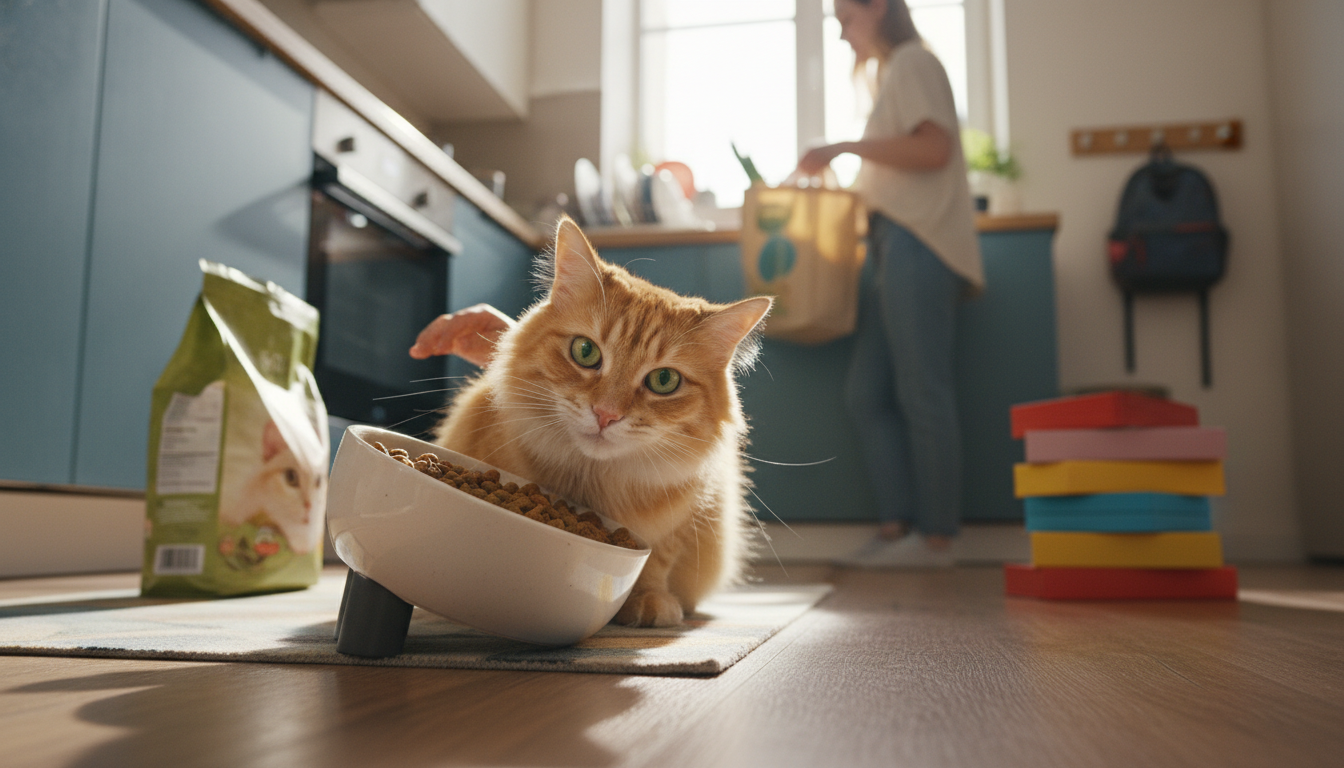
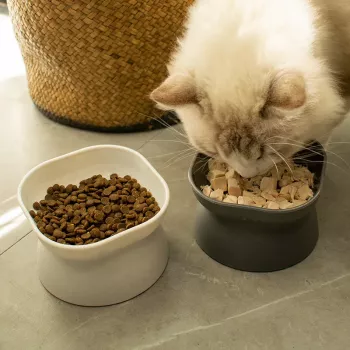
They can be. A tilted cat bowl often has a wider, shallower eating area and a forward-leaning angle that helps keep food closer to the rim. That design can reduce how often your cat’s sensitive whiskers press against the sides of a deep or narrow dish—one of the common triggers people associate with whisker fatigue.
Whisker fatigue is typically discussed as overstimulation from repeated whisker contact. Bowls that are deep, steep-sided, or too narrow can force more rubbing as a cat tries to reach the last bits of food. With a tilted bowl, food tends to settle toward the front, so many cats can eat with less “digging” and fewer whisker collisions. The angle may also encourage a more comfortable head and neck position, which can make mealtime feel calmer for some cats.
Not every tilted bowl is automatically whisker-friendly. Prioritize a wide opening, a low front edge, and smooth, rounded interior surfaces. A stable base matters too—if the bowl slides or tips, cats may become frustrated and avoid it. Materials like ceramic or stainless steel are often easier to keep clean and odor-free, which can also affect a cat’s willingness to eat.
Some cats show subtle clues: pawing food out of the bowl, eating only from the center, walking away mid-meal, or preferring flat plates. If those behaviors improve after switching to a wide, shallow, tilted bowl, it’s a good sign the change made mealtime more comfortable.
For a deeper look at bowl angles, stability, sizing, and cleanup tips, visit this tilted cat food bowl guide.
A wide bowl with higher sides (especially at the back) can help keep kibble or wet food contained while still giving the whiskers space. A stable, non-slip base also reduces spills from pushing or nudging during meals.





Leave a comment