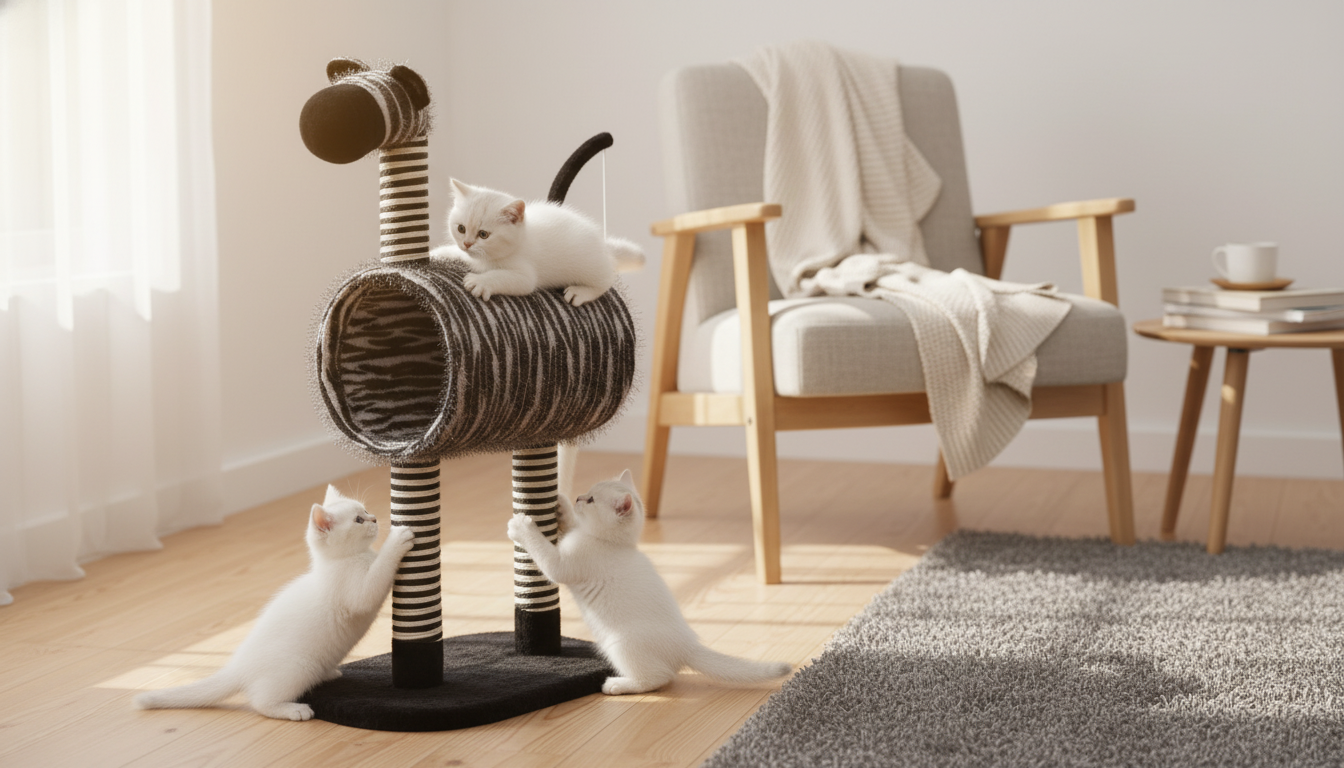
Kittens need a safe place to climb, scratch, and burn energy without turning furniture into a training ground. A compact cat tree that combines two levels for perching, sisal rope for scratching, and a dangling toy for batting can channel natural instincts into one dedicated station—especially helpful during the high-energy months of kittenhood. When a kitten has a reliable “yes space,” it’s easier to build routines that protect rugs, couch corners, and door frames while still letting your cat act like a cat.
A dual-tier setup is a practical middle ground for kitten homes: enough vertical interest to feel exciting, without the intimidating height of larger towers. Here’s what it brings to daily life:
As the ASPCA notes, enrichment and appropriate outlets for natural behavior help keep cats mentally and physically engaged, which can reduce frustration-driven habits at home. See general cat care guidance from the American Society for the Prevention of Cruelty to Animals (ASPCA).
Not every kitten takes to the same setup, but a few design details make a scratch-and-play station far more likely to “stick” as a daily habit.
Veterinary organizations consistently emphasize safe home setups, stress reduction, and age-appropriate activity as part of good pet care. The American Veterinary Medical Association (AVMA) provides cat care resources that pair well with establishing healthy play and scratching routines early.
This type of station is designed to combine scratching, solo play, and a bit of “up-high” comfort in one compact piece.
| Kitten need | How the cat tree helps | Simple tip to boost use |
|---|---|---|
| Scratching and stretching | Sisal rope texture encourages repeated scratching | Sprinkle a pinch of catnip (if age-appropriate) or use a silvervine spray sparingly |
| Climbing practice | Two levels provide short, confidence-building climbs | Lead play up the tiers with a wand toy for 30–60 seconds |
| Solo play outlet | Hanging ball invites batting and pouncing | Rotate other toys nearby so the station stays “new” |
| Territory and comfort | Perching gives a small “safe zone” above floor level | Place it near a wall or corner for added security |
Placement is the difference between a cat tree that becomes the house “hot spot” and one that gets ignored. Aim for convenience and visibility.
If your kitten is timid, a corner placement often feels more secure than a wide-open center-of-room location, and can encourage more frequent climbs and longer perching breaks.
If you want one compact station that covers multiple kitten needs, the Dual-Tier Sisal Rope Cat Tree with Hanging Ball – Ultimate Play & Scratch Station for Kittens is built around the three big daily behaviors: climb, scratch, and bat. It’s a strong choice for kitten households that need a single setup that’s easy to place near the areas where play and mischief usually happen.
Cat play zones get heavy use, and quick cleanup habits make it easier to keep the area fresh. If you’re building a simple routine around daily pet care, Clean Faster, Stay Calm – A Stress-Free Speed Cleaning Guide for Busy Homes can pair nicely with a “reset the room” approach after play sessions.
Sisal rope is generally safe when it’s tightly wrapped and kept in good condition. Check routinely for loose strands, trim fraying fibers, and supervise very young kittens that may chew or tangle in long threads.
Yes—sisal is a popular scratching material because it offers texture and resistance that help cats shed old claw layers and get a satisfying stretch. Preferences can vary, so good placement and gentle training usually make a bigger difference than the material alone.







Leave a comment