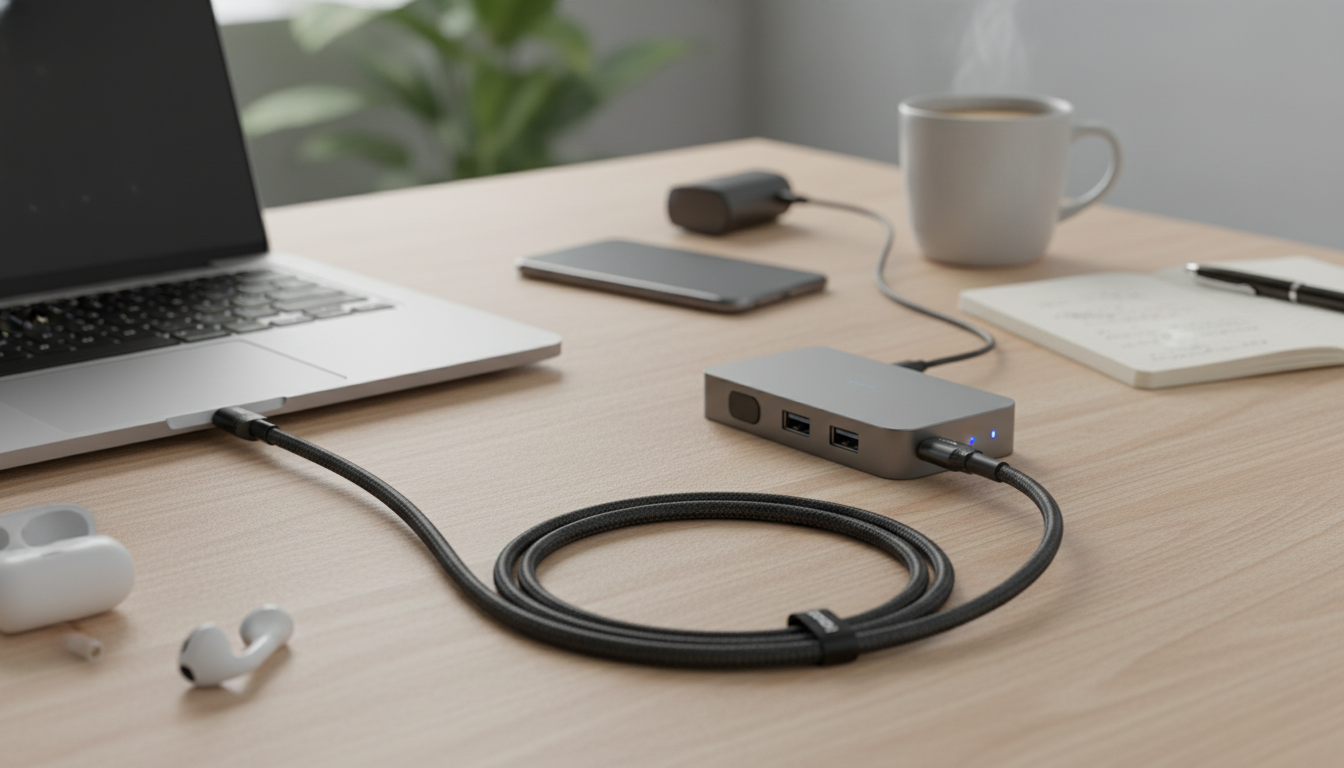
A high-power USB-C to USB-C cable can be the difference between slow “trickle” charging and full-speed charging for phones, tablets, handhelds, and many USB-C laptops. A 100W (5A) cable is built for higher current and safer sustained power delivery, so it’s less likely to become the limiting factor when a compatible charger and device are capable of faster charging. Below is a practical breakdown of what “100W” really means, how PD and QC compatibility impacts real-world performance, and what to double-check before plugging in.
“100W” is a maximum rating: it’s the highest power the cable can safely carry when the charger and device negotiate a high-power USB-C Power Delivery (PD) mode. It doesn’t force 100W into a device—charging is negotiated, and the device only draws what it’s designed to accept.
The “5A” rating is the cable’s maximum current capacity. Reaching 100W commonly involves higher voltage (often 20V) and up to 5A. Many everyday USB-C cables are designed for up to 3A, which tops out at 60W under a 20V PD profile. If a laptop or power bank needs more than that, a 5A cable helps remove that ceiling.
A 100W-capable cable is still useful with lower-power devices. If a phone only negotiates 18–27W, it will charge at that rate; the cable simply has extra headroom. Keep in mind that charging speed depends on the entire chain: the device, the USB-C PD charger, the cable rating, the negotiated protocol (PD/QC), and temperature/thermal limits inside the device.
| Target power | Typical PD profile | Common use cases | Cable requirement |
|---|---|---|---|
| 18–27W | 9V ⎓ 2A–3A | Many phones and small tablets | Any quality USB-C to USB-C cable (3A is often enough) |
| 45W | 15V ⎓ 3A | Tablets, some ultrabooks, handheld consoles | USB-C cable rated for at least 3A |
| 60W | 20V ⎓ 3A | Many USB-C laptops and docks | USB-C cable rated for 3A (60W) |
| 100W | 20V ⎓ 5A | Higher-power laptops, hubs, and multi-device setups | USB-C cable rated for 5A (100W) |
USB Power Delivery (PD) is a USB-IF standard that lets a USB-C charger and a device agree on a voltage/current combination that’s safe and efficient. Rather than “always-on” high voltage, PD negotiation happens digitally, and the power level can change as the battery fills or the device heats up. For more background, the USB-IF overview is a helpful reference: USB Power Delivery (USB-IF).
Quick Charge (QC) is Qualcomm’s fast-charging family used by many phones. QC 4.0 is more aligned with USB-C and can interoperate with USB PD in many modern setups, depending on the charger and phone. Qualcomm’s feature page provides additional context: Qualcomm Quick Charge.
The important takeaway is that the cable doesn’t “decide” the charging speed. The charger and device negotiate the fastest mutually supported method. If a phone relies on a proprietary method that isn’t PD (or isn’t supported by the charger), it may fall back to a slower standard rate even if the cable itself is rated for 100W.
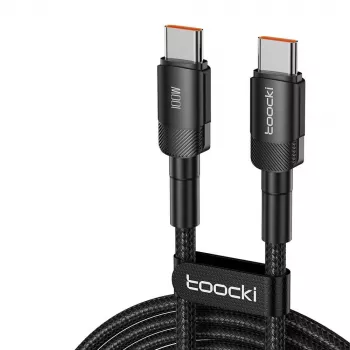
If the goal is one dependable cable that won’t cap charging performance across phones, tablets, power banks, and many USB-C laptops, a 5A-rated option is a practical upgrade. The 100W USB-C to USB-C Fast Charging Cable with PD 3.0 & QC 4.0 – 5A Power is designed for high-power USB-C charging up to 100W when paired with compatible PD chargers and devices, and it supports common negotiation approaches used by modern USB-C devices.
For shoppers who like browsing other popular items while building a cart, these in-stock guides are also available: Clean Faster, Stay Calm – A Stress-Free Speed Cleaning Guide for Busy Homes and Cozy Pumpkin Spice Latte | Fall-Inspired Recipe Guide.
USB-C PD is a USB-IF standard that negotiates defined power profiles over USB-C for safe charging across many brands. QC is Qualcomm’s fast-charging ecosystem; QC 4.0 is more aligned with USB-C and often overlaps with PD, but charging speed ultimately depends on what the phone and charger both support.
This usually refers to chargers, cables, or setups that can work with USB Power Delivery and also support Quick Charge-compatible negotiation for certain phones. Devices typically fall back to the fastest charging standard that both sides can use.
A PD fast charging cable is a USB-C cable designed to safely support USB Power Delivery charging without becoming the limiting factor. Higher-watt PD charging (such as 100W) generally requires a 5A-rated USB-C cable plus a PD charger with the right voltage profile.






Leave a comment