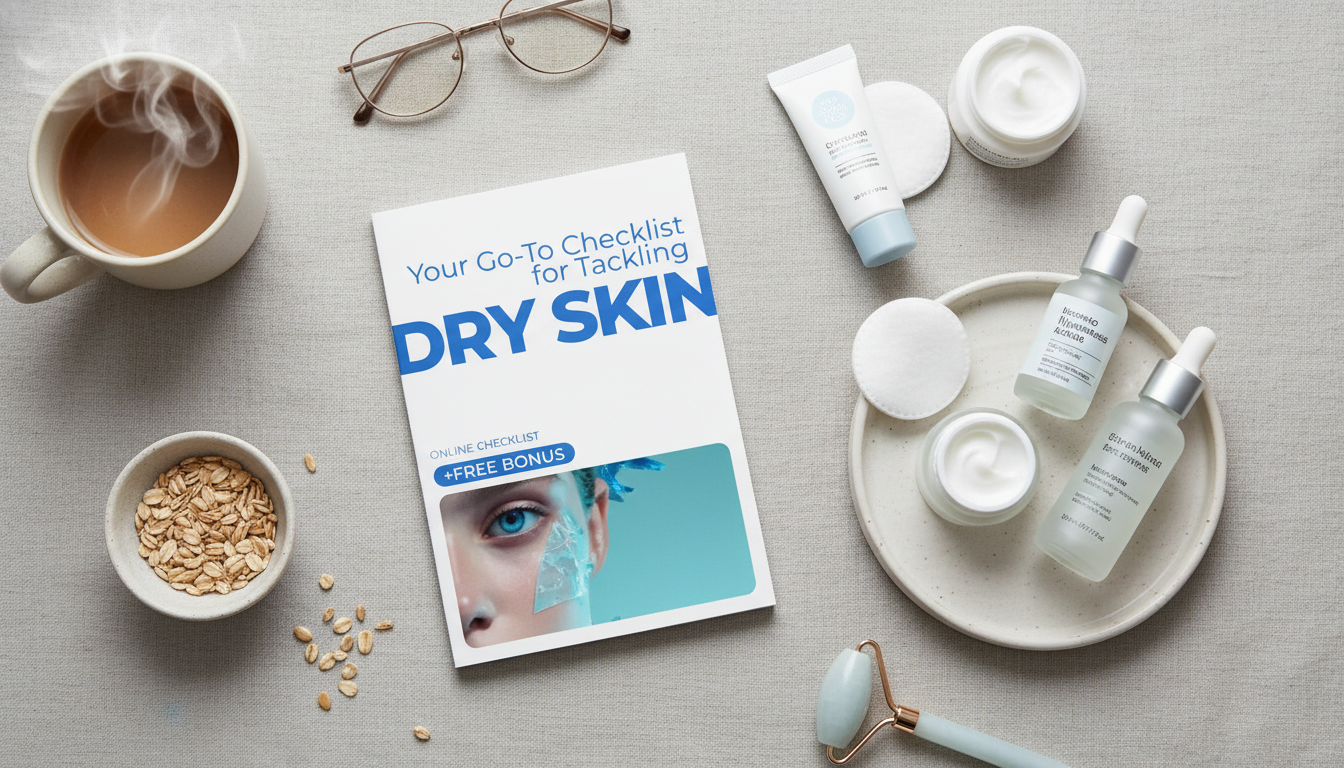
Dry skin often looks like flaking and feels like tightness, but the real issue is usually a weakened moisture barrier plus daily habits that quietly strip hydration. A barrier-first reset focuses on gentle cleansing, fast moisturizing, and consistent repetition long enough for skin to settle. Below is a clear breakdown of what dry skin is (and isn’t), the most common at-home causes of flakes, a simple morning/night routine, and an easy printable checklist system to help you stay consistent.
Dry skin commonly shows up as tightness after cleansing, visible flakes, rough texture, dullness, and fine lines that look more noticeable when your skin is dehydrated. Makeup may cling to patches, and products that “never used to sting” can suddenly feel sharp or burny on contact.
One frequent mix-up: dehydrated skin vs. dry skin. Dehydrated skin is low on water; dry skin is low on oil/lipids. They can overlap—especially in winter or when you’re using strong actives—so a routine that both hydrates (water-binding) and moisturizes (lipid replenishment) often works best.
Red flags that may need medical advice include cracking that bleeds, intense itch, rash, swelling, or persistent burning despite switching to gentle care. If symptoms are severe or long-lasting, it’s worth checking in with a dermatologist. For practical self-care basics, see the American Academy of Dermatology guidance on dry skin.
Most flaking cycles come down to barrier disruption plus environment. Harsh foaming cleansers, frequent washing, or very hot water can dissolve protective lipids. Over-exfoliating (scrubs, strong acids, retinoids too often, or stacking multiple actives) can leave skin raw-feeling and reactive. Add dry indoor air from heating/AC, and water loss ramps up quickly.
Timing matters too: waiting too long after washing reduces the payoff of moisturizer because more water has already evaporated. And common irritants—fragrance, certain essential oils, strong alcohols, or even detergent residue—can keep skin in a low-grade irritated state. Lifestyle contributors like low fluid intake, long hot showers, and stress-picking at flakes can lock you into a “peel, scrub, repeat” loop.
| If flakes show up after… | Most likely cause | Simple change for the next 7 days |
|---|---|---|
| Cleansing | Cleanser too stripping or water too hot | Switch to a gentle cleanser; use lukewarm water; limit cleansing to 1–2x/day |
| Exfoliating/active nights | Barrier overwhelmed by actives | Pause exfoliation 7 days; reintroduce 1–2x/week max |
| A day in heated/AC rooms | Low humidity and higher transepidermal water loss | Add a humidifier; apply moisturizer to damp skin; consider occlusive at night |
| Trying to “scrub off” texture | Micro-irritation and barrier damage | Stop physical scrubs; use soft cloth only; focus on moisturizing layers |
A reset works best when it’s boring: fewer steps, gentler products, and the same rhythm for 2–4 weeks. Sun exposure can worsen dryness and sensitivity, so daytime protection matters even when you’re not “trying to tan.” At night, the goal is comfort and recovery—no stinging, no tight finish, no “squeaky clean.”
| Step | Morning | Night | Notes for flaky days |
|---|---|---|---|
| Cleanse | Optional (rinse or gentle cleanser) | Gentle cleanse | If skin feels tight after cleansing, switch cleanser or cleanse less |
| Hydrate | Optional light hydrating layer | Hydrating layer if comfortable | Apply on damp skin; stop if stinging persists |
| Moisturize | Yes | Yes (richer) | Use more than usual; cover flaky zones fully |
| Seal (occlusive) | Usually no | Optional/yes if very dry | Thin layer on top of moisturizer; avoid if acne-prone areas clog easily |
| SPF | Yes | No | Use moisturizing sunscreen; reapply if outdoors |
For a deeper look at barrier support and moisturizer basics, the National Eczema Association’s overview on moisturizers and the skin barrier is a helpful reference.
If dryness is widespread or persistent, it can help to understand common causes and treatments; the Cleveland Clinic’s dry skin overview provides a clear medical-level summary.
It’s a layering method where you apply a hydrating toner/essence in multiple thin layers. For dry or sensitive skin, start with 1–3 layers and stop if stinging shows up, then seal with moisturizer to reduce water loss.
Keep it minimal and gentle: a mild cleanser (or just rinse in the morning), a fragrance-free moisturizer applied to damp skin, and daily sunscreen. At night, cleanse, moisturize more richly, and add a thin occlusive layer if flakes persist.
A consistent barrier-first routine is “perfect” when it stays comfortable and is easy to repeat: gentle cleansing, optional hydration, solid moisturizing, SPF during the day, and an occlusive at night if needed. Consistency for several weeks matters more than adding extra steps.







Leave a comment