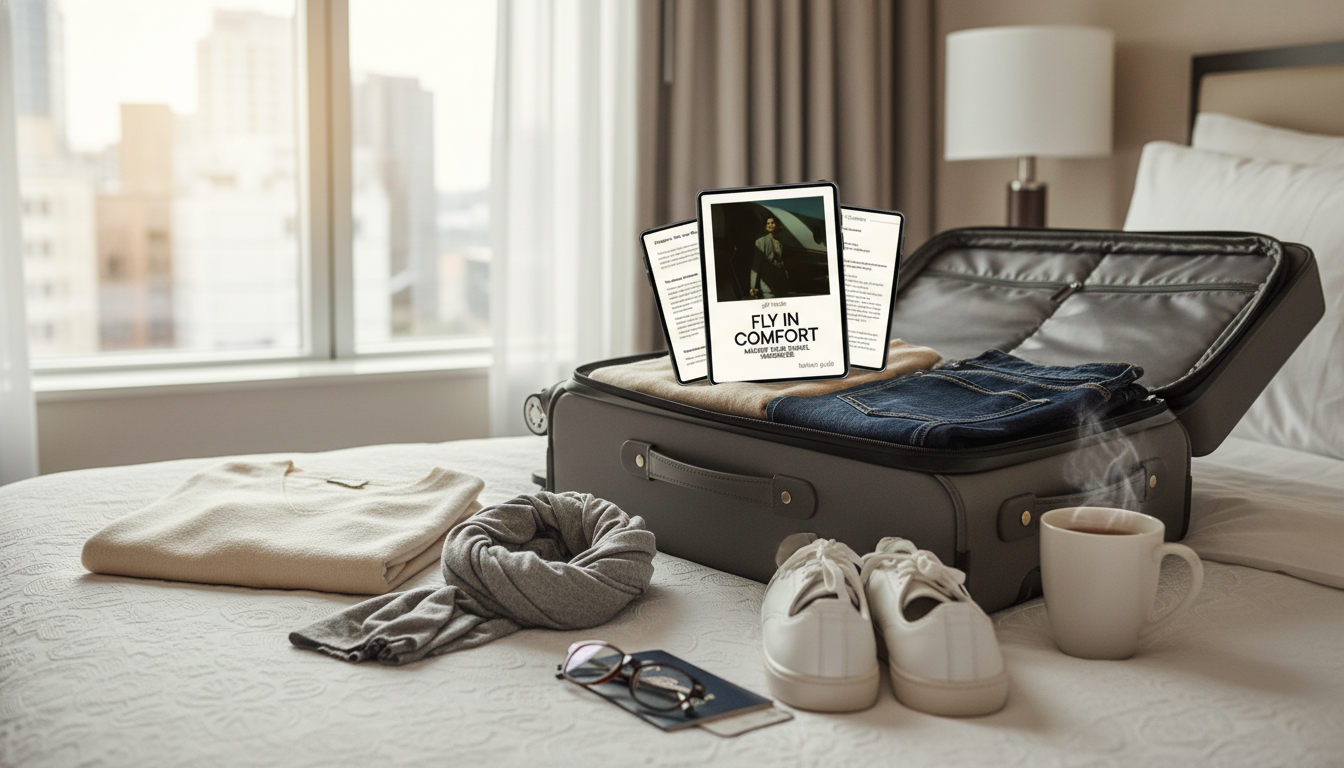
A comfortable flight outfit does more than feel soft—it manages temperature swings, long hours of sitting, security checkpoints, and the reality of arriving ready to go. This guide breaks down what to wear on a plane, how to build a small travel capsule that mixes easily, and a simple checklist that keeps packing decisions fast and stress-free.
The best airplane outfits aren’t complicated—they’re practical. A few smart choices keep you comfortable from boarding to baggage claim, even when terminals are warm, cabins are cold, and your schedule changes.
For security screening specifics (and to avoid last-minute repacking at the checkpoint), check TSA’s “What Can I Bring?” before you fly.
Think of your travel-day look as a five-piece system. Each part has a job: temperature regulation, comfort in a seat, and quick transitions when you land.
Start with a soft tee, breathable long-sleeve, or lightweight tank depending on season and destination humidity. Prioritize a fabric that won’t trap heat when you’re hustling to a gate.
Add a cardigan, zip hoodie, or thin sweater that can be removed without messing up hair or accessories. A front opening is helpful when you need to cool down quickly after boarding.
Choose joggers, relaxed trousers, leggings with a longer top, or ponte pants for structure without stiffness. The goal: comfort while seated, plus a waistband that doesn’t dig in after two hours.
Finish with a packable jacket, blazer-knit hybrid, or light trench for airports and arrival weather. This piece does double duty—warmth in transit and polish after landing.
Wear cushioned socks and comfortable shoes with a stable sole; consider compression socks on longer flights. You want something easy for security, supportive for long walks, and roomy enough for swelling.
| Scenario | Top | Bottom | Layer | Shoes |
|---|---|---|---|---|
| Early morning domestic flight | Soft tee + light long-sleeve | Joggers or ponte pants | Zip hoodie | Slip-on sneakers |
| Red-eye or long-haul | Breathable long-sleeve | Relaxed trousers | Cardigan + scarf | Cushioned sneakers + compression socks |
| Warm departure, cold cabin | Tank + lightweight button-down | Leggings or wide-leg knit pants | Packable jacket | Loafers or sneakers |
| Business-casual arrival | Knit top | Ponte pants | Unstructured blazer | Clean sneakers or flats |
Small details can be the difference between “fine” and “actually comfortable.” Focus on feel, movement, and temperature control—especially if you tend to run cold on planes.
If you’re flying with health considerations or want up-to-date travel guidance, CDC Travelers’ Health is a reliable place to review recommendations before you go.
A travel capsule is less about having “the perfect outfit” and more about having repeatable combinations that look intentional. When everything matches, you can pack fewer pieces and still feel like you have options.
To make this even easier, keep a saved set of outfit formulas you can reuse for every trip—especially for travel days when you want comfort without looking sloppy.
A simple rule: wear what’s bulky and essential; pack what’s flexible and saves the day if plans change.
Wear breathable layers and choose non-restrictive bottoms so you can sit for hours without digging seams or stiff waistbands. Bring a scarf or wrap for warmth, keep small essentials within reach, and consider compression socks on longer flights—especially if your feet tend to swell.




Leave a comment