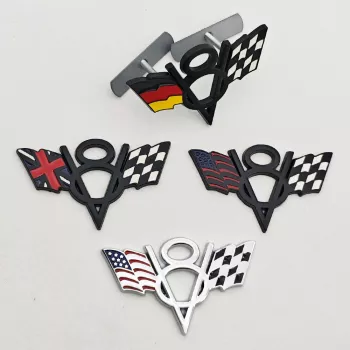
Add a clean, sporty accent to a grille, trunk, fender, or interior trim with a compact V8 flag-style emblem. This 3D metal badge is designed to look sharp, stay put, and bring a subtle performance vibe to a wide range of vehicles—from daily drivers to weekend builds. If you want a quick visual upgrade without drilling, cutting, or repainting, a peel-and-stick metal emblem is one of the simplest ways to make a vehicle feel more “finished.” For more guidance, see Flags | Elektroplate.
Emblems work because they break up large, plain surfaces and add a focal point where your eyes naturally land—near a grille bar, at the edge of a trunk panel, or along a clean body line. A flag-style V8 badge gives that classic performance cue without taking over the entire design.
If you’re shopping for the actual badge, see the V8 Flag Emblem Badge – 3D Metal Car Sticker for Dodge, Jeep, Ford, Chevrolet for a straightforward way to add that small performance accent.
Most owners get the cleanest results by treating this like a trim piece: pick a spot that’s visible, relatively flat, and naturally “belongs” with nearby factory badging. Before you commit, stand back 6–10 feet and check whether it looks centered with the vehicle’s lines.
| Location | Surface type to aim for | Quick note |
|---|---|---|
| Grille bar | Smooth painted/plastic bar | Keep clear of active shutters and moving parts |
| Fender/side panel | Clean painted metal | Measure alignment against body lines |
| Trunk/tailgate | Flat painted area | Center using panel gaps as guides |
| Interior trim | Smooth hard plastic or painted trim | Avoid airbag cover zones and soft-touch rubber |
Metal badges typically read more premium than printed vinyl because the edges cast real shadows and catch highlights as you walk around the car. That depth matters most on darker paint colors and in direct sunlight, where a flat decal can disappear.
For general vehicle identification and trim resources, manufacturer support pages can also help confirm model details before adding drivetrain-themed styling. Ford’s official support hub is a solid starting point: Ford Motor Company – Support & vehicle resources.
Most emblem installs go wrong for one of two reasons: the surface wasn’t actually free of wax/grease, or the badge was placed slightly crooked and then pressed down before alignment was confirmed. Taking an extra two minutes to tape a guide line can make it look factory-clean.
If you want to streamline prep and keep the install stress-free, a simple cleaning routine helps. The Clean Faster, Stay Calm – A Stress-Free Speed Cleaning Guide for Busy Homes can be handy for building a quick, repeatable wipe-down habit—useful when you want the car to stay looking freshly detailed.
A V8 emblem looks best when it’s part of a consistent theme. The goal is “intentional accent,” not a cluster of mismatched add-ons. Keep the visual hierarchy simple: one or two standout details, then clean supporting elements.
For historical background on why V8 badging became such an American performance symbol, overviews of the early flathead era offer useful context. A general reference like Encyclopaedia Britannica can help when you’re looking up the early Ford flathead V-8 and its impact.
Check the VIN and compare it with Ford resources or reputable VIN decoder tools, then verify using the under-hood emissions label and the door-jamb information sticker. If the vehicle may have an engine swap, visual identifiers like intake layout, casting numbers, and valve cover style can be necessary.
Ford’s first widely recognized V8 for mass-market vehicles was the flathead V-8 introduced in the early 1930s. It became historically significant because it made V8 power more accessible to everyday buyers, though exact model-year details can vary by market.






Leave a comment