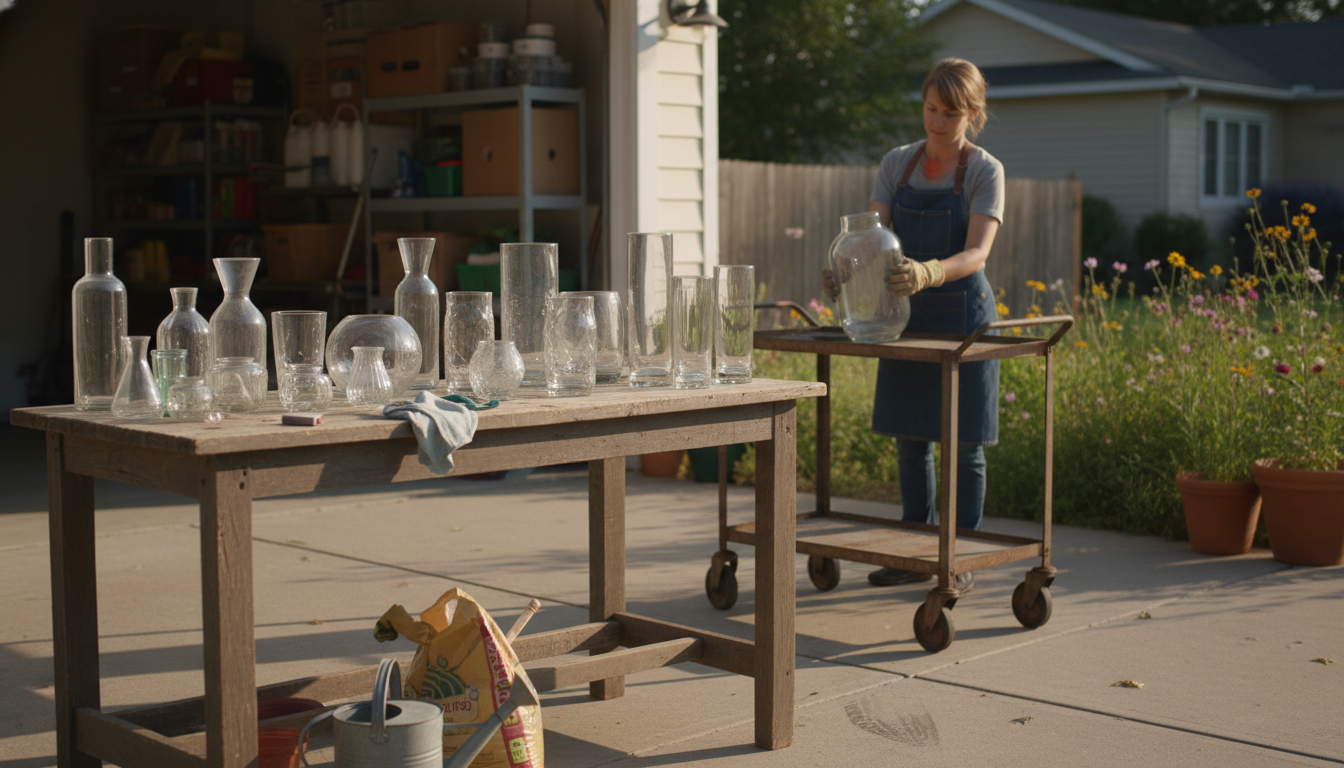
Empty glass vases can look intentional and styled when you treat them like sculptural objects instead of “missing flowers.” Start by deciding what role you want the vase to play: a clean, minimalist accent, a warm centerpiece, or a layered element in a larger vignette. Then use light, height, and repetition to make the arrangement feel finished.
Group two to five vases in the same color family (all clear, or clear mixed with one tinted piece) and vary the heights. Keep the shapes related—like all rounded bodies or all cylinders—so the cluster reads as one decor moment. Place the tallest vase slightly off-center and stagger the rest to create a gentle “step” effect.
Empty doesn’t have to mean bare. Add a small amount of texture that still feels airy: a few smooth river stones, a coil of dried vine, a pinch of preserved moss, or a single branch trimmed to fit the opening. If you prefer a cleaner look, try nothing inside and instead focus on contrast—set clear glass against dark wood, stone, or a matte tray.
Wide-mouth vases can hold a pillar candle (set it on a stable base inside the vase), while slimmer vases can be wrapped with micro string lights. Clear glass amplifies glow, so one or two illuminated vases on a console or dining table can replace a traditional centerpiece.
On shelves, place an empty vase next to books, a small bowl, or a framed photo to balance hard edges with soft curves. On tables, anchor the vase with a tray and add one companion item—like a small catchall or coaster stack—so it looks curated rather than random.
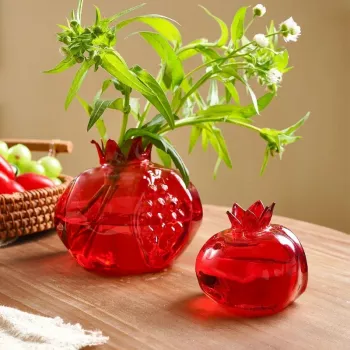
For more ideas on using clear glass and creating an elegant tabletop look, visit this clear pomegranate glass vase decor guide.
Try stones, shells, dried branches, preserved greenery, or micro string lights. Keep the fill low or minimal so the glass still feels light and intentional.





Leave a comment