No. PD 100W refers to a power standard (USB Power Delivery) that can negotiate up to 100 watts, while USB-C is the physical connector shape. A USB-C cable or port may support PD, but it can also support lower power, data-only functions, or different charging methods depending on how it’s built and what the devices support.
PD” stands for USB Power Delivery, a protocol that lets a charger and device “talk” to choose a safe voltage/current combination. “100W” is the maximum power level the setup can provide under the right conditions (charger, cable, and device all supporting it). Many laptops require higher wattage than phones, so PD 100W is often associated with laptop charging over USB-C.
USB-C tells you the plug type, not the capabilities. Two USB-C cables can look identical but perform very differently: one might be limited to 60W charging, another rated for 100W, and data speed can range from basic USB 2.0 to much faster standards depending on the cable and devices. That’s why the packaging (or cable spec) matters more than the connector appearance.
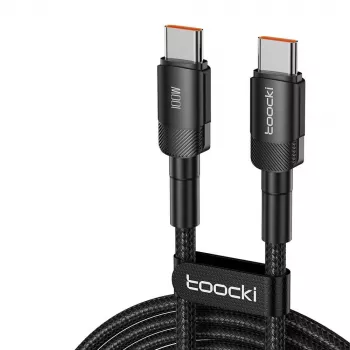
To get up to 100W, three things must line up: a USB-C PD charger that can output 100W, a USB-C to USB-C cable rated for 5A (commonly required for 100W), and a device that can accept that level of power. If any one part is limited—like a 60W charger or a lower-rated cable—your system will charge at the highest mutually supported level, not automatically at 100W.
For a deeper breakdown of PD 3.0, QC compatibility, 5A cable requirements, and how to choose the right 100W USB-C to USB-C cable, see the full guide here: https://mrsmattie.com/blog/guide-100w-usb-c-to-usb-c-cable-pd-3-0-qc-4-0-5a-explained/.
Often, yes. Many 100W (20V/5A) setups require a 5A-rated USB-C cable, while some standard cables top out at 3A and are typically limited to around 60W.






Leave a comment