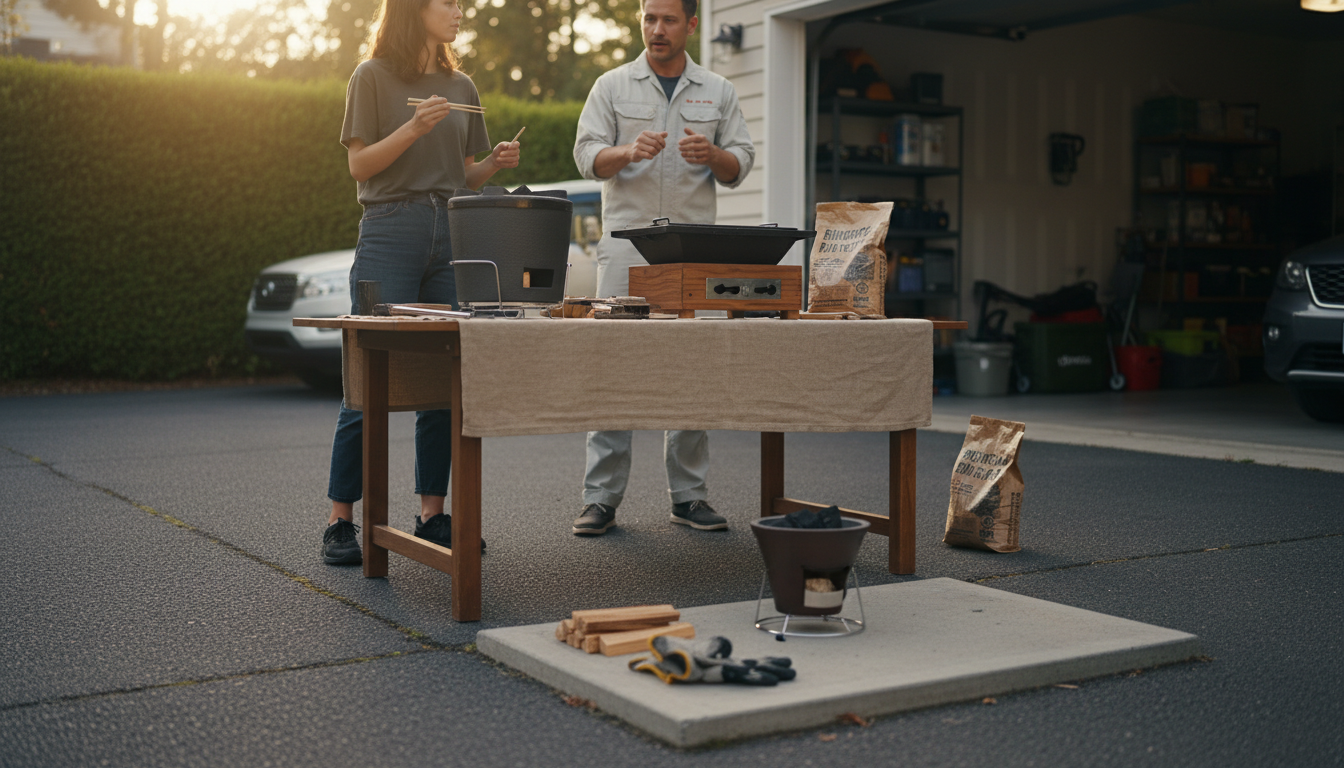
A traditional Japanese charcoal grill is most commonly called a shichirin. In Japan, “shichirin” typically refers to a small, portable charcoal grill—often made from ceramic (like diatomaceous earth) or similar heat-retaining materials—designed for cooking over high, steady heat with excellent fuel efficiency.
In the U.S., many tabletop charcoal grills are casually called a hibachi, but that word can be misleading. In Japan, a hibachi is historically more like a charcoal brazier used for warmth rather than a dedicated cooking grill. Over time, the American use of “hibachi grill” became a common label for compact charcoal cookers, so you’ll still see it in product listings—just know that shichirin is the more accurate term for the classic Japanese grilling style.
If you’re shopping for Japanese-style charcoal cooking, you may also run into these terms:
Konro (or “yakitori konro”): A narrow, rectangular charcoal grill designed for skewers like yakitori. It’s built to focus heat along a tight cooking lane for precise browning.
Robatayaki grill: A larger, restaurant-style setup used for robata cooking, often with a wider grate and space for multiple ingredients at once.
A big part of the experience is pairing the grill with the right fuel—especially binchotan (Japanese white charcoal). It burns very hot, produces minimal smoke, and lasts a long time, which is ideal for clean, controlled searing. Even if you use standard lump charcoal, a shichirin-style grill’s compact design helps concentrate heat efficiently.
If you’re comparing portable charcoal options for camping, parks, or a small patio, this guide to compact, folding charcoal grills is a helpful next stop: https://mrsmattie.com/blog/guide-compact-folding-charcoal-grill-guide-camping-parks/.
Binchotan is the classic choice because it burns hot, clean, and long with very little smoke. High-quality hardwood lump charcoal is a solid alternative if binchotan is hard to find or too expensive.






Leave a comment