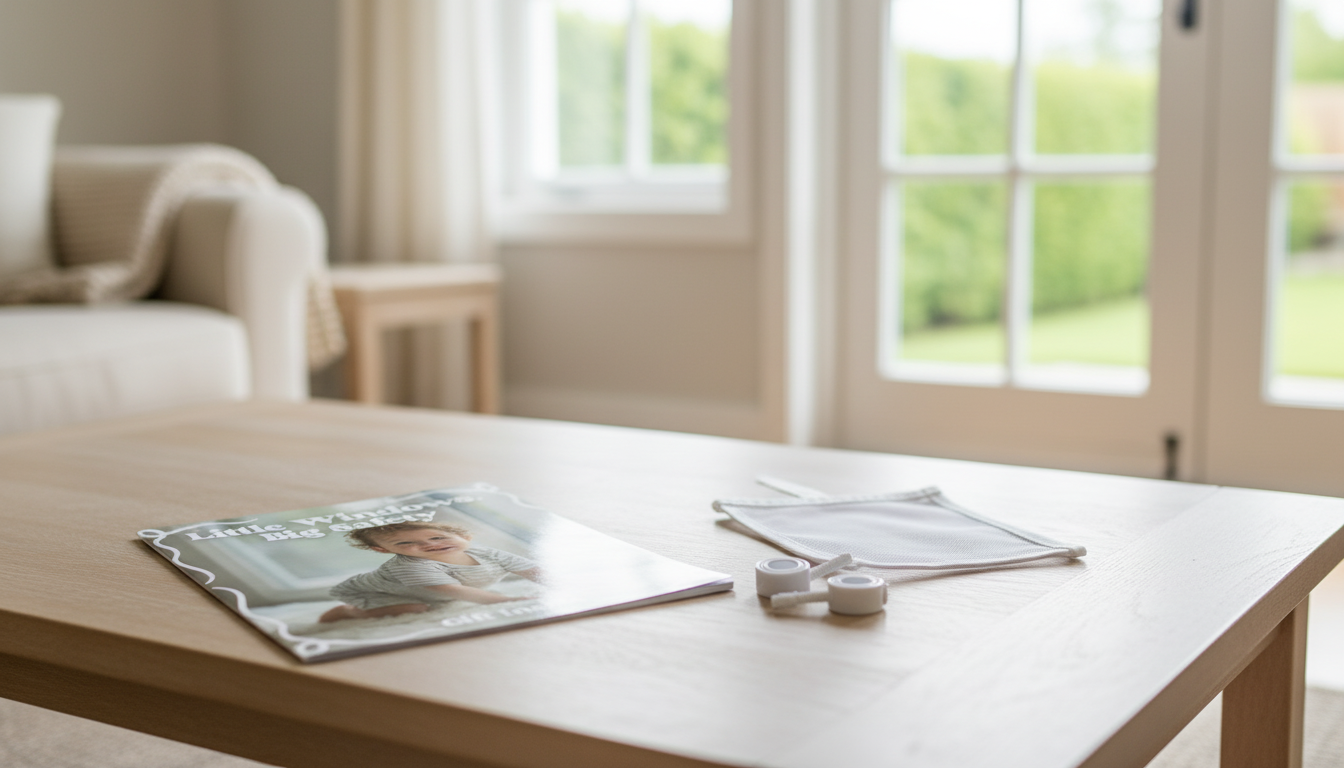
Windows bring in light and fresh air, but for babies and toddlers they can also introduce fall hazards, strangulation risks from cords, and pinch points. The good news: most window risks can be reduced quickly with a few smart habits, the right hardware, and a simple routine for re-checking as kids grow and seasons change.
A common danger is an open window that’s wide enough for a child to fit through. Start by limiting access to open windows and reducing the opening size with an approved window guard or an opening-control device (sometimes called a window restrictor). Choose products designed for your window type and follow installation directions carefully.
Most window incidents begin with climbing. Move beds, dressers, toy bins, chairs, storage cubes, and window seats away from windows. If a tall dresser must stay nearby, anchor it to the wall so a child can’t tip it while climbing.
Blind and curtain cords can be dangerous if they’re accessible. Replace corded coverings with cordless designs when possible. If cords exist, secure them high and out of reach using cord cleats or tension devices, and remove cord loops whenever you can.
Insect screens help with ventilation, not fall protection. Even a properly installed screen can pop out under pressure. Treat screens as “bug control,” not “child control.”
Loose latches, broken locks, or windows that slam shut create hazards. Tighten screws, replace stripped hardware, and address sticking tracks so windows don’t suddenly drop or pinch fingers.
Do a quick walk-through at child height. Look for anything climbable near windows, test openings and locks, and scan for cords. Then schedule a second pass for fixes and installs. For a ready-to-use checklist you can keep on your phone, see Little Windows, Big Safety – Baby Proofing Windows Safety Guide for Parents | Home Window Safety Checklist & Digital Download.
| Check | What to look for | Fix to consider | How often |
|---|---|---|---|
| Furniture placement | Climbable items within reach | Reposition furniture; use wall anchors for tall pieces | Monthly + after rearranging |
| Window opening | Opens wide enough for child to fit | Window opening-control device or approved guard | Seasonally |
| Locks/latches | Loose, missing, or easy to defeat | Repair/replace lock hardware | Quarterly |
| Screens | Loose frame or tears | Repair/replace screen; add guard if needed | Seasonally |
| Blind/shade cords | Accessible cords/loops | Cordless options; cord cleats/tensioners; shorten cords | Monthly |
| Pinch points | Slamming or sticking windows | Maintenance, track cleaning, soft-close or restrictor as appropriate | Quarterly |
Keep beds and cribs away from windows. Avoid placing changing tables under windows where a toddler could climb up. At night, cord risks matter more because supervision is lower—secure or replace corded coverings near sleep spaces.
Sofas under windows and built-in window seats can invite climbing. If you use remote-controlled blinds, store remotes out of reach and don’t leave a child able to open blinds and access cords or window hardware.
Prioritize cordless coverings and low-profile locks. Skip hanging décor near windows that can be grabbed and tugged. As children grow, reassess whether they can reach latches they couldn’t reach a month ago.
Step stools are a common “sudden access” tool. Store them away when not in use. For ventilation windows above counters, add secure restrictors so a curious climber can’t turn a counter into a window approach.
Privacy film helps with visibility, but it doesn’t prevent a fall. If a bathroom window opens within reach of a toddler standing on a stool (or even a closed toilet lid), add a restrictor/lock and keep stools stored.
Window safety works best in layers. Use hardware to limit openings, and use habits to limit access.
For additional guidance, review safety information from authoritative sources like the U.S. Consumer Product Safety Commission (CPSC), the American Academy of Pediatrics (AAP), and child injury prevention resources from the CDC.
If you want a structured, repeatable system, Little Windows, Big Safety – Baby Proofing Windows Safety Guide for Parents | Home Window Safety Checklist & Digital Download is designed to be saved on a phone, printed, and shared with caregivers. And if keeping up with home safety projects feels overwhelming, pairing your plan with a simple home routine can help—consider Clean Faster, Stay Calm – A Stress-Free Speed Cleaning Guide for Busy Homes | Learn how to clean faster without stress to make time for those monthly and seasonal re-checks.
Little windows can improve privacy and may reduce fall exposure when openings are smaller or positioned higher, but any operable window can still be hazardous. Use child-safety layers like opening-control devices or approved guards, and choose cord-safe coverings to reduce risks.
This safety guide is a digital download, so it’s accessible anywhere you have your device—phone, tablet, or computer. Save a copy for quick checks at home, and share it with grandparents or caregivers so the same window rules are followed in every location.






Leave a comment