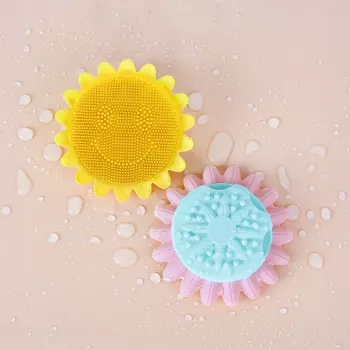
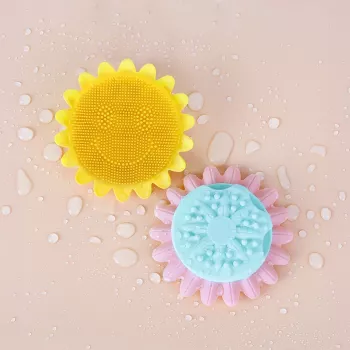
A soft silicone bath brush shaped like a sunflower can make baby bath time calmer and more comfortable by pairing gentle cleansing with a simple grip for parents. The right tool helps spread cleanser quickly, keeps pressure light, and supports a consistent routine—without relying on fingernails or rough scrubbing. Below is what a silicone baby bath brush does, how to use it safely, how to keep it clean, and when it’s most helpful in a baby’s routine.
A baby bath brush is a simple, handheld tool designed to help cleanse with gentle, repeatable strokes. When used with a mild baby wash, it can make lathering faster and more even.
Silicone tools are popular for baby care because they can be easy to rinse and quick to dry when stored properly. The key is keeping the brush clean and fully air-dried between uses.
Shape matters more than it seems during a wiggly bath. A rounded, palm-friendly design can help keep your grip steady and pressure consistent.
The best option depends on baby’s skin sensitivity, how often baths happen, and how you prefer to apply cleanser. Many families keep a brush for quick, gentle lathering and a soft cloth for careful wiping around the face.
| Tool | Best for | Potential downsides | Care tip |
|---|---|---|---|
| Soft silicone bath brush | Gentle lathering, quick rinsing, easy grip | Too much pressure can irritate sensitive spots | Rinse thoroughly and air-dry bristle-side down |
| Soft washcloth | Face/neck folds, targeted wiping | Can stay damp and develop odor if not dried | Use fresh cloths frequently; wash and fully dry |
| Sponge | Holding lots of water for warm rinses | Can trap moisture and residue | Replace often; avoid storing in closed containers |
Gentle technique matters more than the tool itself. Keep bath time calm, brief, and supervised, and avoid “scrubbing” motions—especially on dry patches.
For bath safety basics—especially the importance of constant supervision—see the American Academy of Pediatrics (AAP) bath safety guidance and the CDC drowning prevention facts.
A silicone brush stays freshest when it’s rinsed well and allowed to dry completely in open air. Avoid leaving it sitting in pooled bath water or tucked into a closed container.
For general context on silicone used for consumer products, review the FDA’s overview of food-contact silicone and related materials (helpful background, though baby products should still be used only as directed by the seller/manufacturer).
Soft silicone can be safe for babies when used gently, kept clean, and fully dried between baths. Use very light pressure, avoid broken or inflamed skin, and check the brush regularly for tearing or stickiness. Always supervise bath time closely.
It’s used to help lather baby wash and cleanse with gentle strokes on areas like arms, legs, back, and sometimes the scalp. It can also provide mild exfoliation for everyday residue, but it should be kept away from eyes and not used on broken skin.
No—hands and a soft washcloth are enough for many families. A bath brush is optional, but it can be convenient for quicker lathering, an easy grip with wet hands, and a consistent gentle touch during short baths.





Leave a comment