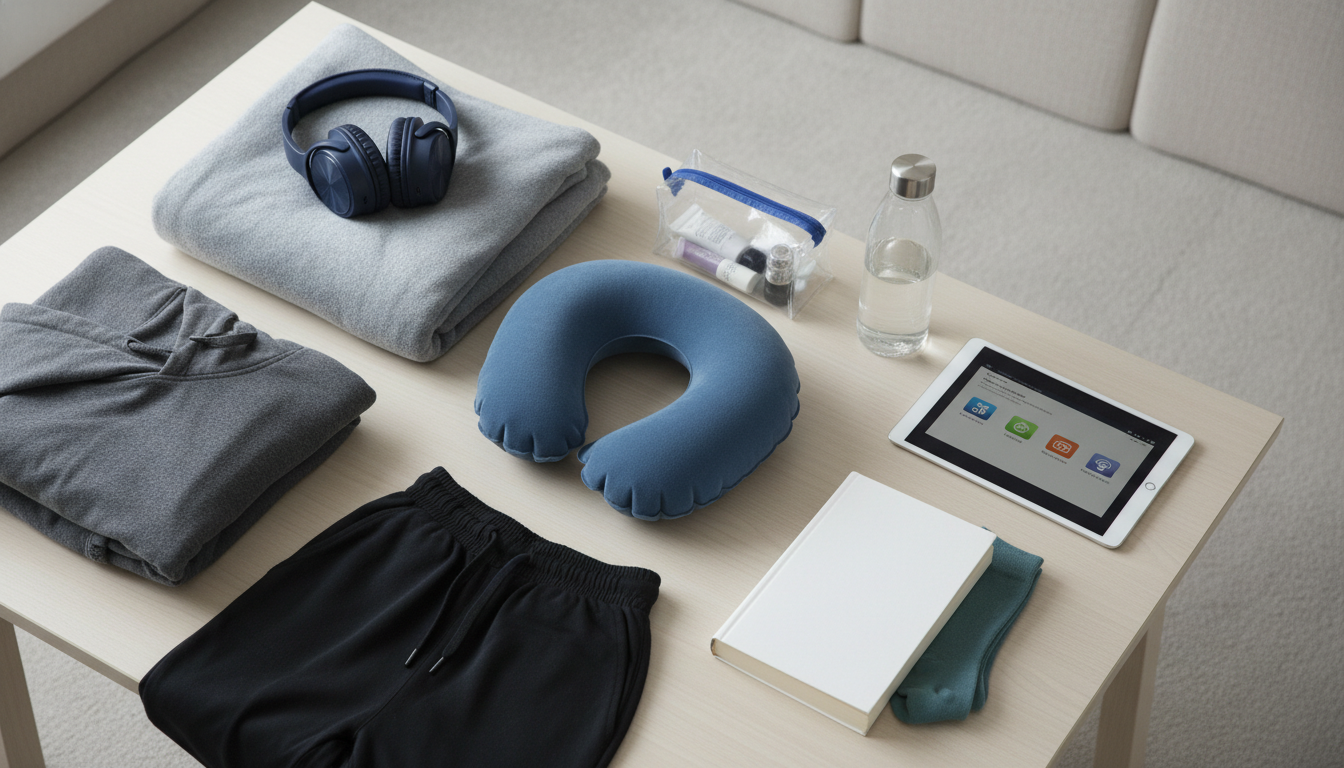
A more comfortable flight usually comes down to a few controllable basics: what you wear, how you set up your seat space, and how you manage temperature, hydration, and movement. A little planning before boarding can make even a long-haul feel more manageable.
Airplanes swing from warm to chilly fast, so build an outfit that adapts. Start with a soft, breathable base layer, add an insulating mid-layer (like a cardigan, sweatshirt, or light sweater), and finish with an easy-on outer layer or wrap. Choose fabrics that don’t itch, bind, or trap heat. For more outfit ideas built around comfy layers, see this guide to the perfect airplane outfit.
Feet can swell in-flight, so wear supportive shoes that aren’t tight and socks that don’t cut in. Slip-on styles help at security and make it easier to adjust during the flight. If you run cold, pack thicker socks in your personal item and swap after takeoff.
Instead of rummaging mid-flight, keep essentials in the seat pocket or a pouch: lip balm, hand lotion, tissues, gum, a pen, and a refillable water bottle (filled after security). Add a light snack to avoid getting stuck hungry between service times.
A neck pillow (or even a scarf you can roll) helps reduce head bobbing. Lumbar support matters too—try a small pillow, rolled sweatshirt, or compact cushion behind your lower back. Noise-canceling headphones or earplugs plus an eye mask can make rest far easier, even on daytime flights.
Drink water steadily and go easy on alcohol and extra caffeine, which can worsen dehydration. Every hour or so, flex your ankles, rotate your shoulders, and stand briefly when possible to reduce stiffness.
Pack layers, a small toiletry pouch (lip balm, moisturizer, toothbrush wipes), chargers, headphones, an eye mask, snacks, and any medications. Keep the items you’ll use most at the top so you can grab them without unpacking everything.



Leave a comment