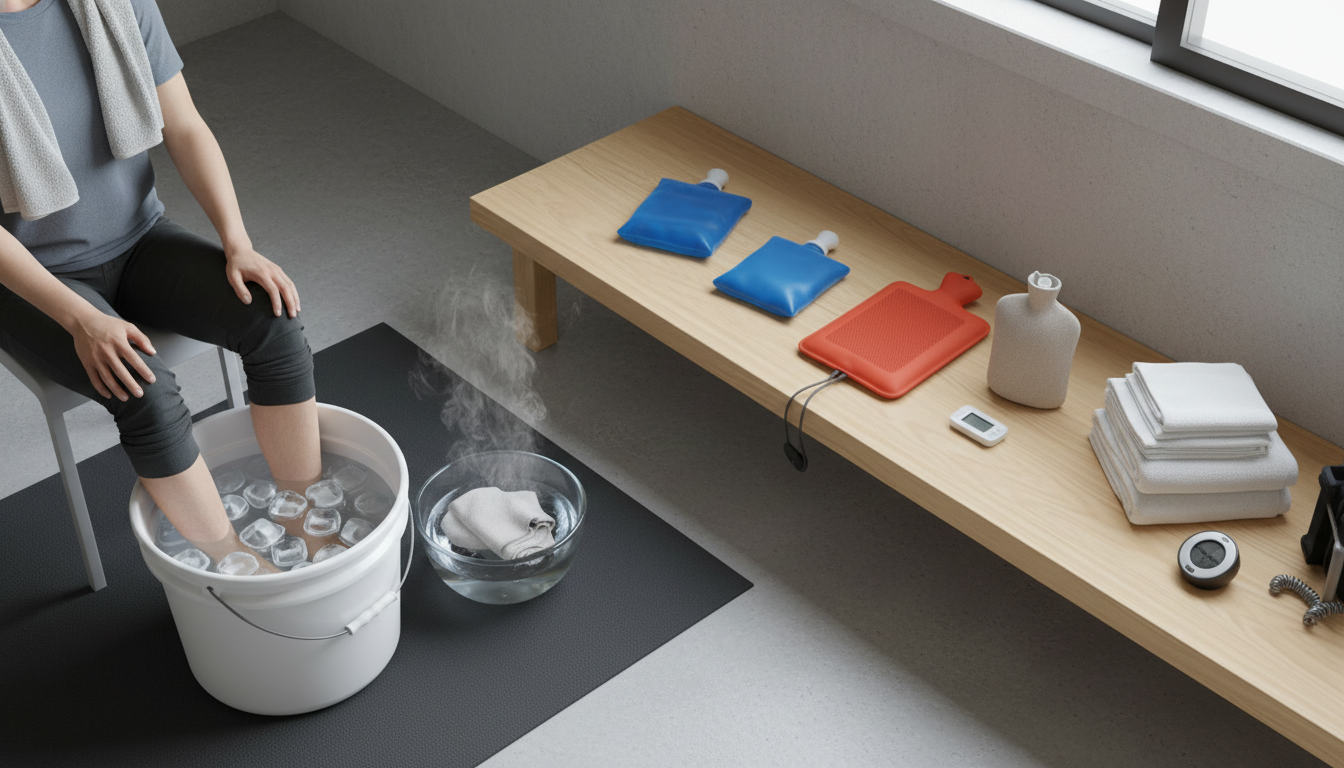
Hot and cold therapy is a simple, effective way to manage everyday aches, stiffness, and minor strains at home. The key is matching the temperature to what your body needs, timing it correctly, and protecting your skin during use.
Use cold therapy for fresh soreness, minor swelling, or a “just tweaked it” feeling—especially within the first 24–48 hours after activity. Cold helps calm inflammation and temporarily dulls pain signals.
How to do it: Wrap an ice pack (or a bag of frozen peas) in a thin towel and apply it to the area for 10–15 minutes. Let the skin return to normal temperature before repeating, up to a few times per day.
Use heat for tight muscles, stiffness, and lingering tension (like a cranky neck or shoulders). Heat increases circulation and helps tissues relax, which can improve comfort and mobility.
How to do it: Apply a warm (not hot) heating pad, warm compress, or microwavable wrap for 15–20 minutes. Keep a layer of fabric between the heat source and your skin, and avoid falling asleep while it’s on.
For some people, alternating temperatures helps with stubborn soreness. Start with cold if the area feels irritated or puffy, then switch to heat once swelling has settled. A common approach is 10 minutes cold, 10 minutes heat, for 2–3 cycles, ending with cold if you’re trying to reduce swelling.
Never place extreme cold or heat directly on skin. Check the area every few minutes for excessive redness, numbness, or burning. Avoid heat over new swelling and avoid cold if you have circulation problems or reduced sensation unless a clinician advises otherwise.
For a practical option designed for targeted comfort, see the full guide here: self-absorbing hot/cold neck and shoulder wrap guide.
Wait until your skin feels back to normal temperature—usually about 10–20 minutes—before switching. This helps prevent skin irritation and lets each treatment do its job.






Leave a comment