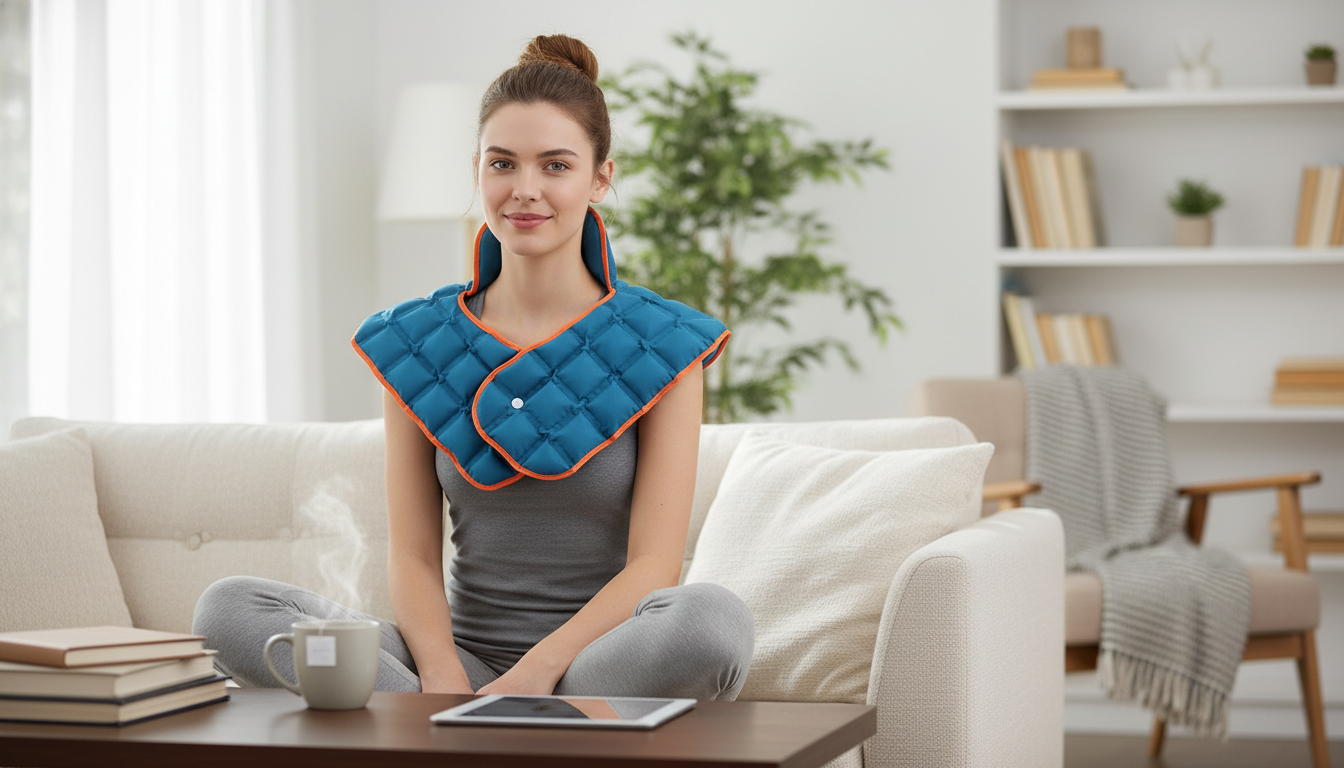
Neck and shoulder tightness can build quickly from long hours at a desk, workouts, or everyday stress. A wrap that conforms to the upper back and neck can make heat or cold therapy easier to use consistently—without needing to hold an ice pack in place or balance a heating pad. This hot & cold therapy shoulder and neck wrap uses a self-absorbing water pad design so it can be prepared for soothing warmth or refreshing cold, then draped comfortably where tension often collects.
A shoulder-and-neck wrap is all about simple, reliable coverage. Instead of chasing a small gel pack around a sensitive area, the wrap format encourages steady contact across the upper back and the base of the neck—places that often feel “locked up” after a long day.
If you want a straightforward option to keep on hand, you can find the Hot & Cold Therapy Shoulder and Neck Wrap – Self-Absorbing Water Pad on our site.
Heat and cold both have a place in basic self-care. The key is matching the sensation to how the area feels today, then keeping sessions comfortable rather than extreme. For general guidance, resources like Mayo Clinic’s overview of ice packs and heat therapy and Cleveland Clinic’s heat therapy guide are helpful starting points.
| Goal | Often choose | Typical session length | Practical tip |
|---|---|---|---|
| Soothe post-activity soreness | Cold | 10–15 minutes | Place a thin layer of fabric between skin and wrap if needed for comfort |
| Ease stiffness and tightness | Heat | 15–20 minutes | Use before light stretching or mobility work |
| Relax at the end of the day | Heat | 15–20 minutes | Pair with calm breathing and supported posture |
| Tender, overworked feeling after a long day | Cold (short) or alternating | 10 minutes cold, then reassess | Keep sessions brief and stop if skin feels overly sensitive |
Because the neck is sensitive—and because temperature therapy can feel intense fast—safe setup matters as much as the wrap itself. Always rely on the specific product instructions for prep time and method, and keep comfort as the main rule.
A helpful habit is setting a timer. It keeps therapy consistent and prevents the “just a few more minutes” drift that can irritate skin.
To get the most out of hot or cold sessions, aim for even contact across the upper trapezius and the base of the neck. If one corner is doing all the work, the sensation may feel too sharp in one spot and too mild everywhere else.
For extra coziness after a heat session—especially if you tend to tense back up when you get chilly—a soft layer can help. A comfortable option to browse is the Patriotic Eagle Hoodie – 4th of July Hooded Sweatshirt – USA Unisex Hoodie.
Cold sessions are often kept to about 10–15 minutes, while heat sessions commonly run about 15–20 minutes. Check your skin during and after, take breaks between sessions, and follow any included instructions or clinician guidance.
It can help soothe tight muscles and day-to-day discomfort, especially when used consistently. For longer-lasting relief, pair it with posture changes, screen-height adjustments, short movement breaks, and gentle stretching.
Avoid use on open wounds, irritated skin, areas with reduced sensation, or when significant swelling or circulation issues are present unless a clinician has advised otherwise. Stop if you notice numbness, burning, worsening pain, or skin that doesn’t return to normal soon after the session.





Leave a comment