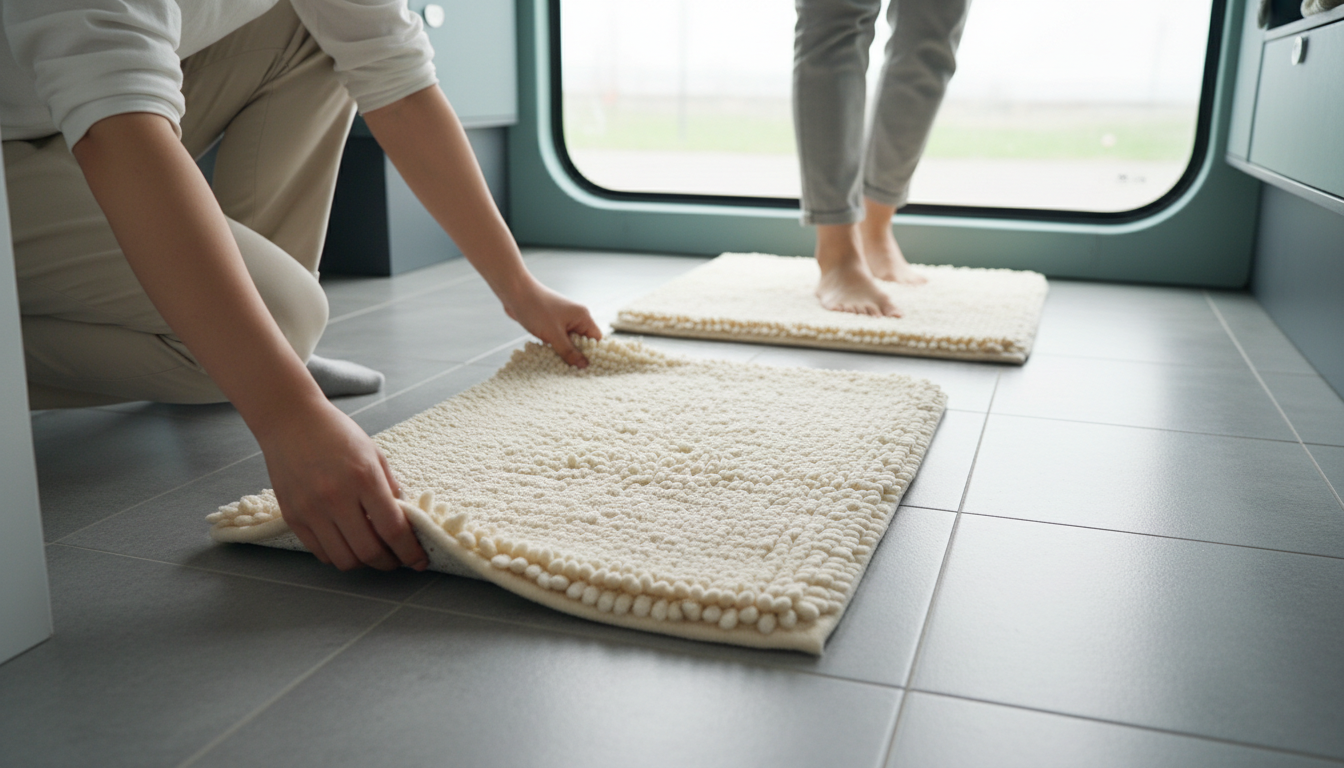
Plush bathroom mats can be safe on tile floors, but only if they’re built to grip. Tile is slick when wet, and a soft, thick pile can slide or bunch up if the backing doesn’t anchor the mat to the floor. The safest plush mats pair a cushy surface with a dependable non-slip underside and are used on clean, dry tile.
Safety comes down to traction and stability. Look for a mat with a true non-slip backing (often rubberized, TPR, or silicone-style grips) that’s designed to cling to smooth surfaces. A heavier mat with a stable edge also helps prevent curling, which can become a trip hazard.
Fit matters too: a mat that’s too small may shift more easily, while an oversized mat that reaches into door swing areas can snag and fold. Choose a size that lays flat and stays fully supported by the floor.
Even a quality non-slip mat can lose grip if the tile has residue or if water gets trapped underneath. For better stability:
Plush mats hold more water than flat weaves, so they can stay damp longer if ventilation is poor. That can reduce traction over time and may lead to mildew odors. Choosing a fast-drying plush material and washing it as directed helps keep the mat fresh and grippy.
For a closer look at plush, non-slip bath mat options (including what to check in backing and materials), visit this guide to fruit plush velvet non-slip bath mats.
Use a mat with a true non-slip backing, place it on clean, dry tile, and avoid letting water pool underneath. If the backing is worn or smooth, replacing the mat is usually safer than trying to “make it work.”




Leave a comment