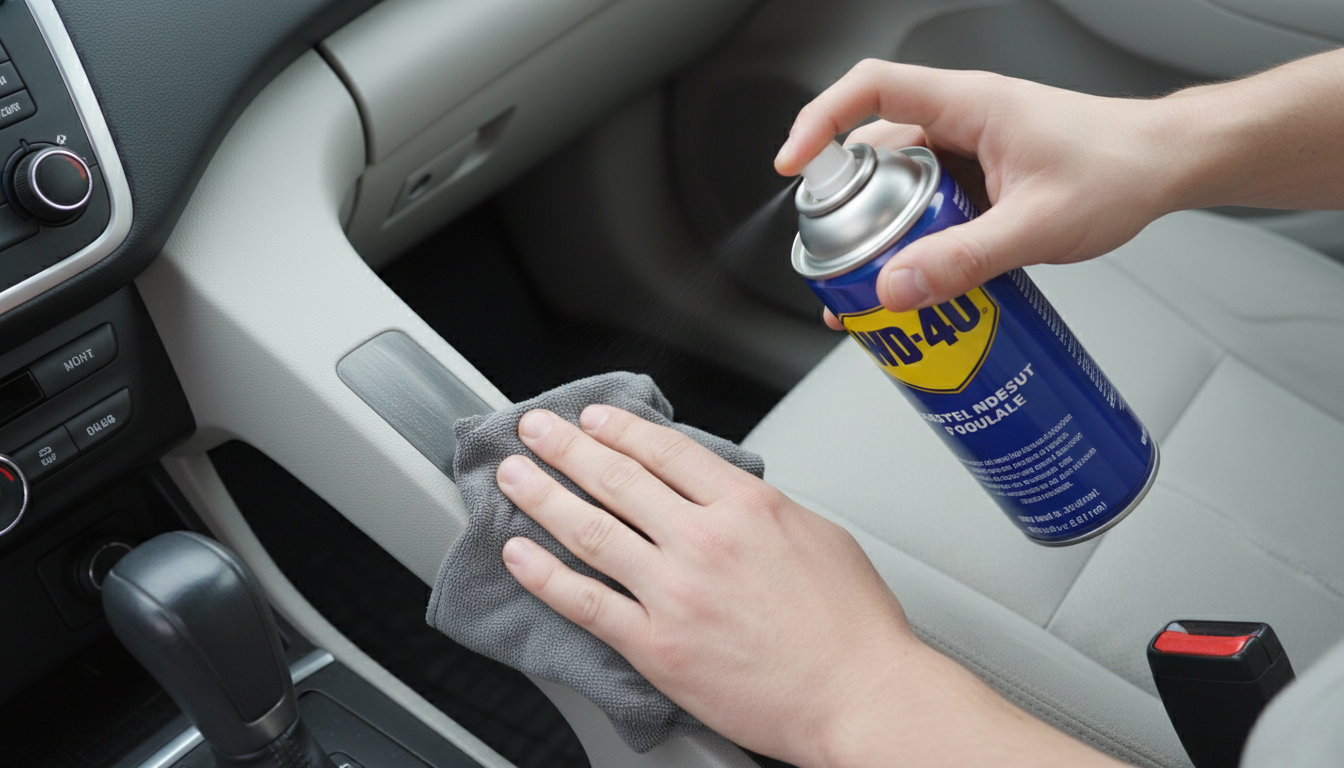
WD-40 can make faded plastic look darker for a short time, but it isn’t a true plastic restorer. It’s a water-displacing lubricant that leaves an oily film, so the “restored” look tends to fade quickly and can attract dust and grime. On exterior trim, that residue may also sling onto paint or glass, creating extra cleanup and a streaky finish.
If you wipe a small amount onto dull black trim, it can temporarily deepen color by wetting the surface. That can be useful for a quick, short-term visual improvement before photos or an event. Just don’t expect it to bond to the plastic or provide UV protection like a dedicated trim restorer.
The main issues are longevity and mess. Because it stays slick, it can transfer to towels, hands, clothing, and nearby surfaces. Over time, that oily layer can hold onto dirt, making trim look blotchy sooner. It also doesn’t address oxidation the way purpose-made products do, so repeated applications may become a cycle of wipe-on, wipe-off, and reapply.
For exterior plastic and leather-style surfaces that need real “back to black” results, use a dedicated restorer designed to clean, condition, and leave an even, durable finish. For a step-by-step approach and a product that’s made specifically for this job, see the full guide here: Back to Black Plastic & Leather Restorer Gloss—Done Right.
Test on an inconspicuous spot first. Apply a small amount to a microfiber towel (not directly to the surface), wipe a thin layer, then buff thoroughly to remove excess. Avoid textured areas where residue can linger, and keep it away from tires, pedals, steering wheels, and anything you need to stay non-slip.
Clean the trim thoroughly, then apply a dedicated plastic trim restorer that cures to a dry-to-the-touch finish. Buff off excess product so it levels evenly and doesn’t leave oily residue that attracts dust.






Leave a comment