
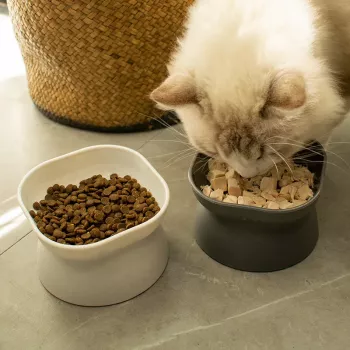
Many veterinarians do recommend raised cat bowls for certain cats and situations, but it isn’t a one-size-fits-all rule. Elevating the bowl can help some cats eat in a more natural, comfortable posture, especially if they’re older, have arthritis or neck stiffness, or tend to hunch low over a dish. The goal is simple: reduce strain during meals and make eating easier.
Vets often suggest a raised or slightly elevated bowl when a cat shows signs of discomfort while eating—such as hesitating at the bowl, shifting positions, or seeming stiff afterward. Elevation may also help cats that are prone to messy eating because it can bring the food closer to mouth level and reduce the need to crouch.
Another common recommendation is to pair elevation with a gentle tilt. A tilted design can keep food pooled toward the front, which may help cats access kibble or wet food without pressing their whiskers against the sides as much.
Healthy, young adult cats that already eat comfortably from a standard dish may not need a raised feeder. Some cats simply have no preference. If a cat is vomiting frequently, eating too fast, or has a medical condition affecting swallowing, bowl height alone may not solve the issue—those cases are best evaluated by a vet to rule out underlying causes.
Rather than a fixed number for every cat, the most practical approach is to raise the bowl so the cat can eat with a more neutral neck position—less crouching, less reaching. The best height depends on the cat’s size and posture. If the bowl is too high, a cat may have to lift the head awkwardly, which defeats the purpose.
Look for stability, a wide base, and materials that clean easily. Shallow, whisker-friendly bowls can make meals calmer for sensitive cats. For a deeper dive on how shape, tilt, and height affect comfort and cleanliness, see this guide to tilted cat food bowls.
They can be, especially for cats that dislike reaching into deep bowls. A gentle tilt helps keep food accessible and may reduce whisker contact for some cats.



Leave a comment