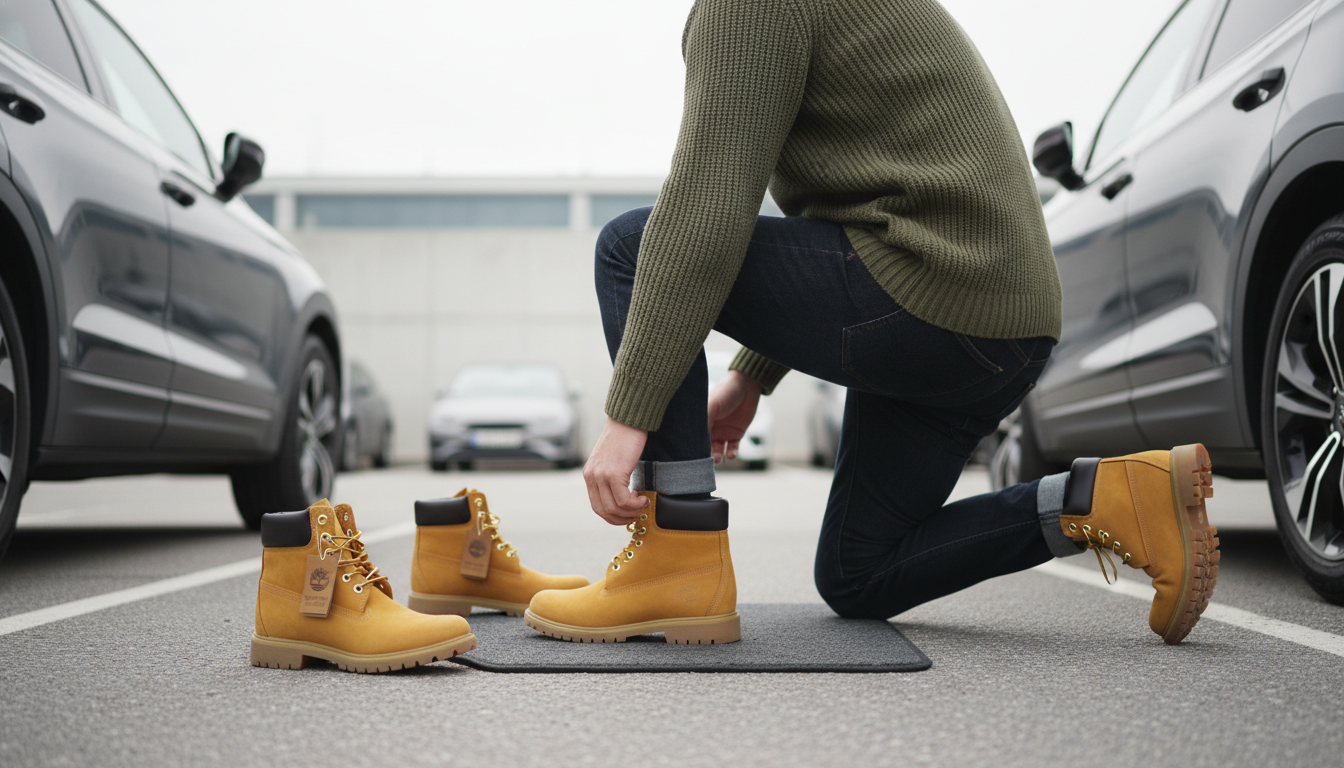
Most people should stick to their true size in Timberland boots, but whether you size up or down depends on the specific style and how you plan to wear them. Classic Timberland leather boots often feel snug at first (especially across the toe box and instep) and then break in, so sizing down can backfire if your feet are wider or you like thicker socks. If you’re between sizes, a slight size up is usually the safer move for comfort.
If you have average-width feet and plan to wear regular everyday socks, true-to-size typically gives the best overall fit once the leather softens. New pairs can feel firm around the midfoot, but that structured feel is part of what makes Timberland boots supportive. After a few wears, the leather relaxes and the fit becomes more natural without turning sloppy.
Size up (especially if you’re a half size) if you wear thick wool socks, use orthotics, or have a high instep or wider forefoot. Boots that are too short won’t “stretch longer,” so any toe crowding is a sign you need more room. A little extra space can also prevent heel rubbing during the break-in period; you can fine-tune the fit with lacing, thicker socks, or an insole if needed.
Sizing down is only worth considering if the style runs notably roomy, your heel lifts a lot even when tightly laced, and your toes still have comfortable space. If you size down and your toes touch the front when walking downhill or your forefoot feels pinched, that’s a mismatch—go back up.
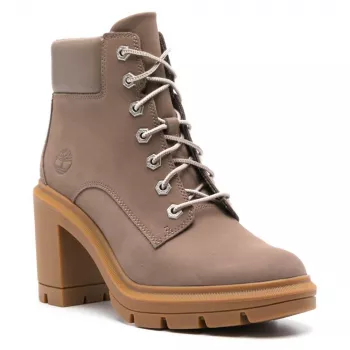
For a style-specific fit guide and more details on how Timberland women’s boots should feel, visit this Timberland boots guide.
Wear them indoors with the socks you’ll actually use, starting with short sessions. Gradually increase wear time, and use heel protectors or moleskin on hot spots while the leather softens.





Leave a comment