A home that feels clean doesn’t require marathon scrubbing—just a repeatable reset that keeps mess from multiplying. The goal is simple: protect your downtime with quick daily touchpoints, a light weekly rhythm, and a few stress-free habits that keep floors, surfaces, and bathrooms under control.
“Clean once, relax more” is less about doing more and more about stopping the second mess—the one that happens when clutter migrates, crumbs spread, and small jobs become big jobs.
When your home is set up for quick resets, cleaning stops feeling like a project and starts feeling like a routine. A few small decisions now remove dozens later.
For product safety and smarter disinfecting, it helps to follow established guidance like the CDC’s cleaning and disinfecting recommendations and the EPA Safer Choice program for selecting safer product options.
The daily reset is the anchor. It works because it’s short enough to repeat and structured enough to avoid decision fatigue.
| Room | First 3 minutes | Next 7 minutes | Last 5 minutes |
|---|---|---|---|
| Kitchen | Trash + food put away | Load/empty dishwasher + wipe counters | Sweep main path + reset sink |
| Living room | Trash + cups/dishes out | Fold blankets + gather clutter to baskets | Quick vacuum high-traffic area |
| Bathroom | Trash + towels hung | Wipe sink/counter + quick toilet swish | Spot-mop + restock toilet paper |
| Bedroom | Laundry into hamper | Make bed + clear nightstands | Quick tidy of floor path |
Instead of saving everything for Saturday, choose one small zone per day. You’ll still get the “clean house” feeling—without losing the weekend.
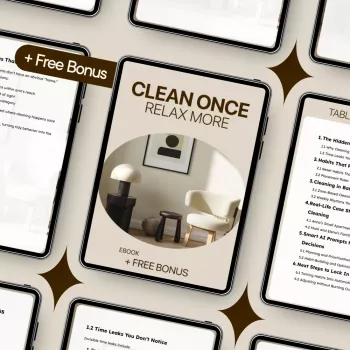
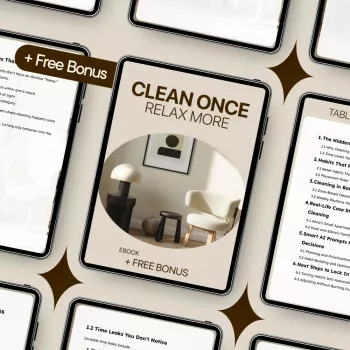
If you want a reliable reference while you build the habit, a structured digital guide can help you stay consistent without overthinking: Clean Once, Relax More – Time-Saving Cleaning Guide (Digital eBook Download).
Most cleaning time isn’t spent “cleaning”—it’s spent moving things out of the way, hunting for supplies, and restarting half-finished tasks. These habits reduce that friction.
For a faster “get it done without stress” approach on days when time is tight, keep a shorter playbook handy: Clean Faster, Stay Calm – A Stress-Free Speed Cleaning Guide for Busy Homes.
When you do disinfect, lean on practical best practices from the American Cleaning Institute to match products and methods to the surface you’re cleaning.
Two helpful options to keep the plan simple and portable are Clean Once, Relax More – Time-Saving Cleaning Guide (Digital eBook Download) and Clean Faster, Stay Calm – A Stress-Free Speed Cleaning Guide for Busy Homes.
Aim for 10–20 minutes. Use a timer and a fixed order (trash, dishes, laundry, surfaces, floors), and stop when the time is up so the routine stays repeatable.
Start with trash and dishes, then fully reset one anchor area like the kitchen sink and counters. Use baskets for items that belong elsewhere, and save floors for last.
Lower the entry barrier: stage supplies where you use them, rely on micro-moments, and keep surfaces lighter so wiping is fast. A short checklist and a small minimum standard help you keep momentum without pressure.




Leave a comment