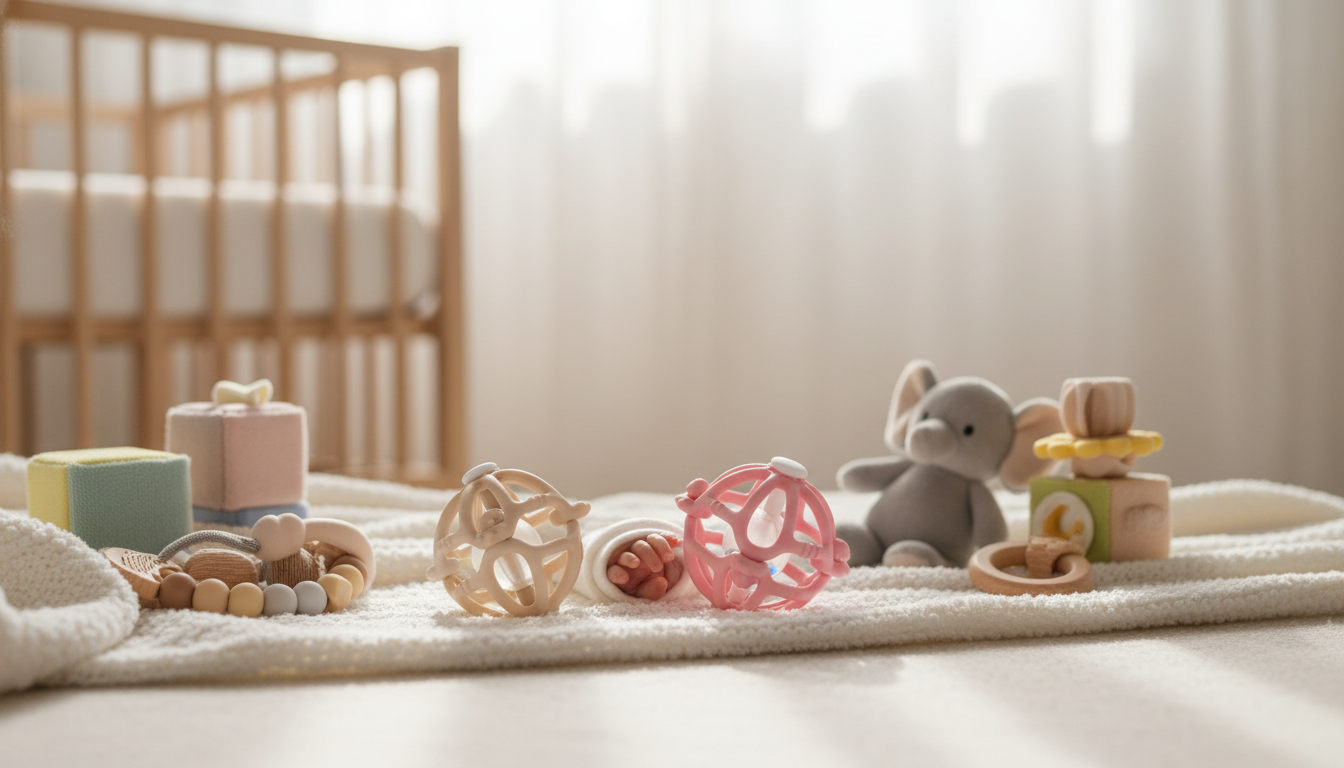
Teething can make babies fussy, drooly, and eager to chew on anything within reach. A silicone teether rattle combines a gum-soothing chew toy with gentle sound and easy-to-grip shapes, helping keep little hands engaged while offering comfort during sore-gum days. When it’s thoughtfully made and used with supervision, it can become one of those grab-and-go baby essentials you’ll reach for daily—at home, in the car seat, or while running errands. For more guidance, see Ritzy Rattle Silicone Teether Rattle Highland Cow.
A teether rattle is designed to do two jobs at once: offer a safe chewing surface and provide a simple sensory toy. Here’s why parents often keep one within arm’s reach during teething phases: For further reading, see These Are the Best Toys for Babies Right Now – Consumer Reports.
For general teething guidance and what’s normal, the American Academy of Pediatrics is a helpful reference. The FDA’s tips for teething also cover important safety reminders.
Not all teethers are built the same. A few design details can make a big difference for safety, comfort, and how long the toy holds up to daily chewing.
It also helps when a teether is lightweight, since babies often drop toys repeatedly while they’re still learning grip control. An easy-to-hold shape can reduce frustration for both baby and caregiver.
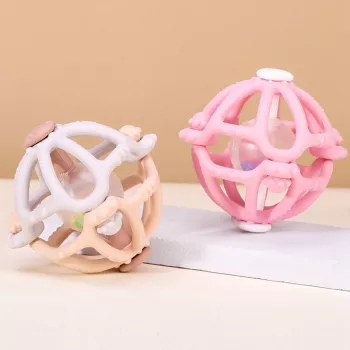
If you want a straightforward option that combines chewable silicone with gentle sound feedback, the Baby Silicone Teether Rattle is a simple everyday pick. It’s designed for teething comfort and early sensory play, and it’s compact enough to toss into a diaper bag without taking up much space.
| Item | What to know |
|---|---|
| Product | Baby Silicone Teether Rattle |
| Price | $4.51 |
| Availability | In stock |
| Best for | Teething comfort, grasp practice, sensory play |
| Care | Clean regularly; follow the seller’s care instructions |
For parents building a small “grab-it-fast” kit, pairing a teether with a simple home routine can help you stay ahead of the messier teething weeks. If that sounds useful, Clean Faster, Stay Calm – A Stress-Free Speed Cleaning Guide for Busy Homes is an easy add-on for simplifying day-to-day reset routines.
Even the best teether should be treated like any other baby product: check it often, keep it clean, and use it appropriately for your child’s age and development.
If your baby seems unusually uncomfortable, has a high fever, or you’re unsure whether symptoms are related to teething, it’s worth checking with your pediatrician.
Silicone is popular for baby teethers because it’s durable and easy to wash, but it can still pick up lint, dust, and odors if it’s not cleaned and dried regularly. A few small habits can keep it fresher and ready when fussiness hits.
For general hygiene best practices, the CDC’s cleaning guidance is a solid reference point for keeping everyday items cleaner at home.
Many babies start using teethers around 3–6 months when they begin reliably bringing objects to their mouth. Follow the product’s labeled age guidance, and always supervise—especially for younger babies who are still developing coordination.
Check the seller’s care instructions first. Some silicone teethers can be cooled in the refrigerator for brief, gentle relief, but avoid freezing hard if it creates an overly cold surface that could irritate sensitive gums.
Clean it daily when it’s used often, and wash it after drops or outings. During illness or heavy drooling phases, more frequent washing is a good idea, and it should be fully air-dried before storing.




Leave a comment